
Reviewed · DA NANG TOURS
Da Nang: Tandoori Naan Bread-Making Class
Naan tastes better when you make it yourself. This small-group class at RANG, an Indian restaurant in Da Nang, turns a simple flatbread into a hands-on food lesson, complete with dough kneading, spice choices, tandoor baking, and a fresh tasting at the end. I especially like the tiny group size of eight and the chance to learn both traditional tandoor methods and practical home-oven tips.
I also like the setting. RANG is an Indian fusion restaurant with a Michelin Bib Gourmand award in 2024 and 2025, so you are learning in a real professional kitchen rather than a detached classroom. The main consideration is that the listed duration is one day, but the exact class length and starting time depend on availability, so you should confirm the schedule before planning the rest of your day.
In This Review
- Key points to know before booking
- Why naan makes a good Da Nang cooking class
- Arriving at RANG, Da Nang’s Indian kitchen
- Starting with dough, spices, and the basics
- Learning why naan matters across India
- The tandoor moment
- Tasting warm naan with dips and curry
- Group size, pace, and who will enjoy it
- Price, flexibility, and practical planning
- My call: book it if you want a useful food memory
- FAQ
- How much does the Tandoori Naan Bread-Making Class cost?
- How long is the activity?
- Where does the class take place?
- Is prior cooking experience required?
- What languages are available?
- How many people can join the class?
- Are children allowed to participate?
- What is included in the class?
Key points to know before booking
- You make the naan from scratch: Knead the dough, season it, shape it, and bake it yourself with chef guidance.
- The tandoor is part of the fun: You get to experience the traditional method of placing naan against the hot oven, with a home-oven alternative explained too.
- The class is very small: With a maximum of eight participants, it should feel more personal than a large cooking demonstration.
- You taste several styles: Classic, garlic, butter, and stuffed naan such as paneer or keema may be covered as creative options.
- RANG adds serious food credentials: The Da Nang restaurant received a Michelin Bib Gourmand in both 2024 and 2025 for quality food at moderate prices.
- The price is remarkably low: At $2.60 per person, the class offers strong value even if you book it mainly for the lesson and tasting.
Why naan makes a good Da Nang cooking class
Naan looks simple on the plate. It is not quite so simple in the kitchen. The dough needs the right texture, the seasoning must be balanced, and the bread must cook quickly enough to puff and char without drying out.
That makes naan a smart choice for a short food activity. You learn a technique you can repeat at home, rather than preparing a complicated dish that requires a cupboard full of hard-to-find ingredients. The lesson also gives you an easy way to understand Indian food. Once you know how naan is made, curries make more sense as part of a meal built around bread, sauces, and shared plates.
The class is designed for beginners. You do not need previous cooking experience, and the instruction covers the process from dough preparation through baking. I would especially recommend it if you enjoy food but do not usually take cooking classes. You get to work with your hands without committing to a long or highly technical course.
The price also changes the calculation. At $2.60, this is less expensive than many drinks, snacks, or short activities in Da Nang. You are getting instruction, a hands-on session, freshly baked naan, and signature dips. That makes it an easy addition to a day in the city.
A few more Da Nang runs to compare on price
- 5 Dishes Cooking Class with Market Trip in Da Nang
★ 5.0 · 466 reviews - Da Nang Authentic Home Cooking Class
★ 5.0 · 354 reviews - 5 traditional dishes Da Nang cooking class with market trip
★ 5.0 · 331 reviews
Arriving at RANG, Da Nang’s Indian kitchen
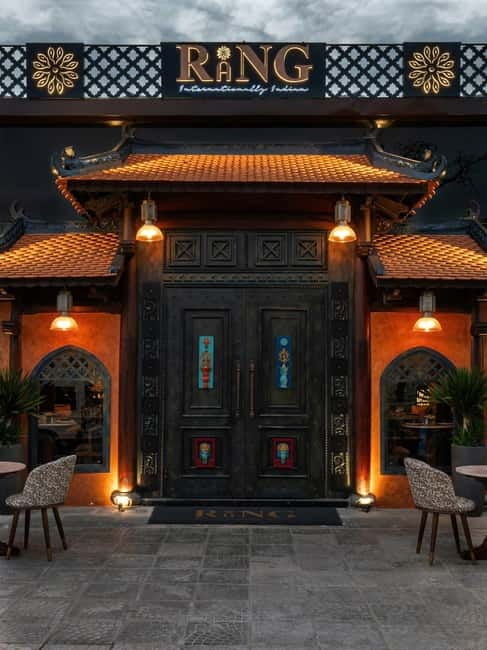
The meeting point is RANG, an internationally focused Indian restaurant in Da Nang. The restaurant made local food history by becoming the first fusion Indian establishment in Da Nang to receive the Michelin Bib Gourmand award in 2024 and again in 2025.
That award matters mainly because it tells you something about the setting. You are not learning in a temporary tourist kitchen. You are working inside a functioning restaurant where food is prepared for paying diners. One particularly useful detail is that the class takes place in the real kitchen while the restaurant continues serving food. That gives the session a working-kitchen feel, with chefs preparing dishes around you.
There is a tradeoff. A restaurant kitchen can feel more active and less quiet than a private cooking studio. You may have other kitchen work happening nearby, and the class may feel connected to the restaurant rather than isolated from it. For me, that is a plus because you see where professional Indian food is actually made, but anyone seeking a calm, polished classroom should know what to expect.
Chef Manku and server Amit have received specific praise for their friendly, welcoming approach. Their role seems to be part of what makes the class feel social rather than mechanical. You are not simply handed a recipe and left to follow it. The staff explain the process and help you through the practical parts.
Starting with dough, spices, and the basics
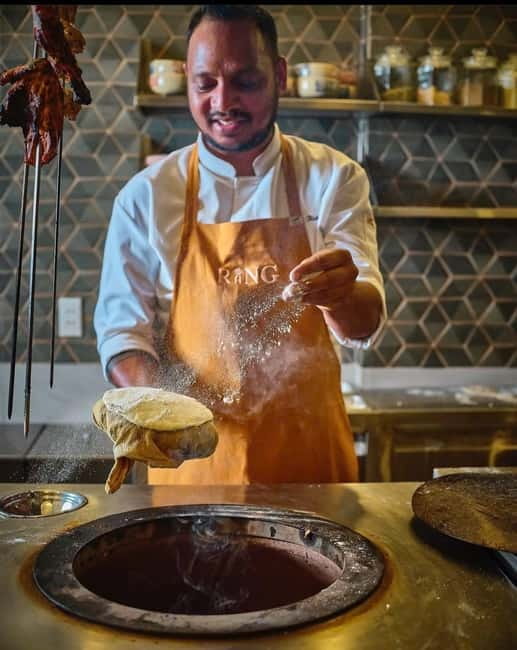
The class begins with the foundation of naan: the dough. You knead it under chef supervision and learn how the texture should feel before it is shaped. That hands-on stage is important because naan dough can look ready before it has reached the right consistency.
You also learn how the dough connects to the final result. A soft, fluffy naan requires more than simply mixing ingredients. The preparation affects how well the bread stretches, puffs, and holds toppings. These are the small lessons that help you get better results at home.
The class also covers seasoning with authentic spices. Plain naan gives you the basic method, while garlic and butter versions show how simple additions can change the character of the bread. Stuffed variations such as paneer or keema offer a more ambitious option, though you should treat these as creative possibilities rather than assuming every variation is prepared in every session.
I like this progression. You begin with a basic bread that is easy to understand, then see how it can be adjusted for different meals. If you are cooking for family or friends, that flexibility is useful. One dough method can lead to several different breads.
Learning why naan matters across India
The chefs also explain the cultural background of naan and its place in Indian cooking. The class connects naan with regional food traditions, including hearty meals in Punjab and royal feasts associated with Delhi.
This is not just decoration around the cooking. Bread tells you how a meal is meant to work. Naan is made to accompany curries, scoop up sauces, and add texture to a plate. It is often the part of the meal that brings everything together.
The regional references help you see that Indian food is not one single style. A plain naan served with one curry can feel very different from a garlic naan paired with another dish, and stuffed breads bring a heavier, more filling quality. You do not need a long lecture to understand this. A few clear stories, followed by making and tasting the bread, can make the ideas stick.
The language options are English, Vietnamese, and Hindi. That gives the class useful flexibility in Da Nang, especially for mixed-language groups. If you want detailed explanations, check that your preferred language is available when you book, since the instructor arrangement may vary.
Same city, a very different kind of morning:
- Full Day Golden Bridge and Ba Na Hills Small Group Tour
★ 5.0 · 2,369 reviews - Morning Small group to Marble Mountains – Am Phu Cave – Monkey Mountain
★ 5.0 · 1,097 reviews - Da Nang: Ba Na Hills and Golden Bridge Tour
★ 5.0 · 938 reviews - Da Nang & Hoi An: Food, Sightseeing, Culture & Hidden Gems
★ 5.0 · 806 reviews
The tandoor moment
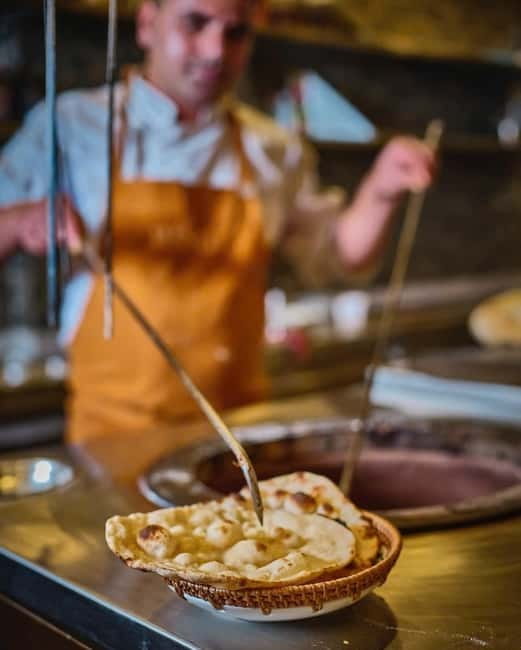
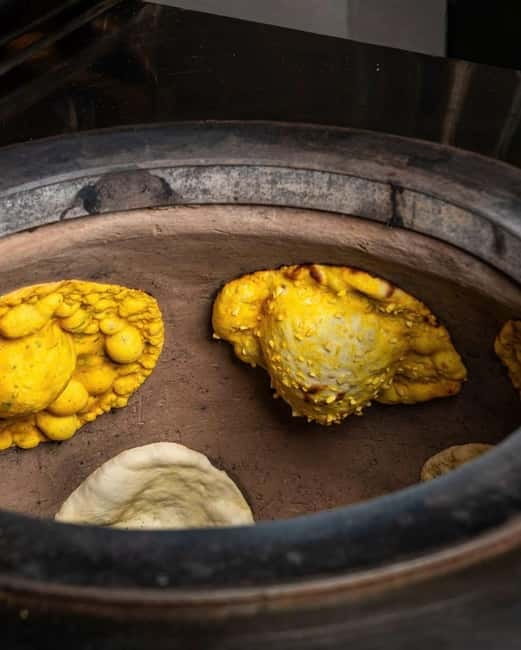
The most memorable part is the baking. After shaping and seasoning the naan, you get to experience the traditional tandoor method, including the thrill of placing or slapping the bread onto the hot oven surface under supervision.
This is where the class feels different from making flatbread at home. A tandoor cooks at intense heat, so the naan can puff quickly and develop the charred edges associated with restaurant bread. The cooking is fast, visual, and a little dramatic, which helps explain why this activity works well for beginners and families with older children.
The restaurant uses a tandoori oven, with freshly baked bread served hot. One session was described as producing several types of naan from a charcoal-fired oven. The exact oven fuel or method may depend on the kitchen setup, but the central lesson is the same: you see how high heat changes the dough.
The class also explains how to adapt the process at home. Most people do not own a tandoor, and the staff offer tips for using an oven instead. This may be the most practical part of the class. You learn what can be copied exactly and what needs adjusting when you return home.
You should still keep expectations realistic. An ordinary home oven will not fully reproduce the heat and surface of a tandoor. The lesson can help you make very good naan, but it cannot turn a standard kitchen into a restaurant oven. That honest distinction makes the home advice more useful.
Tasting warm naan with dips and curry
Once the bread comes out of the oven, you taste it with signature dips. Fresh naan has a different texture from bread that has been sitting on a restaurant table. It is warm, soft, and best eaten right away.
The tasting also gives you a chance to compare the styles you have prepared. Plain naan lets you notice the bread itself. Garlic or butter versions add more aroma, while a stuffed naan can be more substantial. The format makes the lesson feel complete because you do not stop at the cooking stage.
You can also combine the class with a meal at RANG. This is optional, not a requirement, and the restaurant staff are not described as pushy about it. Ordering a curry afterward lets you use your own naan as it is traditionally intended, torn into pieces and dipped into sauce.
That combination is worth considering if you enjoy Indian food. The class gives you an activity, while the meal lets you sample the restaurant’s broader cooking. It also turns the bread lesson into a fuller lunch or dinner plan without requiring another venue.
Still, the tasting included with the class may be enough for some people. If you have a busy schedule or only want the practical lesson, you do not need to add a restaurant meal.
Group size, pace, and who will enjoy it
The group is limited to eight people. That is a useful number for a hands-on cooking class because you should have a better chance to ask questions and receive help with shaping and baking.
Small groups also reduce the risk of spending the session watching someone else cook. The format is described as interactive, with each participant involved from the dough through the oven. That matters more here than it would in a demonstration class because the physical technique is part of the lesson.
The class suits:
- First-time cooks who want an easy introduction to Indian food
- Couples looking for a low-cost activity in Da Nang
- Food-focused families with children aged seven or older
- People who want practical recipes for cooking at home
- Anyone planning to eat at RANG and interested in seeing the kitchen at work
Children under seven are not suitable for the activity. The hot oven is an obvious reason to take that rule seriously. Older children may enjoy the shaping and baking, but an adult should still stay alert around the tandoor.
The class is also a good fit for solo participants. With only eight places, you are less likely to feel lost in a crowd. The friendly staff and shared tasting create an easy social setting without requiring you to join a large group tour.
Price, flexibility, and practical planning
The advertised price is $2.60 per person. That is exceptional value for a class that includes chef guidance, the hands-on work, freshly baked naan, and dips. Even if you are already planning to eat Indian food, the additional cost is small enough to justify booking for the activity alone.
The booking is valid for one day, with starting times based on availability. The listing does not give a fixed number of class hours, so check the available time before booking. Do not assume that one day means a full-day cooking course. It appears to refer to the booking date and validity rather than a guaranteed all-day schedule.
You can reserve now and pay later, which helps if your Da Nang plans may change. Cancellation is free up to 24 hours in advance for a full refund. Those terms are useful for a short city stay, especially if you are arranging several food stops around weather or day trips.
The class is offered in English, Vietnamese, and Hindi. Alcohol and drugs are not allowed. No prior experience is required, but food allergies, dietary restrictions, and ingredient substitutions are not explained in the available information, so ask RANG directly before booking if that matters to you.
My call: book it if you want a useful food memory
I would book this class if you enjoy Indian food, want a practical activity, or have a spare slot in your Da Nang schedule. The strongest features are the tiny group, real restaurant kitchen, chef guidance, tandoor baking, and useful advice for making naan in a normal home oven.
The Michelin Bib Gourmand setting adds confidence, but the award is not the main reason to go. You are booking this for the friendly instruction and the chance to make and eat bread while it is still hot. Chef Manku and Amit appear to add the warm human touch that turns a basic lesson into a pleasant afternoon or meal starter.
Skip it if you want a long, full-menu cooking course, a quiet private studio, or detailed instruction on several Indian dishes. This is focused on naan. At $2.60, though, it is hard to argue with the value. If the timing fits, it is an affordable way to learn a real technique and taste Da Nang through one of India’s most enjoyable foods.
FAQ
How much does the Tandoori Naan Bread-Making Class cost?
The price is $2.60 per person.
How long is the activity?
The activity is listed as valid for one day. Starting times depend on availability, and the exact class length is not specified.
Where does the class take place?
The meeting point is RANG, an Indian fusion restaurant in Da Nang, Vietnam.
Is prior cooking experience required?
No. The class is designed to be interactive and beginner-friendly.
What languages are available?
Instruction is available in English, Vietnamese, and Hindi.
How many people can join the class?
The group is limited to eight participants.
Are children allowed to participate?
Children under seven are not suitable for the activity.
What is included in the class?
The price includes the Tandoori Naan Bread-Making Class, hands-on instruction, expert chef guidance, freshly baked naan tasting, and signature dips.
New around Da Nang
- Your Incredible Scooter Adventure On Hai Van Pass★ 5.0 · 67 reviews
- Four-Hands Harmony (Perfect · Synchronized · Flow)★ 5.0 · 78 reviews
- Private car from Danang to Hoi An★ 5.0 · 20 reviews
- Dry Deep Bodywork (Dry | Thai–Shiatsu based)★ 5.0 · 45 reviews
- Da Nang Street Food Private Tour With Local Students★ 5.0 · 24 reviews
- Private Customize car rental 4 hours – 8 hours- 12 hours Da Nang★ 5.0 · 22 reviews
- Monkey mountain-Huge Lady Buddha-Marble mountains & Am Phu caves★ 5.0 · 210 reviews
- Surf Lessons★ 5.0 · 42 reviews
Da Nang Tours, compared.

Full Day Golden Bridge and Ba Na Hills Small Group Tour
Read our review →
Morning Small group to Marble Mountains – Am Phu Cave – Monkey Mountain
Read our review →

Da Nang & Hoi An: Food, Sightseeing, Culture & Hidden Gems
Read our review →
Marble Mountains – Am Phu Cave – Monkey Mountain Sunset tour
Read our review →

Marble Mountains – Hoi An Ancient Town Sunset Daily Ingroup Tour
Read our review →
DaNang/HA: Lady Buddha, Marble Mountain & Am Phu Caves Tour
Read our review →Browse the lists this tour appears in