
Reviewed · MARKET TOURS IN DA NANG
5 traditional dishes Da Nang cooking class with market trip
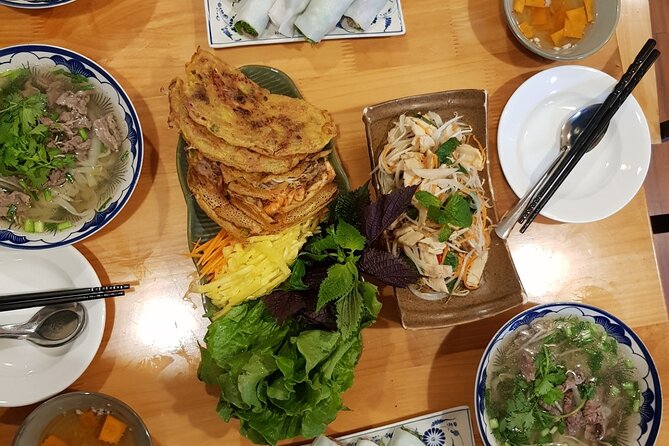
Come hungry and bring curiosity. This four-hour Da Nang cooking class combines a visit to Bac My An Market with hands-on lessons in five Central Vietnamese dishes, so you learn where the ingredients come from before you cook them. I especially like the market visit and the broad menu, which includes Bun Bo Hue, Banh Xeo, fresh rolls, young jackfruit salad, and avocado ice cream. The main drawback is that some preparation, including the soup, may be shared across the group rather than completed entirely by you.
I also like the class’s flexible menu, which can be adjusted for dietary needs, plus the friendly teaching style praised in the feedback. Instructors such as Blue, Bora, Chi, and Jenny are described as patient, clear, and good with children. At $39 per person, the price is fair for a market outing, lunch, cooking instruction, drinks, a recipe book, and a certificate, though a group of up to 30 could feel less personal.
In This Review
- Key points at a glance
- Starting at 07 Nguyen Ba Lan Street
- Bac My An Market: the best part for curious eaters
- Five dishes from Central Vietnam
- Bun Bo Hue
- Banh Xeo
- Tam Huu fresh roll
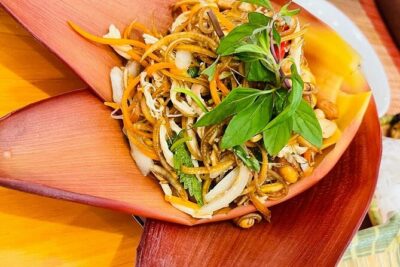
- Young jackfruit salad
- Da Nang avocado ice cream
- What cooking together is really like
- The instructors: Blue, Bora, Chi, and Jenny
- Eating what you made
- Is $39 good value in Da Nang?
- Who should book this class?
- Booking, cancellation, and practical notes
- Should you book the Apron Up Da Nang class?
- FAQ
- Where does the Da Nang cooking class meet?
- How long does the cooking class last?
- Which market does the class visit?
- Which dishes will I cook?
- What is included in the price?
- Can I cancel for a full refund?
Key points at a glance
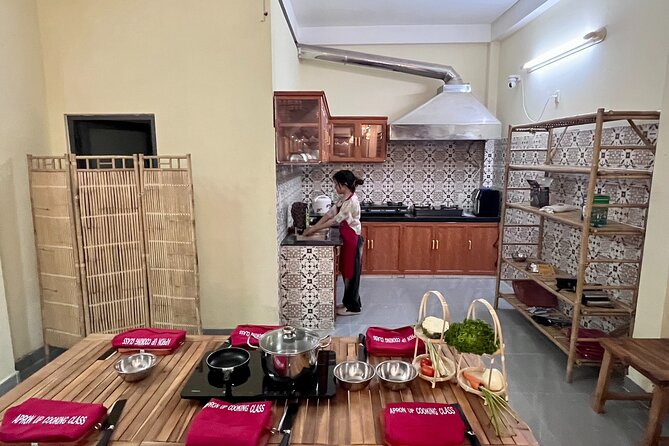
- Bac My An Market comes first: You shop for ingredients at a nearby local market before returning to the kitchen.
- Five dishes cover a full meal: The menu includes Bun Bo Hue, Banh Xeo, Tam Huu fresh rolls, young jackfruit salad, and Da Nang avocado ice cream.
- Central Vietnam gets the spotlight: The recipes focus on food from Da Nang and the wider middle region rather than generic Vietnamese dishes.
- Instructors earn strong praise: Blue, Bora, Chi, and Jenny are singled out for clear explanations, patience, humor, and kindness with children.
- You finish with more than lunch: The class includes fruit, rice vodka, a recipe book, and a certificate.
- The group size matters: The maximum is 30 people, but some sessions may be much smaller, including one reported group of six.
Starting at 07 Nguyen Ba Lan Street
You meet at 07 Nguyen Ba Lan Street in the Bac My An area of Da Nang, arriving 10 minutes before the scheduled start. The activity begins and ends at this address, so you do not need to arrange a separate ride between the market and kitchen.
The meeting point is near public transportation, which helps if you are staying around Da Nang. The supplied details do not promise hotel pickup, so plan to reach the address on your own. A mobile ticket is provided, and booking confirmation arrives at the time of booking.
The class lasts about four hours. That is long enough for a market walk, demonstrations, hands-on cooking, and a proper meal without taking up your entire day. I would avoid scheduling a major sightseeing appointment immediately afterward. Cooking five dishes involves waiting, chopping, wrapping, frying, and tasting, and the pace may vary with group size.
More Cooking Classes in Da Nang
- 5 Dishes Cooking Class with Market Trip in Da Nang
★ 5.0 · 466 reviews - Da Nang Authentic Home Cooking Class
★ 5.0 · 354 reviews - Da Nang Cooking Class with Coffee Tasting and Market Visit
★ 5.0 · 310 reviews
Bac My An Market: the best part for curious eaters
The first stop is Chợ Bắc Mỹ An, also known as Bac My An Market. This is not just a quick ingredient pickup. The stated aim is to help you understand local produce and the stories behind the dishes you will later prepare.
That order matters. You see the ingredients in their everyday setting before they appear measured and arranged at the cooking station. A local guide can explain what you are buying, how it is used, and why certain foods fit Central Vietnamese cooking. For many people, this will be more useful than simply watching a chef produce a finished plate.
The market visit also adds a cultural layer without requiring a separate market tour. You get a practical look at local food shopping, then use the ingredients yourself. Several participants especially enjoyed this part, calling it interesting, fun, and a good photo opportunity.
Still, a market is a working place, not a polished food hall. You should expect a real local shopping stop rather than a quiet, carefully staged walk. The details do not specify how long the market portion lasts, so the amount of time spent there may depend on the class schedule and shopping list.
Five dishes from Central Vietnam
The menu is the heart of the class. It is designed as a balanced set of well-known local foods, with enough variety to show different techniques and flavors.
Bun Bo Hue
Bun Bo Hue is a beef noodle soup associated with Hue, the former imperial city just north of Da Nang. It gives you a chance to work with broth, noodles, herbs, and the seasoning style linked with Central Vietnam.
One important practical detail is that the soup may be prepared as a group recipe. That is sensible for a broth-based dish, which can require shared cooking time and larger equipment. It also means you should not expect every element of all five dishes to be made individually by each person.
The payoff is a meal with variety. After cooking a soup, you move on to crisp pancakes, fresh rolls, salad, and dessert rather than repeating one basic technique.
More Market Tours in Da Nang
- Guided Tour to Marble Mountains & Hoi An Walking Tour , Night Market, Boat Ride
★ 5.0 · 218 reviews - Hoi An Night Market with Hoi an walking Tour , Colourful Lanterns, Boat Ride
★ 5.0 · 142 reviews - DaNang Farm-to-Table Cooking Class with Market and Coffee Tasting
★ 5.0 · 131 reviews - Market Tour, Basket Boat Ride & Cooking Class by Hangcoconut
★ 4.8 · 95 reviews
Banh Xeo
Banh Xeo is the crisp Vietnamese savory pancake. It is one of the most useful dishes to learn in a class because the result depends on technique: batter handling, pan heat, filling, and timing all matter.
One family specifically enjoyed learning how to make a perfectly browned, crispy pancake. That detail is worth noting because Banh Xeo can look simple but is easy to make too soft or heavy at home. A good instructor should show you how to judge the texture rather than simply hand over a finished plate.
This is also likely to be one of the most hands-on parts of the class. You get a clear lesson in how Vietnamese cooking uses texture as much as seasoning.
Tam Huu fresh roll
Tam Huu is presented as a fresh roll. Fresh rolls are useful for learning how to handle rice paper, arrange fillings, and wrap without tearing the sheet.
One piece of feedback raised a fair concern about a roll made with lettuce and a little beef. It fell apart and tasted bland for that person. That does not make the dish a failure, but it shows that fresh rolls can be the least forgiving item in a group class. The amount of filling, the softness of the rice paper, and the tightness of the wrap all matter.
If you struggle with your first roll, pay close attention to the demonstration and ask for help before adding too much filling. The class is intended for all skill levels, and several instructors are praised for patient explanations.
Young jackfruit salad
Young jackfruit salad brings a local ingredient into the meal. It is a useful introduction to a food you may not often prepare at home, and it broadens the class beyond the familiar spring-roll-and-noodle format.
The salad also shows how Vietnamese dishes balance fresh ingredients with sharp, savory, and sweet notes. The supplied information does not specify the full dressing or garnish, so you should treat the class as the place to learn the exact method rather than assume it will match a restaurant version.
Da Nang avocado ice cream
Dessert is Da Nang avocado ice cream. This is a playful finish to a menu that otherwise leans toward savory dishes, and it gives the class a distinctly local touch.
Including dessert makes the experience feel like a complete meal rather than a short lesson followed by a snack. Vegetarians are offered a vegetarian version of the menu, though the exact substitutions are not listed. If you have dietary restrictions, raise them when booking so the kitchen has time to adjust the dishes.
What cooking together is really like
The class is designed as a join-in session. You cook with other people, watch demonstrations, and share the work. That makes it social and often more relaxed than a private lesson, but it also creates the main limitation: your individual control over every dish may be limited.
One person found the shared plating disappointing, preferring to prepare and plate each dish alone. The soup was made as a group, and other dishes were not always plated by each participant separately. If you want a highly personal chef lesson with your own workstation and your own complete set of dishes, ask about the group format before booking.
For most people, the shared approach is part of the appeal. You meet other people, compare results, and eat a larger meal without having to cook every component from scratch alone. The atmosphere is described as light-hearted and friendly, with instructors who explain techniques clearly and keep the session moving.
Families should take note. The class received particular praise for being patient with a 10-year-old and a 13-year-old. That suggests the teaching style can work well for children, provided they are comfortable with a four-hour food activity and a market visit.
The instructors: Blue, Bora, Chi, and Jenny
The strongest praise goes to the teaching team. Blue is described as warm, friendly, and easy to connect with. She also receives credit for explaining recipes carefully and creating an enjoyable class.
Bora is praised for guiding the market trip and helping the group cook dishes they had already enjoyed during their time in Vietnam. Chi is described as a good teacher who helped produce authentic food in a fun setting. Jenny is thanked for friendly, patient instruction during a morning class.
The names may indicate different instructors or sessions, so you should not assume you will meet one particular person. The consistent point is the teaching style: clear demonstrations, patience, humor, and a willingness to explain local food and daily life.
Good language skills also matter in a cooking class. You need to understand timing and technique, not just watch someone cook. The feedback describes the host’s language ability as strong, which should help you follow the recipes and ask questions.
Eating what you made
At the end, you sit down to eat the food prepared during the class. The meal includes the five menu items, along with fruit, coffee or tea, and rice vodka. Lunch and dinner are listed among the inclusions, though the exact meal label may depend on the class time.
This is where the class earns much of its $39 value. You are not paying only for a demonstration. You receive food, a market visit, instruction, cooking tools, and a social meal. The included recipe book gives the experience a useful afterlife, letting you try the dishes again at home. The certificate is a pleasant extra, especially for families or anyone collecting cooking experiences during a trip.
The menu is also large enough to make the meal feel substantial. Feedback repeatedly describes the food as delicious and the range as well chosen. One dish may not work perfectly for every person, particularly a fresh roll or a shared preparation, so keep expectations practical. A class kitchen is a learning space, not a restaurant with identical plates coming from a single professional line.
Is $39 good value in Da Nang?
At $39 per person, I consider this a solid mid-range price for a four-hour activity. The value comes from the combination of services: a guided market visit, five dishes, use of cooking equipment, a meal, drinks, a recipe book, and a certificate.
The price is especially reasonable if you want both food and culture in one booking. A market walk alone might be shorter and less useful without the cooking lesson that follows. A cooking class without the market would miss the chance to connect the recipes with local ingredients.
The value drops slightly if you strongly prefer private attention. The maximum group size is 30, and a large session could make individual instruction or personal plating harder. The feedback also includes a smaller group of six, so the actual feel may vary by date.
You can improve your odds of a relaxed experience by checking the group arrangement when possible and telling the provider about dietary requirements early. The class has been booked at least five times in the past week, so it has recent demand, but that does not tell you how large your own session will be.
Who should book this class?
I would recommend it to you if you want to understand Vietnamese food by making it, not just eating it. It suits first-time cooks because the instructors explain the steps, and it suits experienced home cooks who want ideas for Banh Xeo, fresh rolls, jackfruit salad, and Central Vietnamese soup.
It is particularly good for:
- Couples who want a shared activity with a meal at the end
- Families with older children who enjoy food and practical lessons
- Solo visitors who want an easy way to meet people
- Food-focused visitors interested in Central Vietnam
- Anyone who wants recipes to recreate after returning home
It may be less suitable if you dislike group activities, have very limited time, or want every dish prepared and plated individually. The four-hour length also requires more commitment than a short demonstration.
The class is not presented as a full city tour. You visit one nearby market and return to the kitchen. If you want historical sights, river views, or several neighborhoods, choose a separate Da Nang tour and keep this one for food.
Booking, cancellation, and practical notes
Free cancellation is available if you cancel at least 24 hours before the start time. Cancellations within 24 hours are not refunded, and changes in that period are not accepted. The provider may also cancel if the minimum number of participants is not reached, in which case you are offered another date or experience, or a full refund.
Service animals are allowed, and the meeting point is near public transportation. The activity ends back at the starting address. Arrive 10 minutes early, wear something comfortable for cooking, and tell the provider about dietary needs before class.
Should you book the Apron Up Da Nang class?
Yes, if you want a practical introduction to Central Vietnamese food and like the idea of meeting the ingredients at the market before cooking them. The best features are the market visit, the wide five-dish menu, the friendly instructors, and the useful recipe book.
Book with one qualification in mind: this is a shared class, not a private chef lesson. A large group may mean less individual cooking and shared plating, while a smaller session can feel more personal. At $39, the mix of market, instruction, food, drinks, and take-home recipes makes it a worthwhile choice for most food-curious visitors to Da Nang.
FAQ
Where does the Da Nang cooking class meet?
The meeting point is 07 Nguyen Ba Lan Street, Bac My An, Ngu Hanh Son, Da Nang 550000, Vietnam. You should arrive 10 minutes before the class begins.
How long does the cooking class last?
The activity lasts approximately four hours, including the market visit, cooking session, and meal.
Which market does the class visit?
The class visits Chợ Bắc Mỹ An, also called Bac My An Market, to learn about local produce and buy ingredients.
Which dishes will I cook?
The join-in menu includes Bun Bo Hue, Banh Xeo, Tam Huu fresh roll, young jackfruit salad, and Da Nang avocado ice cream. A vegetarian version is available for vegetarians.
What is included in the price?
The experience includes coffee or tea, cooking tools, lunch and dinner, the market visit, the cooking class, a recipe book, and a certificate.
Can I cancel for a full refund?
Yes. You can receive a full refund by cancelling at least 24 hours before the experience start time. Cancellations made within 24 hours are not refunded.
More Workshops in Da Nang
- Hoi An: Lantern Making, Basket Boat, and Cooking Class
★ 4.9 · 233 reviews - RICE PAPER Noodle Making Experience & Hoi An Cooking Class Class
★ 5.0 · 164 reviews - Surf Lessons
★ 5.0 · 42 reviews - Basket Boat Tour from Da Nang/HoiAn by Lunch & Cafe Class Private
★ 5.0 · 36 reviews
More Shopping Tours in Da Nang
- Marble Mountain – Hoi An Colour Lanterns & Night Market from DN
★ 5.0 · 67 reviews - Home Cooking Class: Market, Garden and cooking 4 dishes
★ 5.0 · 61 reviews - Cook 5 Dishes Authentic Vietnam Food and Market Adventure
★ 5.0 · 56 reviews - Da Nang By Night: Seafood dinner, night market and cruise trip
★ 5.0 · 38 reviews
New around Da Nang
- Your Incredible Scooter Adventure On Hai Van Pass★ 5.0 · 67 reviews
- Four-Hands Harmony (Perfect · Synchronized · Flow)★ 5.0 · 78 reviews
- Private car from Danang to Hoi An★ 5.0 · 20 reviews
- Dry Deep Bodywork (Dry | Thai–Shiatsu based)★ 5.0 · 45 reviews
- Da Nang Street Food Private Tour With Local Students★ 5.0 · 24 reviews
- Private Customize car rental 4 hours – 8 hours- 12 hours Da Nang★ 5.0 · 22 reviews
- Monkey mountain-Huge Lady Buddha-Marble mountains & Am Phu caves★ 5.0 · 210 reviews
- Surf Lessons★ 5.0 · 42 reviews
Market Tours in Da Nang, compared.
5 Dishes Cooking Class with Market Trip in Da Nang
Read our review →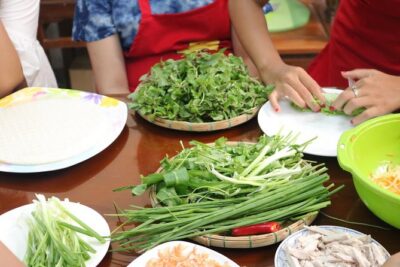
Da Nang Cooking Class with Coffee Tasting and Market Visit
Read our review →
Guided Tour to Marble Mountains & Hoi An Walking Tour , Night Market, Boat Ride
Read our review →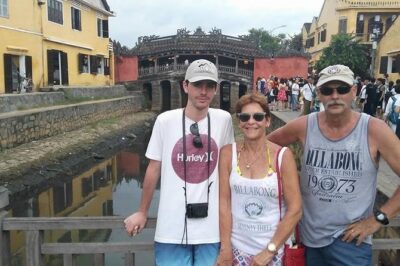
Hoi An Night Market with Hoi an walking Tour , Colourful Lanterns, Boat Ride
Read our review →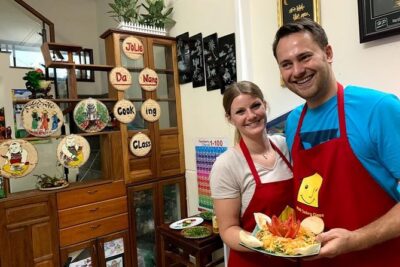
DaNang Farm-to-Table Cooking Class with Market and Coffee Tasting
Read our review →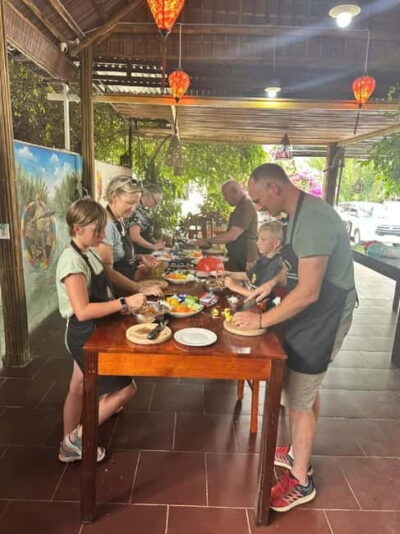
Market Tour, Basket Boat Ride & Cooking Class by Hangcoconut
Read our review →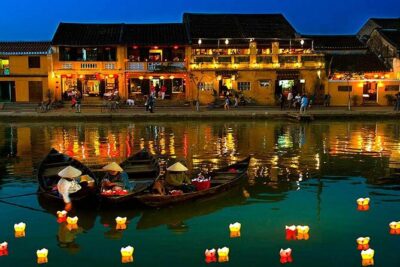
Marble Mountain – Hoi An Colour Lanterns & Night Market from DN
Read our review →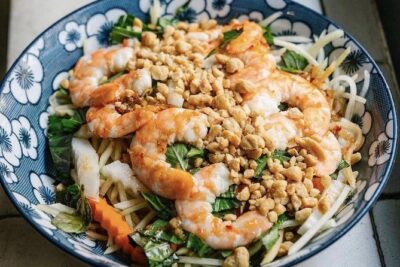
Home Cooking Class: Market, Garden and cooking 4 dishes
Read our review →Browse the lists this tour appears in