
Reviewed · STREET FOOD TOURS IN HANOI
Hanoi Street Food Tour with egg coffee making
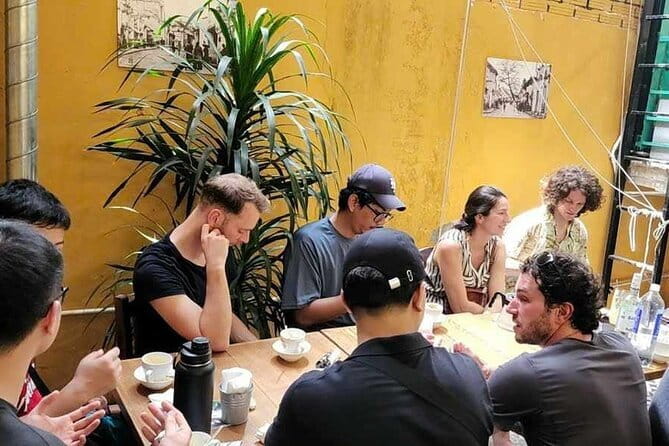
Hanoi tastes best on foot. This four-hour food walk pairs six to seven local dishes with a look at Old Quarter life, a visit to Train Street, and a hands-on egg coffee session. I especially like the wide food mix, from pho and banh mi to spring rolls, grilled pork noodles, sticky rice, and sweet soup. I also like the small group limit of 10, which gives the guide room to answer questions and adjust the pace.
The main consideration is logistics. The tour begins and ends near the Sofitel Legend Metropole Hanoi, and hotel pickup and drop-off are not included, even though pickup may be offered in some booking information. At $40 per person, the price is fair for four hours of guided tasting, but you should budget separately for extra food, drinks, and an optional tip.
In This Review
- Key points to know before booking
- What the $40 price really covers
- Starting near the Sofitel and entering the Old Quarter
- Pho starts the meal with Hanoi’s signature bowl
- Banh mi shows the French influence on Hanoi’s street food
- Nem ran and pho rolls add crunch and freshness
- Grilled pork noodles bring the meal together
- Xôi chè finishes the food portion with a sweet twist
- Train Street adds a visual part to the walk
- Egg coffee making is the strongest finale
- What the guiding adds to the experience
- Who should book this Hanoi food walk
- Timing, group size, and cancellation details
- Should you book the egg coffee tour?
- FAQ
- How much does the Hanoi Street Food Tour with egg coffee making cost?
- How long does the tour last?
- Where does the tour start?
- Where does the tour end?
- Is hotel pickup and drop-off included?
- What food is included?
- Is egg coffee included?
- How large is the group?
- What is the cancellation policy?
Key points to know before booking
- Six to seven Vietnamese dishes: You get a broad sample rather than one long meal, with pho, banh mi, nem ran, pho rolls, grilled pork with noodles, and xôi chè.
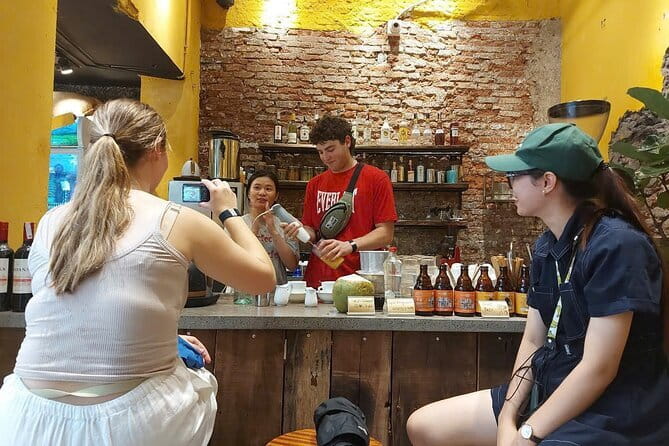
- Egg coffee is the finale: The tour ends at a local café where you learn how Vietnam’s famous egg coffee is made.
- Train Street is part of the city walk: The route adds one of Hanoi’s most talked-about sights to the food stops.
- Small groups help: A maximum of 10 people makes it easier to hear the guide and keep up through the Old Quarter.
- The starting point is central: Meet at 15 Ngo Quyen Street, near the Sofitel Legend Metropole Hanoi, and finish back there.
- Free cancellation has a firm cutoff: Cancel at least 24 hours before the start time for a full refund.
What the $40 price really covers
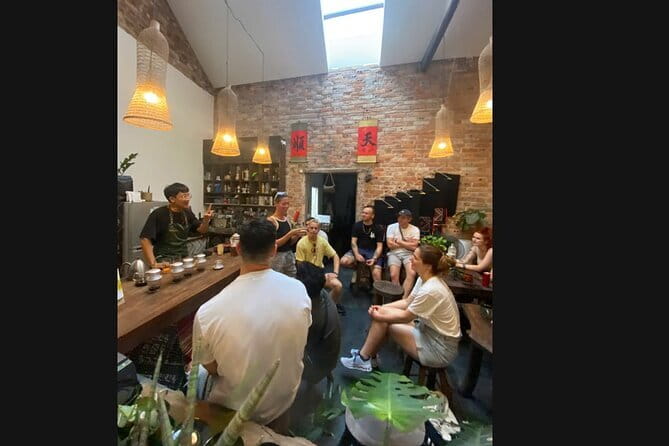
At $40, this is not simply a meal with a guide. You are paying for about four hours of walking, local food tastings, cultural explanation, an English-speaking guide, and coffee or tea at a café. For a first visit to Hanoi, that combination can make the cost worthwhile because you get both a meal and an introduction to how the Old Quarter works.
The food is served across several stops, so you are not choosing one restaurant and sitting in one place. You get a succession of small tastes and dishes, which is a useful way to try foods you might not order on your own. The guide also gives the meal context, explaining more than just what is on the plate.
The package includes six to seven food tastings. It does not include extra food or drinks, personal expenses, or gratuities. Since the tour is built around eating, you may want a light breakfast or lunch beforehand rather than arriving very hungry and expecting a full restaurant-style meal at every stop.
The price also covers coffee or tea at the coffee shop. The egg coffee-making experience is the final food activity, so it gives the tour a clear ending rather than simply stopping after the last savory dish.
More Street Food Tours in Hanoi
- Hanoi: Guided Food Tour with Train Street Visit
★ 4.9 · 6,239 reviews - Small Group Hanoi Street Food Tour with a Real Foodie
★ 5.0 · 4,682 reviews - Hanoi: Street Food Tour with Train Street & Hidden Alleyways
★ 5.0 · 2,831 reviews
Starting near the Sofitel and entering the Old Quarter
The meeting point is outside the Sofitel Legend Metropole Hanoi at 15 Ngo Quyen Street, in the Trang Tien Ward area of Hoan Kiem District. The tour ends at the same meeting point. That makes planning simple if you are staying nearby or can reach the area by public transportation.
Hotel pickup and drop-off are not included, so do not assume a vehicle will collect you from your accommodation. If you are staying elsewhere in Hanoi, allow time to reach Ngo Quyen Street before the start. The meeting point is near public transportation, which helps, but the tour itself is primarily a walking experience.
From there, the route takes you into Hanoi’s Old Quarter. The value of having a guide becomes clear here. Streets can be busy, food stalls may be easy to miss, and the same dish can look different from one vendor to the next. A guide helps turn the walk into a planned food route instead of a random search for something that looks safe and appealing.
The small group limit matters in this setting. With no more than 10 people, you should have a better chance of hearing the guide’s explanations and asking about unfamiliar ingredients. The group still needs to move together through crowded streets, so comfortable shoes and a little patience are sensible.
Pho starts the meal with Hanoi’s signature bowl
The first food is a bowl of traditional pho. It is described with savory broth and tender noodles, giving you the classic introduction to Vietnamese food that most first-time visitors hope to find in Hanoi.
Pho is a useful starting point because it shows how much flavor can come from a simple-looking bowl. The broth, noodles, and toppings need to work together, and the guide can explain what makes this dish part of everyday Vietnamese eating. You are not just checking pho off a list. You are beginning with one of the foods that best represents Hanoi.
The practical point is portion control. This is a tasting tour with several more dishes ahead, so enjoy the bowl without assuming it is the only course. If you have dietary restrictions, tell the guide before the tour begins. The available information confirms that one guide adapted the route for a participant, so it is worth raising food concerns early rather than waiting until a dish arrives.
Banh mi shows the French influence on Hanoi’s street food
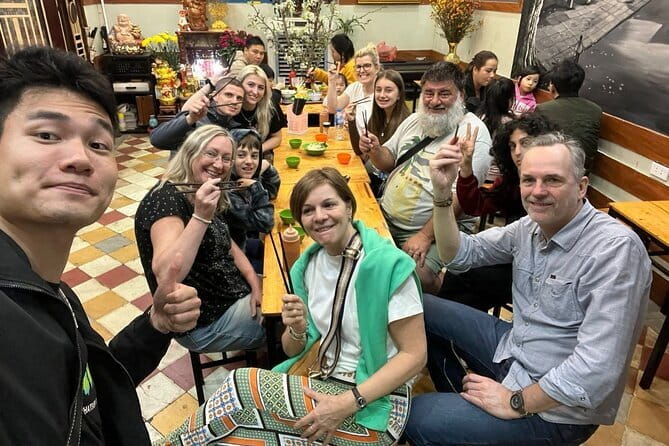
Next comes banh mi, served in a crisp baguette with pate, grilled meats, and sausage. It is a compact sandwich, but the combination gives you several textures at once: crunchy bread, savory fillings, and softer meat.
This is one of the tour’s more familiar stops for many people, yet it is still useful because the Vietnamese version is not simply a French sandwich copied into a different country. The fillings and seasoning make it its own street food. You can compare it with the pho that came before it and see how Vietnamese cooking uses bread, meat, pickled elements, and herbs in a different balance.
Because banh mi can be filling, you may want to share or eat slowly if the group is offered full portions. The tour promises six to seven dishes, not merely samples of two foods, so pacing yourself is part of the strategy.
More street food walks in Hanoi:
- Hanoi: Guided Street Food Tour with Train Street Experience
★ 4.9 · 2,479 reviews - [HOT] Hanoi Old Quarter Walking Street Food – Small Group Tour
★ 5.0 · 2,163 reviews - Hanoi Street Food Tour with local delicacies
★ 5.0 · 1,506 reviews - Hanoi Coffee Workshop: Taste Salt, Coconut and Egg Coffee
★ 5.0 · 1,286 reviews
Nem ran and pho rolls add crunch and freshness
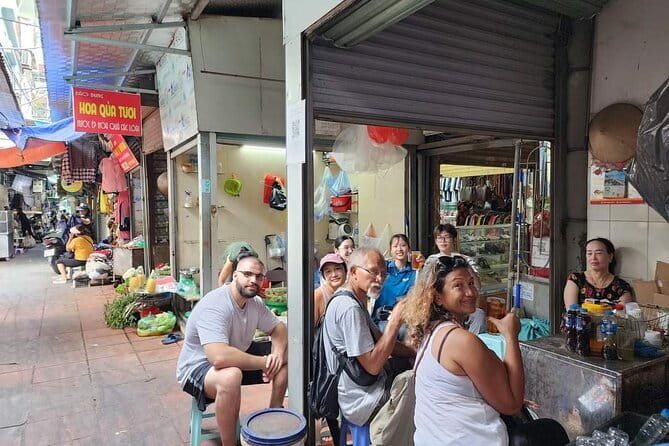
The tour then brings in nem ran, or fried spring rolls, along with pho rolls. These dishes give the meal a welcome change from soup and bread.
Nem ran supplies the crisp, fried side of the tasting. Pho rolls provide a different format, using the familiar pho idea in a roll rather than a bowl. Together, they show how Vietnamese food can shift between soft, crunchy, fresh, and fried textures without losing its balance.
This is also where a guide can help you understand the food beyond its name. You can ask how the dishes are eaten, what sauces go with them, and how they fit into ordinary local meals. The direct food information provided for this tour does not list every ingredient in the rolls, so anyone with allergies should ask the guide before trying them.
Grilled pork noodles bring the meal together
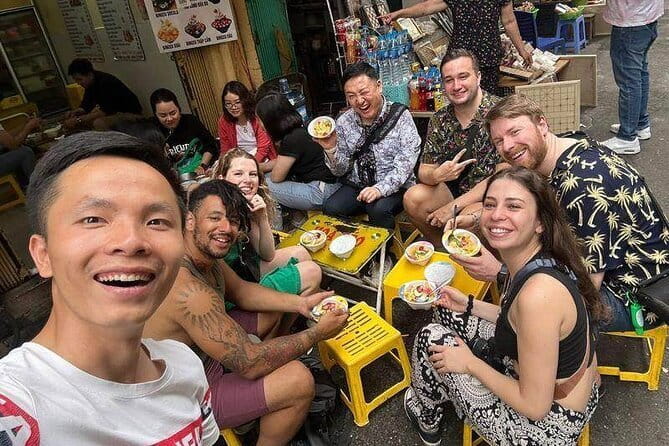
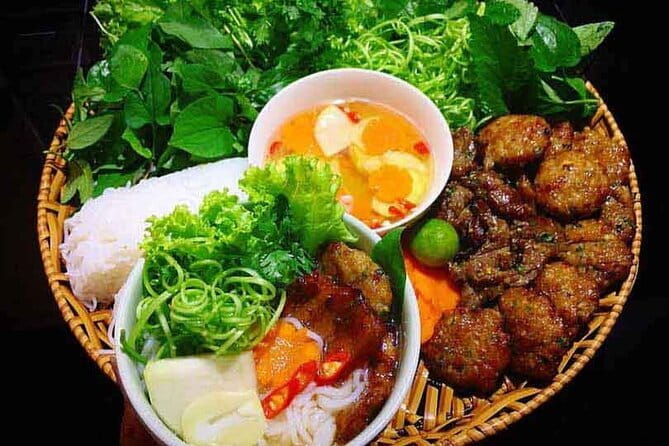
One of the most substantial stops features grilled fatty pork with rice noodles, fresh herbs, pickled carrots, green papaya, and a flavorful dipping sauce. This combination gives you the sweet, salty, fresh, sour, and smoky notes that make Vietnamese noodle dishes so satisfying.
The fatty pork is the main savory element, while the herbs and pickled vegetables keep the plate from feeling too heavy. Rice noodles add softness, and the dipping sauce pulls the parts together. For me, this is the dish that best explains why Vietnamese meals often feel generous without being needlessly rich or heavy.
You should mix the components rather than treating them as separate items. Try a little pork with noodles, then add herbs and pickled vegetables. The contrast is the point. If you prefer mild flavors, take care with the sauce until you know how strong it is.
The tour does not promise a sit-down restaurant setting at each stop. That is part of its appeal, but it also means the pace and seating may vary. Choose practical clothing and shoes, and expect to eat in the rhythm of the street rather than at a long, leisurely table.
Xôi chè finishes the food portion with a sweet twist
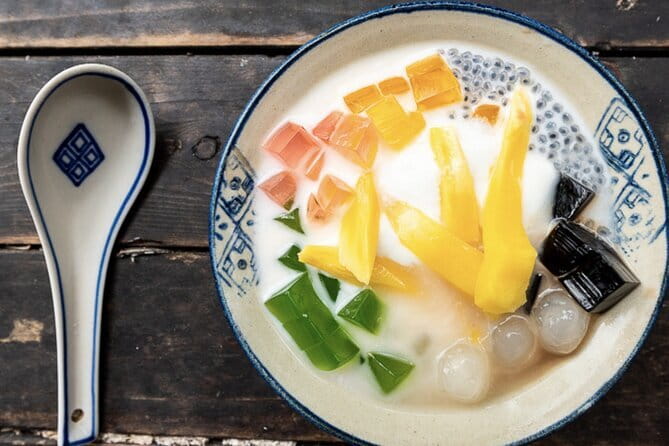
For dessert, you get xôi chè, described as a mix of savory sticky rice and sweet dessert soups. It is a distinctive finish because it does not resemble the standard Western idea of dessert.
Sticky rice gives the dish substance and a gentle savory note. The sweet soup adds a softer, sweeter element. If you usually finish a meal with pastry or fruit, this may be one of the more unfamiliar tastes on the route, which is exactly why it earns a place on a local food walk.
The dessert also helps round out the tour. You have moved through broth, bread, fried foods, noodles, meat, herbs, and pickled vegetables. Xôi chè gives you a final change in flavor and texture before the coffee activity.
Train Street adds a visual part to the walk
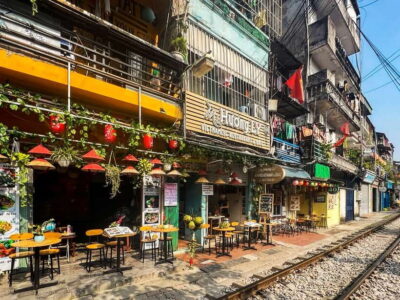
The route includes a visit to Train Street, one of Hanoi’s best-known Old Quarter sights. This section gives the tour more range than a food crawl alone. You are not only moving from one plate to another; you are also seeing a distinctive part of the city’s daily setting.
The supplied details do not specify how long the group stays there or the exact viewing point. I would treat it as one stop within the larger four-hour walk, not as a separate guided railway tour. Follow the guide’s instructions closely and stay with the group, particularly in a narrow or crowded area.
The Old Quarter route also includes local streets, markets, an old gate, and, according to the tour experience described by participants, an old Vietnamese house. Those elements are useful because they connect the food to the neighborhoods where it is eaten. The cultural side is not a separate museum lecture. It comes through while you walk, eat, and ask questions.
Egg coffee making is the strongest finale
The final activity takes place at a local café, described as a hidden café shop, where you learn to make Vietnam’s famous egg coffee. This is more memorable than simply ordering a cup and taking a photograph.
Egg coffee is a Hanoi specialty, and the making session gives you a practical look at how the drink becomes creamy and dessert-like. You get coffee or tea at the café, and the activity is presented as a hands-on experience rather than only a demonstration. The available details do not list the exact ingredients, preparation time, or whether each person makes an entire serving, so you should ask the guide if that matters to you.
This ending works well because it slows the tour down after the street walk. You finish in a café rather than rushing straight back to the meeting point. It is also a good moment to ask the guide about other foods, neighborhoods, or cafés to try during the rest of your stay.
Several guides are praised by name for friendly service and clear English, including Summer, Alice, Tina, Quynh, Huong, Thom, Linh, and others. The strongest pattern is not one particular guide, but the personal attention: guides explained the city, adjusted the food route when needed, and kept a slower walker comfortable. Guide assignments can change, so you should not book solely to meet a specific person.
What the guiding adds to the experience
The best reason to choose this tour is the combination of food and explanation. You can find pho, banh mi, and egg coffee on your own, but finding a varied route and understanding what you are eating takes more effort.
The guide also gives you a way into Hanoi beyond the obvious sights. The tour includes food, markets, an old gate, an old Vietnamese house, and Train Street. That mix helps you see how the Old Quarter functions as a lived-in part of the city, not only as a sightseeing zone.
English is the tour language, and the guides are described as friendly with strong English skills. A four-hour walk gives enough time for questions, but remember that a maximum group of 10 still means the guide must balance several interests. If you want a private, highly customized culinary lesson, this may feel too structured. If you want a social introduction with a clear route, it fits better.
Who should book this Hanoi food walk
I would recommend it to first-time visitors who want to try several Vietnamese foods without guessing where to go. It also suits people who enjoy walking, short cultural stops, and conversation with a local guide.
It is a good choice for anyone curious about egg coffee, especially if simply ordering one at a café does not feel like enough. The making session gives the drink a story and a process, not just a taste.
The tour may be less suitable if you want a long restaurant meal, hotel transportation, or a quiet itinerary with minimal walking. It is also not ideal for someone who dislikes trying unfamiliar foods. The route includes fried dishes, fatty pork, herbs, pickled vegetables, sticky rice, and sweet soup, so variety is central to the experience.
Most people can participate, and the activity is near public transportation. Still, anyone who walks slowly should tell the guide at the beginning. One guide was specifically praised for showing patience with a slow walker, which suggests that communicating your pace can improve the experience.
Timing, group size, and cancellation details
The tour lasts about four hours and has a maximum of 10 participants. That is long enough for a proper food route, but short enough to fit into a day of sightseeing in Hanoi.
Pickup may appear as an available feature, but hotel pickup and drop-off are listed as not included. The reliable plan is to meet at the Sofitel Legend Metropole Hanoi and return there.
You receive booking confirmation at the time of reservation. Free cancellation applies if you cancel at least 24 hours before the start time. Cancel within 24 hours, or request a change inside that period, and you should expect no refund.
Should you book the egg coffee tour?
Book it if you want an easy first taste of Hanoi’s food culture, with a local guide, a small group, and enough dishes to make the $40 worthwhile. The strongest features are the varied menu, the Old Quarter walking route, and the egg coffee-making finale.
Skip it if you want hotel transport included, a private experience, or a traditional sit-down meal from start to finish. For most visitors who can meet at the central starting point and enjoy walking between food stops, Piu Piu Travel’s tour offers a practical and flavorful introduction to Hanoi.
FAQ
How much does the Hanoi Street Food Tour with egg coffee making cost?
The tour costs $40 per person.
How long does the tour last?
The experience lasts approximately four hours.
Where does the tour start?
It starts at the Sofitel Legend Metropole Hanoi, 15 Ngo Quyen Street, Trang Tien Ward, Hoan Kiem District, Hanoi.
Where does the tour end?
The activity ends back at the same meeting point.
Is hotel pickup and drop-off included?
No. Hotel pickup and drop-off are listed as not included. The meeting point is near public transportation.
What food is included?
The tour includes six to seven street food tastings, including pho, banh mi, nem ran, pho rolls, grilled pork with rice noodles, and xôi chè.
Is egg coffee included?
The tour ends with egg coffee making at a local café. Coffee or tea at the coffee shop is included.
How large is the group?
The activity has a maximum of 10 participants.
What is the cancellation policy?
You can cancel at least 24 hours before the start time for a full refund. Cancellations or changes made within 24 hours are not accepted for a refund.
More Food Tours in Hanoi
- Hanoi Jeep Tour: Food, Culture and Fun by Vietnam Army Jeep
★ 5.0 · 15,222 reviews - Hanoi Motorbike Tour: Food, Culture and Fun by Vintage Motorbike
★ 5.0 · 6,699 reviews - Hanoi Half-day with Food + Fun + Culture By Russian Jeep
★ 5.0 · 1,243 reviews - Hanoi: Small-Group Street Food Walking Tour
★ 4.8 · 1,165 reviews
More Coffee Experiences in Hanoi
- Hanoi Coffee Experience: 6 Brews, 9 Recipes & 3 Liquor Tastings
★ 5.0 · 2,945 reviews - Hanoi: Salt Coffee Workshop Awake Your Senses With 6 Brews
★ 5.0 · 792 reviews - Hanoi: Vietnamese Street Food Tour with Egg Coffee
★ 4.9 · 315 reviews - Hanoi Cooking Class: Pho/Bun Cha/Banh Xeo…+Free Egg/Salt Coffee
★ 5.0 · 267 reviews
New around Hanoi
- Private LUXURY Hanoi City Full day guided tour★ 4.5 · 21 reviews
- Private transfer between Hanoi and Sapa★ 5.0 · 27 reviews
- Private Transfer Hanoi <=> Mai Chau One Way (Free hotel pickup)★ 5.0 · 22 reviews
- Private Transfer from Ninh Binh to Halong or Halong to Ninh Binh★ 5.0 · 21 reviews
- Private Transfers Hanoi <=> Halong One Way (Free Hotel Pickup)★ 5.0 · 31 reviews
- Hanoi Airport See-off (Private Ride from Hotels to Hanoi Airport)★ 4.5 · 70 reviews
- Thang Long Water Puppet Theater★ 4.5 · 45 reviews
- Private transfer Ninh Binh <=> Halong One Way (Free Hotel Pickup)★ 5.0 · 21 reviews
Street Food Tours in Hanoi, compared.
Small Group Hanoi Street Food Tour with a Real Foodie
Read our review →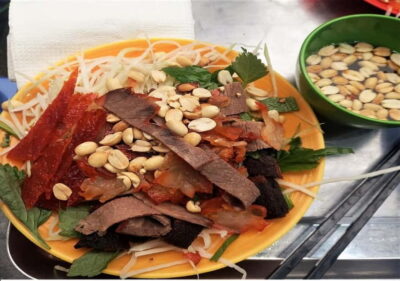
Street Food Tour with Train Street & Hidden Alleyways
Read our review →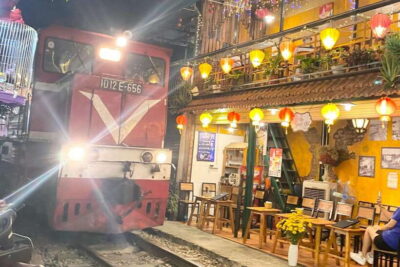
Guided Street Food Tour with Train Street Experience
Read our review →![[HOT] Hanoi Old Quarter Walking Street Food – Small Group Tour](https://i3.thevietnamexplorer.com/wp-content/uploads/hot-hanoi-old-quarter-walking-street-food-small-group-tour-400x267.jpg)
[HOT] Hanoi Old Quarter Walking Street Food – Small Group Tour
Read our review →
Hanoi Coffee Workshop: Taste Salt, Coconut and Egg Coffee
Read our review →
Browse the lists this tour appears in