
Reviewed · HOI AN TOURS
Hoi An: Vietnamese Coffee Culture and Coffee Making Class
Coffee tells Vietnam’s story. This two-hour Hoi An workshop makes that story delicious, practical, and easy to remember. I especially like the hands-on format, where you prepare the drinks yourself instead of only watching a demonstration. I also like the warm family feel, humorous guides such as Tan and Le, and the chance to learn recipes you can repeat at home.
The main thing to consider is the caffeine. The detailed program describes four coffee styles, while the session itself is commonly presented as five: black coffee, white coffee, Hue Imperial salt coffee, coconut coffee, and Hanoi egg coffee. That is excellent value for coffee lovers, but you may want to eat first or choose a morning time if caffeine affects you.
In This Review
- Key points before you book
- A friendly start under the silk lanterns
- Vietnam’s coffee story before the first brew
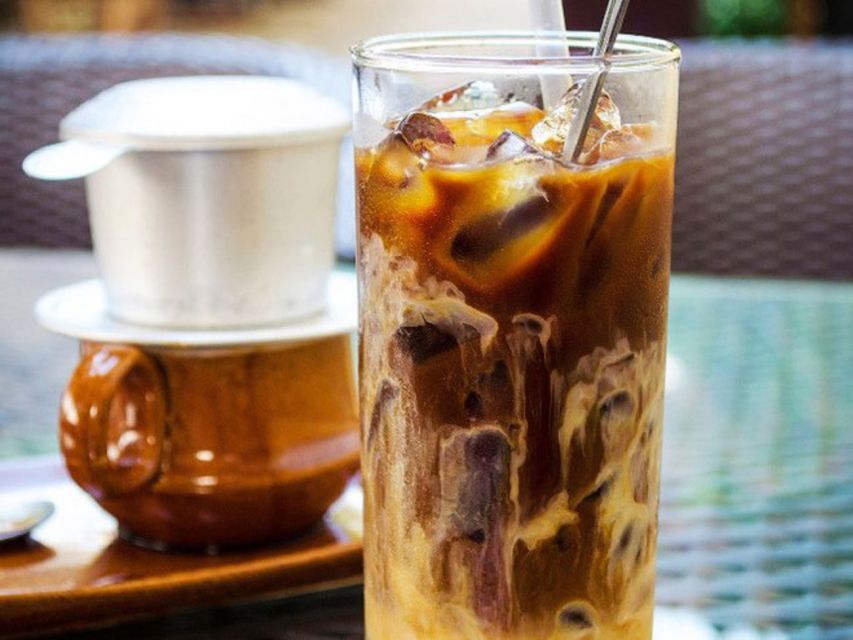
- Learning to use the small metal Phin
- The five cups you are likely to make
- Black Vietnamese coffee
- White coffee with condensed milk
- Hue Imperial salt coffee
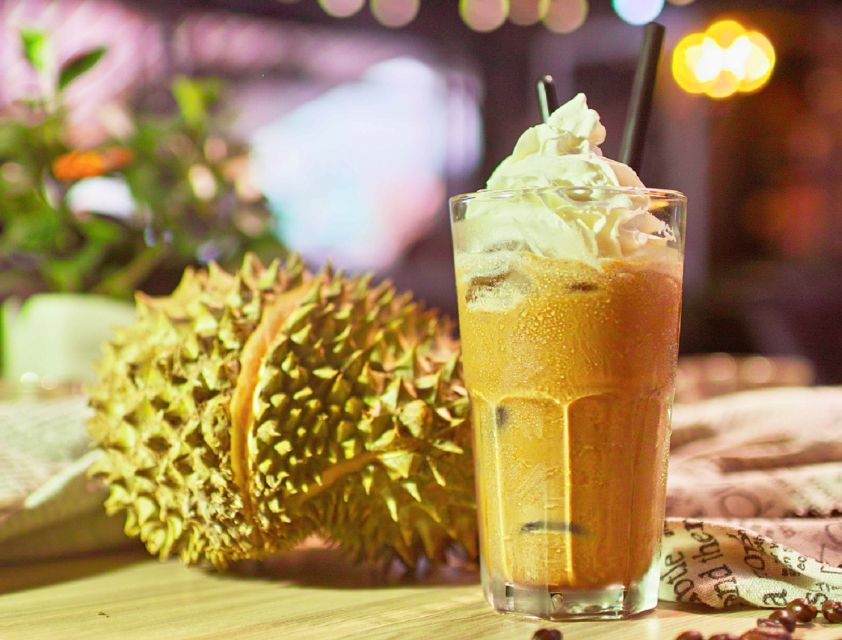
- Coconut coffee
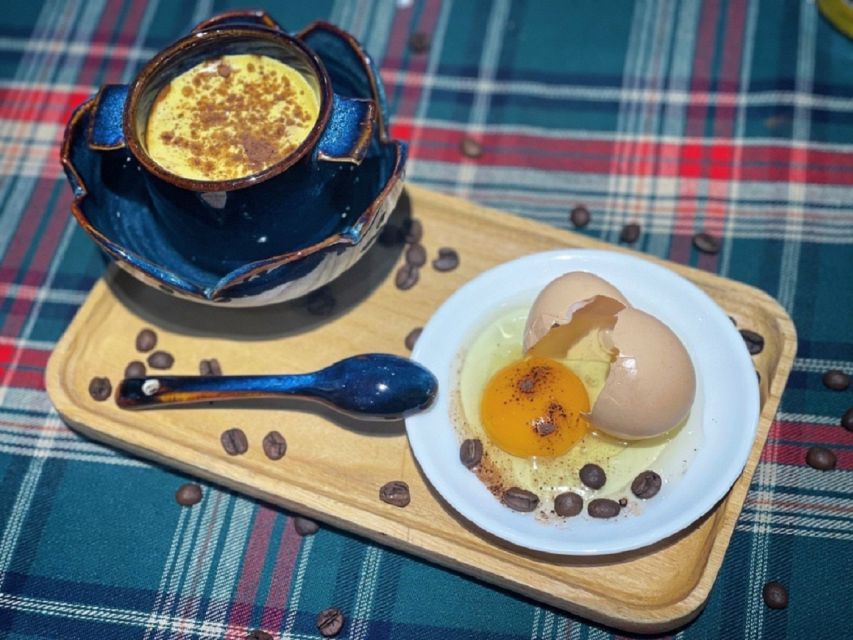
- Hanoi egg coffee
- What the atmosphere adds
- Tasting all the coffee you make
- Is $14 a good deal in Hoi An?
- Who will enjoy this class most?
- My verdict on the Hoi An coffee workshop
- FAQ
- How long does the Hoi An coffee class last?
- How much does the experience cost?
- How many coffee styles will I make?
- Is hotel pickup included?
- What is a Phin?
- Is coffee included in the price?
- Is the class taught in English?
- How large is the group?
- Is the workshop wheelchair accessible?
- Can I cancel for a full refund?
Key points before you book

- Five Vietnamese coffee styles in practice: Prepare black, white, salt, coconut, and Hanoi egg coffee during the workshop.
- A family-run setting: Tan, Le, and their relatives bring humor, music, and stories about the family coffee business.
- From crop to cup: Learn how Vietnamese coffee is grown, roasted, brewed, and paired with condensed milk or other ingredients.
- The Phin filter is the star tool: See how this small metal filter creates Vietnam’s slow, strong coffee style.
- Recipes and a possible take-home gift: You may receive recipe notes and a small Phin filter so the class continues in your own kitchen.
- Good value at $14: The price includes the class, ingredients, coffee, tea, cookies, and a local English-speaking guide.
A friendly start under the silk lanterns
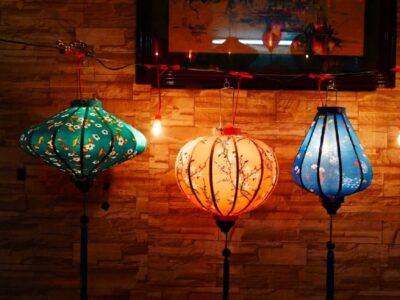
The workshop is easy to spot. Look for the venue decorated with silk lanterns and a board reading COFFEE MAKING WORKSHOP. There is no hotel pickup, so you make your own way there, but that keeps this short activity simple and inexpensive.
The class lasts about two hours and is limited to 10 people. That small group size matters. You can see the demonstrations, ask questions, and work at a comfortable pace without feeling lost in a crowd.
Your introduction begins with Vietnamese herbal tea. It is a pleasant change from starting with another coffee, and it gives the guides a moment to settle everyone in. The mood is relaxed from the start, with music and plenty of joking among the family members who run the workshop.
Tan and Le are often singled out for their playful style. The humor is not just decoration. It helps the class feel social, especially if you arrive alone or are meeting other people during your Hoi An stay. You will still learn practical information, but the lesson does not feel like a formal lecture.
A few more Hoi An runs to compare on price
- Early Morning My Son Sanctuary Trip w. Champa Food & Coffee
★ 5.0 · 629 reviews - Vietnamese Culture and Coffee Making Class
★ 5.0 · 497 reviews - Hoi An: My Son Early Morning with Banh My and Coffee 6 am
★ 4.7 · 205 reviews
Vietnam’s coffee story before the first brew
Before you begin mixing ingredients, the instructor explains how coffee became part of Vietnamese life. The class connects cafés with the country’s past and shows why coffee is more than a morning drink in Vietnam.
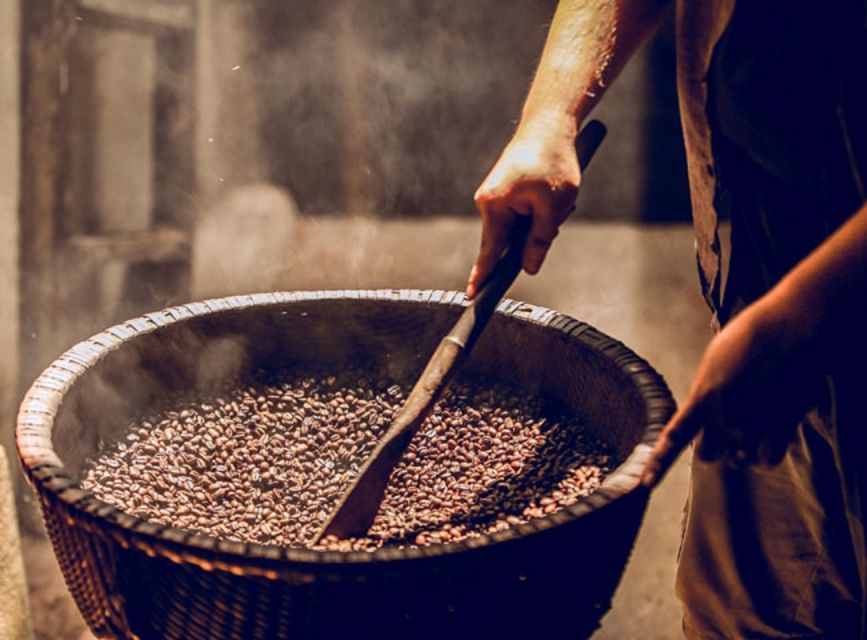
The useful part is the crop-to-cup explanation. You learn about the beans, the roasting process, and the very dark roast that works so well with sweet condensed milk. The aim is not to turn you into a coffee farmer or professional barista. Instead, you leave with a clearer sense of why Vietnamese coffee tastes so forceful, sweet, and smooth at the same time.
The guides also explain how the coffee business connects with their own family. Coffee used by the class comes from a family business, and several accounts describe a link to the grandfather’s farm. That personal connection gives the lesson a stronger sense of place than a generic cooking demonstration.
I like this section because it answers questions you may have while sitting in a Hoi An café. Why does the coffee take so long? Why does the drink taste so concentrated? Why is condensed milk so common? Once you understand the process, a slow cup made with a Phin feels less like a delay and more like the point.
Learning to use the small metal Phin
The Phin is a compact metal filter used to brew Vietnamese coffee. It is not quite the same as a French press, but the workshop describes it as a related style of brewing. You add the coffee, place the filter over your cup, and allow the liquid to pass through slowly.
This is the skill you will use most often after the class. The equipment is small, inexpensive, and easy to pack. You do not need an espresso machine or a complicated kitchen setup to recreate the basic drink.
The method also teaches patience. The coffee drips rather than pours, and the concentrated result forms the base for several drinks. You will see how the same coffee can change character when combined with ice, condensed milk, salt, coconut, or egg.
The class supplies the tools and ingredients, so you can focus on the steps. The guides demonstrate each part, then let you prepare your own cup. That hands-on approach is important. You are not just tasting finished drinks and trying to remember what happened later.
The five cups you are likely to make
The activity information refers to four coffee styles, but the actual sequence described in detail includes five. Expect some variation in how the drinks are grouped or presented, but the familiar lineup is black coffee, white coffee, Hue Imperial salt coffee, coconut coffee, and Hanoi egg coffee.
Same city, a very different kind of morning:
- Hoi An: Basket Boat Ride in the Coconut Forest
★ 4.9 · 4,956 reviews - Hoi An: Vietnamese Foldable Lantern Making Class
★ 4.9 · 3,742 reviews - Cooking Class Hoi An:Local Market, Basket Boat, Fishing & Cooking
★ 5.0 · 3,660 reviews - Hoi An Cooking Class(Market,BasketBoat Crabfishing&Cooking Class)
★ 5.0 · 3,386 reviews
Black Vietnamese coffee
Black coffee is the clearest way to taste the roasted beans and the Phin method. Without milk or extra flavoring, you get the most direct look at the coffee itself.
This is a good first cup because it gives you a reference point. Later, you can compare how the other ingredients soften, sweeten, or change the same coffee base.
White coffee with condensed milk
Vietnamese white coffee combines strong brewed coffee with sweet condensed milk. The contrast is the classic Vietnamese café experience: bold coffee balanced by a thick, sugary sweetness.
The class explains how the dark roast is chosen to work with the milk. That is useful if you plan to make it at home. A milder coffee may get lost beside condensed milk, while the traditional dark brew keeps its presence.
You prepare the drink yourself, so you can see how the balance changes with the amount of milk. That small lesson is more useful than a fixed sample poured by someone else.
Hue Imperial salt coffee
Salt coffee is one of the class’s most memorable recipes. The salt is not there to make the drink taste salty. It helps shape the flavor and gives the coffee a different balance from the usual sweet milk version.
This is the kind of drink that makes the workshop worth doing even if you already drink Vietnamese coffee in cafés. You may have seen salt coffee on a menu in central Vietnam, but making it yourself gives you a better idea of how the flavor is built.
Coconut coffee
Coconut coffee brings a cooler, sweeter profile to the tasting. It is a useful contrast after the intense black and condensed milk coffees.
The coconut version also shows how Vietnamese cafés adapt coffee into something closer to a dessert drink. You learn a recipe that can be served cold and shared with friends, making it one of the easier workshop ideas to recreate at home.
Hanoi egg coffee
Egg coffee is the most talked-about preparation in the class. You learn to make the creamy egg mixture that sits with the coffee and creates a thick, dessert-like drink.
The workshop explains why egg coffee takes time to prepare. That detail changes how you view the drink when you order one in Hanoi or elsewhere in Vietnam. It is not simply coffee with an egg dropped into it.
Egg coffee can be especially fun for people who are unsure about trying it in a café. Here, you see the ingredients and preparation clearly, then taste the result in a relaxed setting. The caution is simple: the class includes a lot of coffee, and egg coffee is one more cup in an already full tasting.
What the atmosphere adds
The setting is comfortable rather than formal. Music plays while you work, and the guides keep the group talking and laughing. That social tone is one of the strongest parts of the experience.
I would choose this class if you want an activity that works for couples, friends, solo visitors, or a small family group. You do not need advanced cooking skills. The guides demonstrate the technique, explain the background, and help you along as you prepare each drink.
The family-run character also gives the class a personal touch. You hear about the people behind the coffee, not just a list of ingredients. The result feels closer to being welcomed into a local café tradition than attending a technical barista course.
There is a tradeoff. The humor and group interaction are central to the experience, so you should not expect a silent, highly focused workshop. If you want a serious lesson in professional coffee extraction, this is probably too light. If you want culture, tasting, and a few useful recipes, the balance works well.
Tasting all the coffee you make
At the end, you drink the coffee you prepared with a cookie. That final snack matters more than it sounds. After several strong drinks, the cookie gives you something plain and sweet to enjoy between sips.
You should plan for a substantial amount of caffeine. Several people advise eating before the class, especially if you are sensitive to coffee. I would also avoid booking it late in the day if coffee tends to keep you awake.
Some sessions may produce small tasting portions, but the overall amount is still enough to affect you. This is not a single-cup tasting. You are making and trying several recipes, which is why the activity feels generous for the price.
The class also appears to provide recipes for home use. A number of participants describe receiving a recipe card or taking a photograph of the recipes. A small Phin filter is also described as a take-home gift in some sessions. Since the formal inclusions list the class, tools, ingredients, drinks, tea, cookies, and guide rather than guaranteeing a souvenir, treat the filter as a welcome extra rather than the main reason to book.
Is $14 a good deal in Hoi An?
At $14 per person, the value is strong. You receive two hours of instruction, several drinks, ingredients, equipment, tea, a cookie, and an English-speaking local guide.
A normal café visit may give you one Vietnamese coffee. This workshop gives you a set of recipes plus the method behind them. You also get the social part of meeting a small group and hearing stories connected to the family business.
The value is highest if you actually use what you learn. A recipe card and a Phin filter can turn the experience into several future cups at home. Even without the souvenir, understanding the brewing process helps you order with more confidence during the rest of your time in Vietnam.
The price does not include transportation. That is not a serious problem in Hoi An, but you need to allow time to reach the lantern-decorated venue yourself. Check the start time when booking, since the two-hour activity may run at different times.
Free cancellation up to 24 hours before the start and the reserve-now, pay-later option make it easier to fit the class around weather, day trips, and changing plans.
Who will enjoy this class most?
I would recommend it to coffee drinkers who want more than a quick café stop. It is also a good choice for anyone looking for a short indoor activity in Hoi An, especially when you want a break from sightseeing.
You will get the most from it if you enjoy:
- Learning by doing
- Trying sweet and unusual coffee drinks
- Meeting people in a small group
- Hearing local stories
- Recreating food and drink at home
- Light humor and a relaxed teaching style
You do not need to be a coffee expert. Beginners can follow the demonstrations, while regular coffee drinkers will appreciate the differences between the five recipes.
People who avoid caffeine should think carefully before booking. The same applies if you dislike very sweet drinks, although the chance to adjust ingredients may help. The activity is wheelchair accessible, and instruction is available in English and Vietnamese, with an English audio guide included.
The stated restriction says the experience is not suitable for people over 95. That is an unusually specific limit, but it is worth noting if it applies to someone in your group.
My verdict on the Hoi An coffee workshop
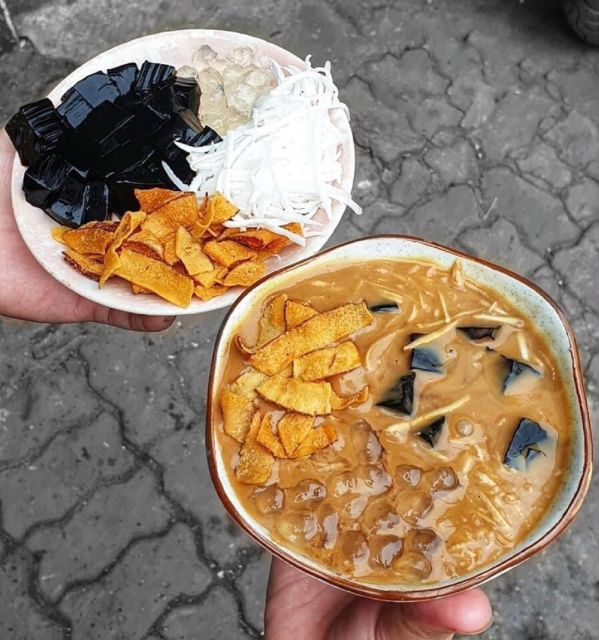
I would book this class if you want an affordable, cheerful way to understand one of Vietnam’s most important café traditions. The best parts are the five practical recipes, the Phin technique, the family stories, and the guides’ easy humor.
I would skip it only if you do not tolerate caffeine, dislike group activities, or want a formal professional barista course. For most visitors, $14 buys far more than a drink. You get a cultural lesson, a tasting session, and skills you can carry into the rest of your trip and back home.
FAQ
How long does the Hoi An coffee class last?
The class lasts two hours.
How much does the experience cost?
The listed price is $14 per person.
How many coffee styles will I make?
The detailed class description lists black coffee, white coffee, Hue Imperial salt coffee, coconut coffee, and Hanoi egg coffee, making five preparations. The activity summary refers to four styles, so the exact presentation may vary.
Is hotel pickup included?
No. Hotel pickup and drop-off are not included.
What is a Phin?
A Phin is a small Vietnamese metal coffee filter used to brew coffee slowly into a cup.
Is coffee included in the price?
Yes. Coffee, Vietnamese tea, cookies, ingredients, tools, and the coffee-making class are included.
Is the class taught in English?
Yes. The instructors speak English and Vietnamese, and an English audio guide is included.
How large is the group?
The activity is described as a small group limited to 10 participants.
Is the workshop wheelchair accessible?
Yes. The activity is listed as wheelchair accessible.
Can I cancel for a full refund?
Yes. You can cancel up to 24 hours in advance for a full refund. The reserve-now, pay-later option is also available.
New around Hoi An
- Snorkeling Cham Island: Snorkeling Tour by Speed Boat★ 3.6 · 26 reviews
- Thanh Ha Village: Pottery Workshop with Locals★ 4.4 · 223 reviews
- Romantic Sunset Dinner Cruise in Hoi An★ 4.7 · 108 reviews
- Hoi An: Rural Cycling Tour to Village with Basket Boat Ride★ 5.0 · 174 reviews
- Private Car Hoi An to Hue Via Hai Van Pass, Lagoon & More★ 5.0 · 22 reviews
- From Hoi An: Day Tour of My Son Temples and Marble Mountain★ 4.8 · 44 reviews
- Market Tour – Cooking Class – Coconut Boat Riding★ 4.4 · 43 reviews
- Mad Monkey Hoi An Pub Craw★ 4.2 · 25 reviews
Hoi An Tours, compared.

Cooking Class Hoi An:Local Market, Basket Boat, Fishing & Cooking
Read our review →
Hoi An Cooking Class(Market,BasketBoat Crabfishing&Cooking Class)
Read our review →
My Son Sanctuary Early Morning w. Champa Food Brunch
Read our review →
Hoi An/ Da Nang – Ba Na Hills – Golden Bridge Deluxe Small group
Read our review →
Market Tour, Basket Boat Ride and Cooking Class
Read our review →
Hoi An Full Lantern Making Class- A special Foldable lantern
Read our review →Browse the lists this tour appears in