Reviewed · HANOI TOURS
Incense, Hat Villages Tour/Traditional Crafts with Options
Craft villages reward curiosity. This Hanoi outing brings you close to working artisans, from silk weaving and bamboo hats to lacquer, pottery, and incense. I especially like the chance to paint your own conical hat and the striking sight of thousands of red incense sticks drying at Quang Phu Cau. The main drawback is the driving time, and some stops may feel hurried if you choose the full-day route.
The tour is also unusually good value at $12 per person, with hotel pickup in Hanoi’s Old Quarter, an English-speaking guide, entrance fees, water, and a conical hat included. Guides such as Louise, also called Lulu, Eric, Lana, and Mr. QA have earned praise for clear explanations, humor, and careful organization. If you want polished museums, this is not your day. If you want workshops, village streets, and useful souvenirs, it is a strong choice.
In This Review
- Key points to know before you go
- Why this craft tour is worth your time
- Quang Phu Cau and the red incense fields
- Making and painting a Chuong village Non La
- Ha Thai and the patient work of lacquer
- Bat Trang pottery, clay, and a market full of choices
- Van Phuc and Vietnam’s silk tradition
- Timing, transport, and the choice between half-day and full-day
- What the $12 price really includes
- Who should book this experience?
- Final verdict: a low-cost route into local craft life
- FAQ
- Where does the tour pick up in Hanoi?
- How long does the experience last?
- Is lunch included?
- Which villages are visited?
- Can I make my own souvenir?
- Is the tour conducted in English?
- Is hotel transportation included?
- What should I bring?
- Can I cancel the booking?
Key points to know before you go
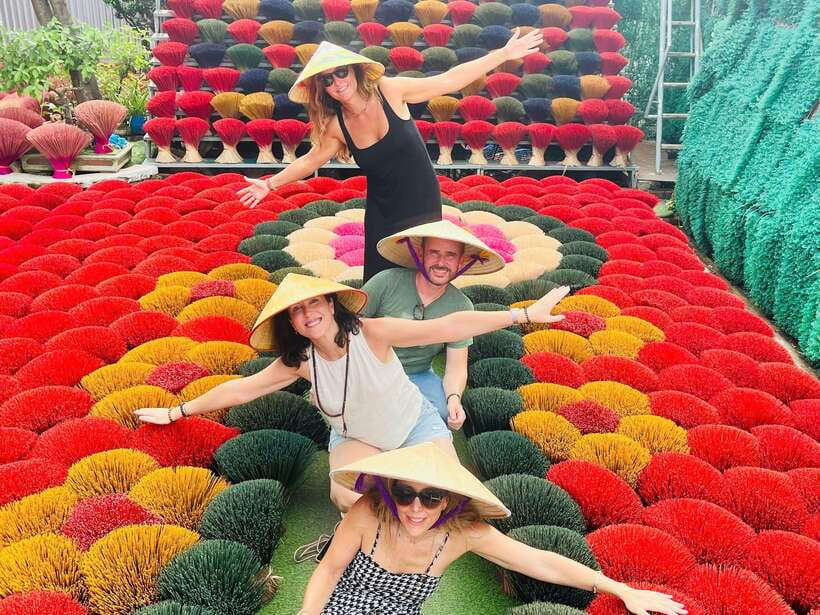
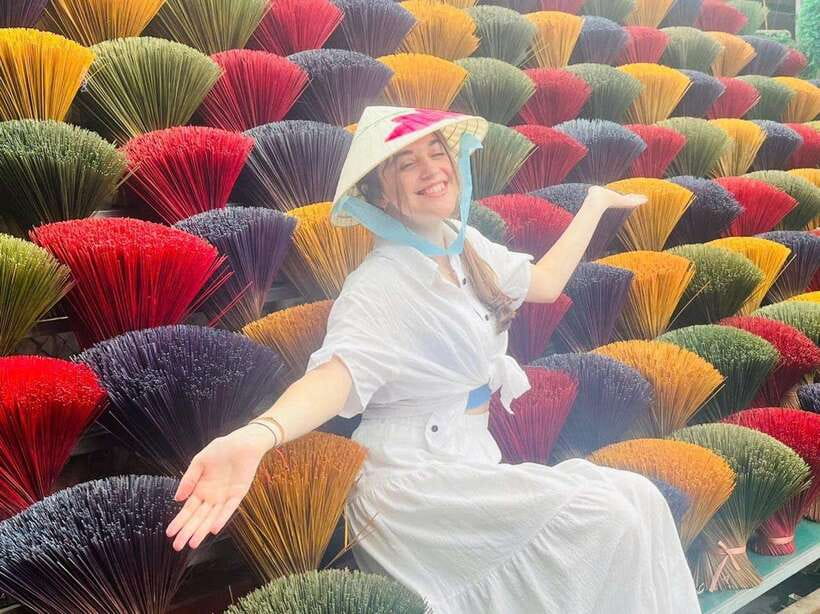
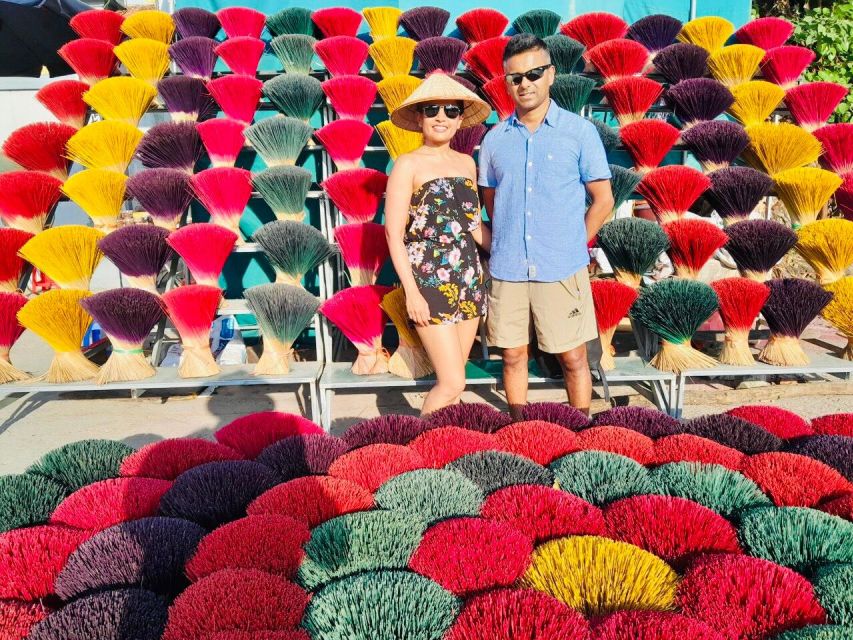
- Quang Phu Cau is the photographic star: Red incense bundles spread across courtyards make memorable pictures, but the stop is more about observation and local production than a long formal class.
- The conical-hat workshop is the hands-on highlight: You can decorate a Non La, and one hat per person is included.
- Five craft traditions fit into one packed day: Silk, hats, lacquer, pottery, and incense each reveal a different part of northern Vietnamese work.
- Bat Trang adds a take-home activity: You can shape your own ceramic item and browse a large market of bowls, vases, and home décor.
- The $12 price covers the basics: Pickup, drop-off, guide, water, entrance fees, and a hat are included. A full-day option also includes a home-cooked lunch.
- Expect walking and road time: Comfortable shoes matter, and the half-day version does not include lunch.
Why this craft tour is worth your time
Hanoi offers plenty of temples and food tours, but the surrounding villages show how everyday objects are made. A silk scarf, conical hat, lacquer tray, incense bundle, or ceramic bowl carries a story of patient handwork and family trade.
I like this experience because it does not stop at a shop doorway. You are shown parts of the process: weaving on wooden looms, shaping clay, preparing bamboo, layering lacquer, and bundling incense sticks. The workshops are practical, not theatrical. You may also get to try your hand at the work, which turns a sightseeing stop into a personal souvenir.
The price is a major part of the appeal. At $12, the basic package costs little more than a simple meal in Hanoi, yet includes transport from the Old Quarter, a guide, several entrance fees, a water bottle, and one conical hat. Personal purchases, drinks, and a lacquer piece for painting are extra, so do not mistake the low price for an all-inclusive shopping trip.
There are two things to clarify before booking. The experience is offered in half-day and full-day forms, and the longer route includes more craft villages. The listed schedule is packed, with several stops lasting from 1.5 to 2.75 hours, plus a 70-minute bus ride from Hoàn Kiếm. Confirm which version you are booking and which villages it includes.
A few more Ninh Binh runs to compare on price
- Full-Day Ninh Binh Highlights Tour from Hanoi
★ 5.0 · 7,761 reviews - Ninh Binh Full-Day Tour from Hanoi to Hoa Lu, Tam Coc & Mua Cave Via Boat & Bike
★ 5.0 · 4,384 reviews - Hanoi: Ninh Binh, Bai Dinh/Hoa Lu, Trang An, & Mua Cave Tour
★ 4.7 · 4,279 reviews
Quang Phu Cau and the red incense fields
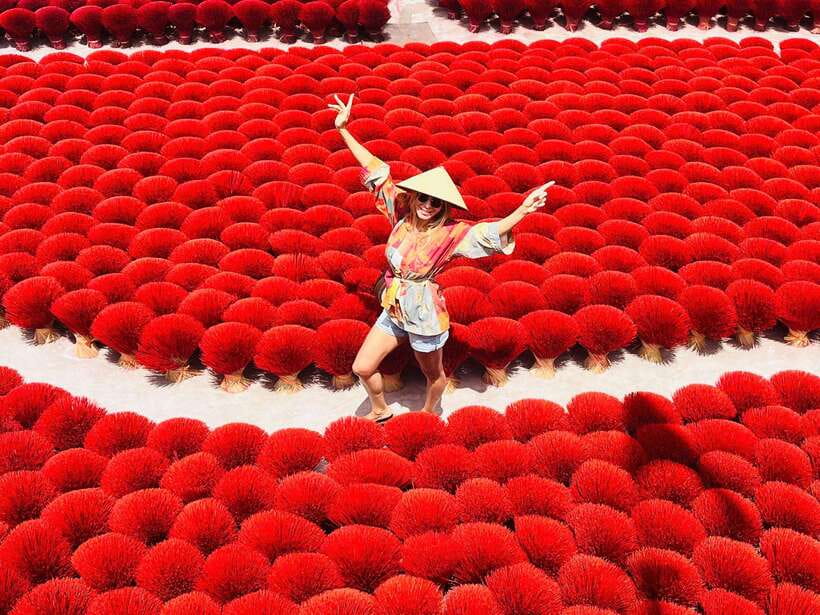
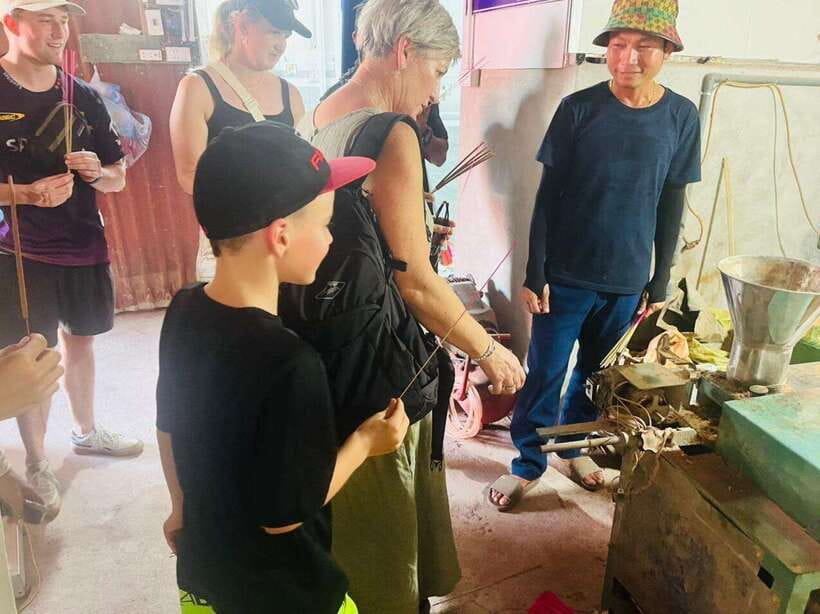
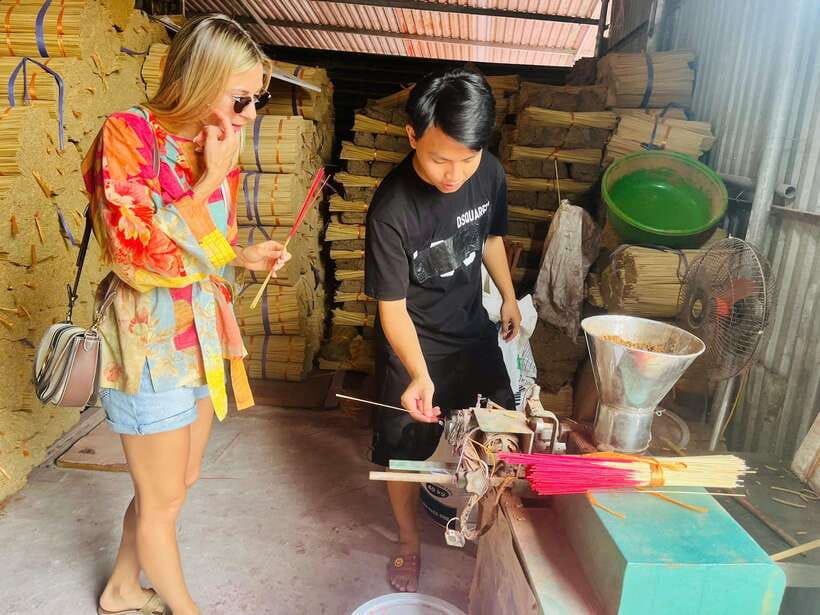
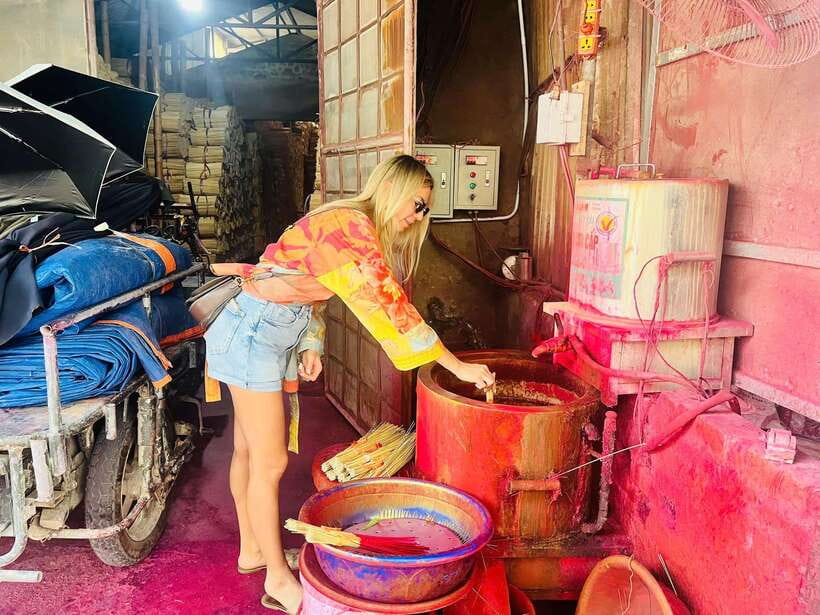
For many people, Quang Phu Cau will be the most memorable stop. This village, often called the Incense Stick Village, is known for bright red incense sticks arranged in large fans and bundles for drying.
The color is the immediate attraction. Rows of red shafts spread across open working areas, creating strong patterns for photographs. Bring your camera, but also pay attention to the work behind the picture. You can learn how bamboo is cut, prepared, colored, and bundled before the incense is ready.
The tour gives you time for sightseeing and photographs, with the stop listed at about two hours. That is enough to take pictures, listen to an explanation, and watch local production without turning the visit into a rushed photo call.
The practical point is that this is a working village. Conditions may be simple, and the experience is not presented as a museum exhibit. The best approach is to watch where you walk, ask before photographing people closely, and remember that the colorful arrangements are part of someone’s daily work.
This stop has received some of the strongest praise from past participants, especially for the clear explanations and picture-taking help provided by guides such as Lulu. If you enjoy photography, put a little thought into clothing colors and camera batteries. The red incense is already doing most of the visual work.
Making and painting a Chuong village Non La
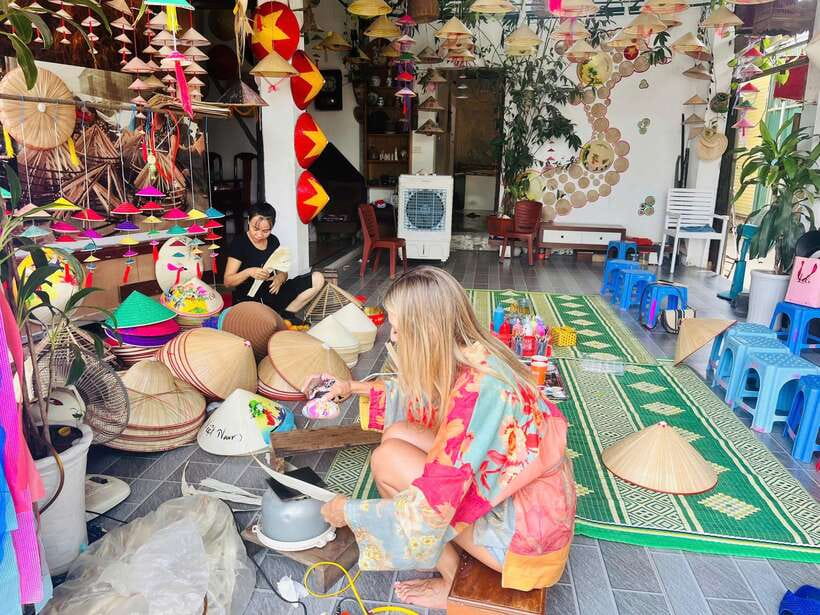
Chuong Village focuses on the Vietnamese conical hat, or Non La. Artisans use bamboo and palm leaves, shaping a lightweight hat that is both useful and closely tied to daily life in Vietnam.
You do more than watch. The workshop may let you make or decorate a hat, and the included conical hat gives you a practical souvenir at the end. Several people particularly enjoyed painting their own hats, and tea was offered during one workshop, a small touch that made the activity feel relaxed rather than rushed.
The guide explains the hat’s place in Vietnamese life and shows how the materials are handled. Bamboo provides the frame, while palm leaves form the covering. The exact amount of construction or decoration can vary, so do not expect to complete every stage of a fully handmade hat in a short class.
This is the most family-friendly part of the outing, although the tour is not suitable for wheelchair users and is not recommended for pregnant women. You will need to move around the village and workshop, and comfortable shoes are a must.
The schedule gives Chuong about two hours, including a break, lunch on the full-day option, a guided visit, and the class. That is a useful amount of time for the activity. Still, one person found the overall route a little rushed, so focus on enjoying the workshop instead of trying to inspect every shop.
Ha Thai and the patient work of lacquer
Ha Thai is one of northern Vietnam’s best-known lacquer craft villages. Here, the craft is slower and more detailed than the hat activity. Family-run workshops produce lacquer paintings, trays, and decorative objects through repeated layers, polishing, and hand-painting.
This stop helps explain why a finished lacquer piece can cost far more than a mass-produced souvenir. The surface must be built up, smoothed, and decorated with care. You may see the sequence from basic layering to polishing and fine painted details.
The visit is listed at about 2.75 hours, making it the longest craft stop. That gives the guide time to explain the process and may include a class or workshop. However, the included package does not cover a lacquer piece for painting, so ask about the cost before agreeing to any extra activity or purchase.
I would treat Ha Thai as a learning stop rather than a shopping obligation. The craft has a refined finish, but not every object will suit every budget or suitcase. If you want a more substantial Vietnamese art purchase, this is the place to compare workmanship and prices carefully.
The village also adds balance to the tour. Quang Phu Cau is colorful and instantly photogenic. Chuong is playful and hands-on. Ha Thai is quieter, more technical, and focused on the time needed to produce a durable decorative object.
Same city, a very different kind of morning:
- Ninh Binh HIGHTLIGHT & HIDDEN GEM Tour From Hanoi: Skip-The-Line
★ 5.0 · 4,212 reviews - Hanoi/Ninh Binh: 1-Day Tam Coc/Trang An, Hoa Lu & Mua Caves
★ 4.6 · 3,706 reviews - Ninh Binh Day Trip: Hoa Lu-Trang An/Tam Coc-Mua Cave-Cycling-Boat
★ 5.0 · 1,886 reviews - Hanoi: Ninh Binh- Hoa Lu – Trang An – Mua Cave – Best Seller
★ 4.9 · 1,655 reviews
Bat Trang pottery, clay, and a market full of choices

Bat Trang Ceramic Village dates back to the 14th century and is one of the best-known pottery centers near Hanoi. The stop combines a production visit, a pottery workshop, a short walk, and time at the market.
You can watch the process from shaping clay to kiln firing, then create your own ceramic item to take home. The class is a welcome change of pace after several demonstrations. Your finished piece may be simple, but it has the advantage no shop-bought souvenir can match: you made it yourself.
The Bat Trang market is filled with vases, bowls, and artistic home décor. Prices and quality can vary, so look closely at the finish and consider how you will carry fragile items back to Hanoi or onward to your next destination.
The listed visit lasts about 1.5 hours. That is enough for a workshop and a quick look around, but not enough for a slow market expedition. If pottery is your main interest, you may wish you had more time here. If you want a compact introduction, the timing works well.
Van Phuc and Vietnam’s silk tradition
Van Phuc is described as Vietnam’s oldest silk village, with more than 1,000 years of weaving tradition. The visit takes you into local workshops where artisans use wooden looms and explain weaving, dyeing, and finishing.
This is a good place to understand the difference between seeing silk in a shop and seeing it made. The loom work gives the fabric a human scale. You can watch the repeated movements and see how raw material becomes cloth before browsing scarves, clothing, and accessories.
The stop lasts about 1.5 hours in the listed schedule. That should give you time for a guided visit, a walk, and a look at products. Shopping is optional, but the village offers a chance to buy something useful rather than another generic souvenir.
I would inspect labels, texture, and stitching before buying. The tour promises authentic silk products, but the information provided does not give fixed prices or a quality guarantee. Ask the guide for help if you are unsure what you are buying.
Van Phuc also makes a sensible final or early stop because it brings the craft story back to fabric. After seeing incense, hats, lacquer, and pottery, you finish with an item that is light, practical, and easier to pack.
Timing, transport, and the choice between half-day and full-day
Pickup and drop-off are provided for hotels in Hanoi’s Old Quarter, with Hoàn Kiếm used as the central pickup and return area. A comfortable bus takes about 70 minutes on the first driving leg, so this is not a quick hop from one downtown workshop to another.
The half-day format appears to focus on the incense and hat villages. It does not include lunch, so eat beforehand or bring snacks and water. The full-day option adds the wider craft circuit, including Ha Thai, Bat Trang, and Van Phuc, with a home-cooked lunch included.
The route can be a long day. The listed activity periods add up to many hours before allowing for all road connections, so the exact duration depends on the package and traffic. This is why I would confirm the start time, return time, and included villages before paying.
Groups can be private, and the standard service is in English. Past guide names include Louise, Lulu, Eric, Lana, and Mr. QA. Their praised qualities are useful ones for this kind of outing: clear communication, humor, organization, and practical help during the workshops.
The tour asks for your WhatsApp number if available so the team can confirm pickup in advance. That is worth providing, especially if your hotel is on a small street or you are staying close to, but not directly inside, the Old Quarter.
What the $12 price really includes
The low price makes sense if you see the tour as an introduction rather than a specialist craft course. You receive:
- Hotel pickup and drop-off in the Hanoi Old Quarter
- An English-speaking guide
- Entrance fees listed in the program
- One water bottle
- One conical hat per person
- A home-cooked lunch with the full-day option
You pay separately for other drinks, personal purchases, and a lacquer piece intended for painting. There is also a $5 per-person surcharge on listed holidays such as New Year, Lunar New Year, Christmas, and national holidays.
At this price, the transport and guide alone offer solid value. The workshops add the real benefit. You are not simply being driven past villages, you are given a chance to make or decorate something and see several production methods up close.
The tradeoff is depth. A private specialist visit to one village could give you more time with a single craft. This outing instead gives you a broad sample of northern Vietnamese traditions in one day.
Who should book this experience?
I would recommend it to first-time visitors who want to get beyond Hanoi’s central sights without arranging several separate trips. It suits people who enjoy local products, short workshops, photography, and guides who explain how things are made.
Families and couples may especially like the hat-painting and pottery activities. Solo visitors can also benefit from the included transport and guide, since the villages are easier to reach with a planned excursion.
You should think twice if you dislike shopping stops, long bus rides, or busy schedules. Anyone with limited mobility should note that the tour is not suitable for wheelchair users. Pregnant women are also listed as unsuitable for the activity.
Wear comfortable shoes, carry a camera, and keep some room in your luggage for a hat, pottery, silk, or other purchases. Bring snacks for the half-day option, and confirm whether lunch is included in your selected package.
Final verdict: a low-cost route into local craft life
Book this tour if you want a broad, affordable introduction to village crafts around Hanoi. The best parts are the hands-on Non La activity, the red incense displays at Quang Phu Cau, and the chance to see real production rather than only finished goods.
Choose the half-day version if you mainly want incense, hats, and a lighter schedule. Choose the full-day route if you want the complete craft circuit and do not mind a longer day with more road time.
At $12, the tour delivers a great deal for the money. Just keep your expectations realistic: it is a busy sampler, not a slow artisan residency. Confirm the route, lunch, and timing, then go ready to walk, look closely, and make something slightly lopsided with your own hands.
FAQ
Where does the tour pick up in Hanoi?
Pickup and drop-off are provided at hotels in Hanoi’s Old Quarter area. Hoàn Kiếm is the stated central pickup and return location.
How long does the experience last?
The activity is offered in formats ranging from 6 hours to a full day. Check the available starting times and confirm which route is included when booking.
Is lunch included?
Lunch is included with the full-day tour option. The half-day tour does not include lunch, so eat beforehand or bring snacks.
Which villages are visited?
The full route includes Quang Phu Cau, Chuong Conical Hat Village, Ha Thai Lacquer Art Village, Bat Trang Ceramic Village, and Van Phuc Silk Village. The shorter option may focus on the incense and hat villages, so confirm the exact package.
Can I make my own souvenir?
Yes. You can make or decorate a conical hat, and the tour includes one conical hat per person. Bat Trang also offers a pottery workshop where you create a ceramic item to take home.
Is the tour conducted in English?
Yes. The live tour guide language is English.
Is hotel transportation included?
Yes. Comfortable bus pickup and drop-off are included for hotels in Hanoi’s Old Quarter area.
What should I bring?
Wear comfortable shoes because the tour involves walking. A camera is also useful because Quang Phu Cau offers many photography opportunities.
Can I cancel the booking?
You can cancel up to 24 hours in advance for a full refund. The reserve-now, pay-later option is also available.
New around Ninh Binh
- Private Transfer from Ninh Binh to Halong or Halong to Ninh Binh★ 5.0 · 21 reviews
- Private transfer Ninh Binh <=> Halong One Way (Free Hotel Pickup)★ 5.0 · 21 reviews
- Hanoi Epic tour 6D5N Hanoi – Halong Bay – Ninh Binh – Sapa★ 5.0 · 51 reviews
- Ninh Binh Daily Tour: Hoa Lu -Mua Cave -Tam Coc- Bike-Swimming with Sunset Party★ 5.0 · 163 reviews
- Ninh Binh Heritage trip in a day★ 5.0 · 19 reviews
- Ninh Binh Full Day Tour with Hoa Lu, Trang An and Mua Cave★ 5.0 · 93 reviews
- Ninh Binh 2 Days 1 Night Tour: Unique Itinerary★ 5.0 · 19 reviews
- Ninh Binh Full Day Tour to Hoa Lu Trang An Mua Cave Small Group★ 5.0 · 176 reviews
Hanoi Tours, compared.

Hanoi Jeep Tour: Food, Culture and Fun by Vietnam Army Jeep
Read our review →
Full-Day Ninh Binh Highlights Tour from Hanoi
Read our review →
Ha Long Bay Day Cruise – Swimming, Meal, Kayaking
Read our review →

Hanoi Motorbike Tour: Food, Culture and Fun by Vintage Motorbike
Read our review →

Hanoi Cooking Class: Culture, Local Market & Meaning CSR Impact
Read our review →