Reviewed · HANOI TOURS
Private Hanoi Sightseeing Tour by Army Jeep
See Hanoi from a seat that rattles. This 4 to 5 hour Army jeep tour links famous sights with less polished corners of the city, giving you a quick but memorable look at Hanoi’s past and present. I like the open-air ride for the fresh perspective, and I like that entrance fees, an English-speaking guide, and Old Quarter pickup are included. The main drawback is that traffic, weather, and road noise can affect your comfort.
The route also gives you a useful mix of grand monuments, wartime sites, old infrastructure, and local streets. Guides such as Sunny, Viet, Banh Mi, Sonny, and Peter have been praised for clear storytelling and friendly care. Still, this is a moving city tour, not a slow walking day, so you will spend less time at each place than you would on separate visits.
In This Review
- Key points to know before you book
- Why an Army jeep works well in Hanoi
- Starting in the Old Quarter
- Ho Chi Minh Complex and Ba Dinh Square
- Temple of Literature and Vietnam’s scholarly past
- Huu Tiep Lake and the downed B-52
- B52 Victory Museum
- Long Bien Bridge, Hanoi’s old steel crossing
- Duong Tau and the railway through the city
- Food, coffee, and the final taste of Hanoi
- The guides and what makes the commentary useful
- Is $85 a fair price?
- Who should choose this tour?
- Should you book the Hanoi Army Jeep tour?
- FAQ
- How long does the Hanoi Army jeep tour last?
- Where does the tour start?
- Where does the tour end?
- What is included in the price?
- How many people can join the tour?
- Can I cancel for a full refund?
Key points to know before you book
- Open-air Army jeep: Ride through Hanoi with a wide view of streets, buildings, traffic, and daily life.
- Small group size: The jeep holds a maximum of six people, which allows for a more personal guide experience.
- Strong historical route: Ho Chi Minh’s complex, the Temple of Literature, the downed B-52, and Long Bien Bridge each show a different side of Vietnam.
- Unusual city corners: Huu Tiep Lake and the Reunification Railroad offer a look beyond Hanoi’s standard sightseeing circuit.
- Convenient Old Quarter service: Pickup and return are offered for hotels and stays in Hanoi’s Old Quarter.
- Flexible departure times: Morning, afternoon, and evening options let you fit the tour around other plans.
Why an Army jeep works well in Hanoi
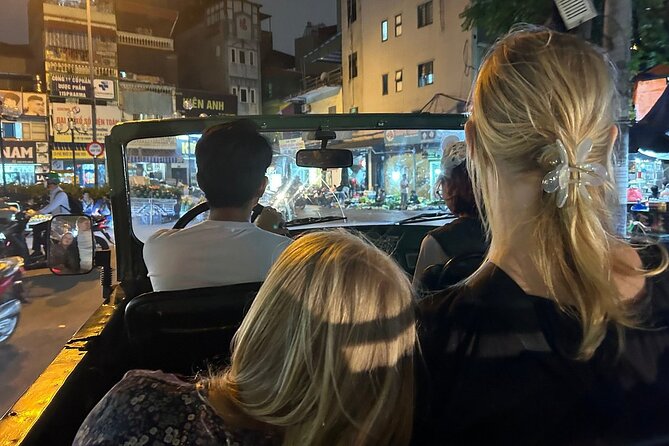
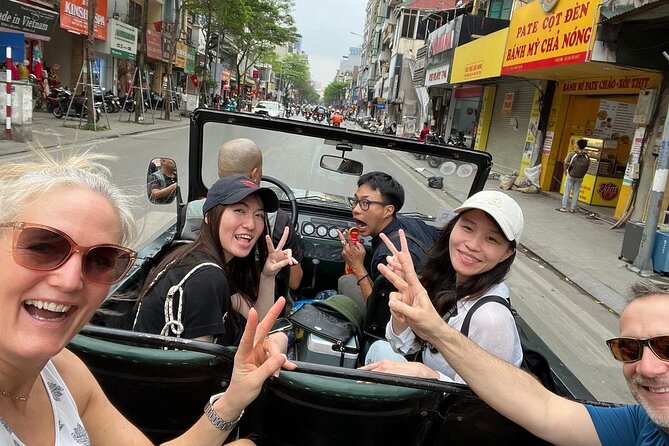
Hanoi is not a city you understand from behind a sealed bus window. The streets are close, noisy, crowded, and full of small details. An open jeep puts you right into that movement while giving you a higher view than a motorbike and more character than a standard car.
You will hear traffic, feel the air, and watch the city shift from formal government buildings to narrow lanes and railway-side homes. That makes the ride part of the sightseeing rather than just transportation between stops.
I particularly like the small group limit of six people. A guide can explain a detail, answer a question, or adjust the pace more easily than on a large coach. The jeep is also useful if you want to cover several parts of Hanoi in one half-day without arranging separate rides.
The trade-off is comfort. An open vehicle offers little shelter from sun or rain, and Hanoi traffic can be loud. If you prefer air conditioning, quiet roads, and long periods inside museums, this may not be your ideal city tour. For most people, the jeep’s character is the point.
A few more Hanoi runs to compare on price
- Hanoi Jeep Tour: Food, Culture and Fun by Vietnam Army Jeep
★ 5.0 · 15,222 reviews - Full-Day Ninh Binh Highlights Tour from Hanoi
★ 5.0 · 7,761 reviews - Hanoi: Ha Long Bay Day Cruise – Swimming, Meal, Kayaking
★ 4.7 · 7,415 reviews
Starting in the Old Quarter
Pickup is offered from hotels and stays in Hanoi’s Old Quarter. If you are not using hotel pickup, the listed meeting point is 41 P. Lương Văn Can in Hàng Gai, Hoàn Kiếm.
The outing begins with a short briefing before the jeep moves into the city. That matters because the tour packs a lot into roughly four and a half hours. You will want to understand the basic plan, confirm where you will meet again, and settle into the vehicle before the first major stop.
The activity is near public transportation, and most people can participate. The group size remains limited to six, although the supplied details do not specify the exact jeep seating arrangement or whether every departure uses one vehicle. If you have a specific seating or mobility need, ask the operator before booking.
Ho Chi Minh Complex and Ba Dinh Square
The first major stop is the Ho Chi Minh Complex, with about an hour set aside and admission included. This area brings together the Ho Chi Minh Mausoleum, Ba Dinh Square, the Presidential Palace, and Ho Chi Minh’s Residence.
The complex is important because it introduces modern Vietnamese history through places connected with Ho Chi Minh’s public and private life. Ba Dinh Square gives the area a formal scale, while the residence offers a more personal contrast. Your guide’s explanation is especially useful here because the buildings and open spaces can feel impressive but difficult to interpret on your own.
Do not expect an hour to cover every corner in great detail. This is an overview stop, and the pace may be affected by access rules, crowds, or the timing of your departure. The tour information also does not promise entry into every building, so treat the stop as a guided visit to the complex rather than a guarantee of a full interior tour.
The site suits first-time visitors who want a grounding in Vietnam’s political story. It may feel less rewarding if you have already spent a full day exploring the complex and want only obscure local places.
Temple of Literature and Vietnam’s scholarly past
The tour allows about an hour at the Temple of Literature, with admission included. This is one of Hanoi’s most rewarding historic sites because it connects architecture, education, and the long tradition of scholarship in Vietnam.
The temple complex gives you courtyards, gates, stone stelae, and traditional architectural details in a calmer setting than the surrounding streets. It was linked with Vietnam’s historic educational system and is now associated with the country’s long academic tradition.
I like the pairing of this stop with the Ho Chi Minh Complex. The first is formal and political. The second is cultural and educational. Together, they show that Hanoi’s identity is not built around one period alone.
Again, an hour is enough for a useful introduction but not for a slow study of every feature. A guide can explain what the courtyards and carved records represent, which adds much more value than simply taking photographs. Wear comfortable shoes, since the visit involves walking through the grounds.
Same city, a very different kind of morning:
- Hanoi: Water Puppet Show Tickets
★ 4.6 · 7,029 reviews - Hanoi Motorbike Tour: Food, Culture and Fun by Vintage Motorbike
★ 5.0 · 6,699 reviews - Hanoi: Guided Food Tour with Train Street Visit
★ 4.9 · 6,239 reviews - Hanoi Cooking Class: Culture, Local Market & Meaning CSR Impact
★ 5.0 · 5,147 reviews
Huu Tiep Lake and the downed B-52
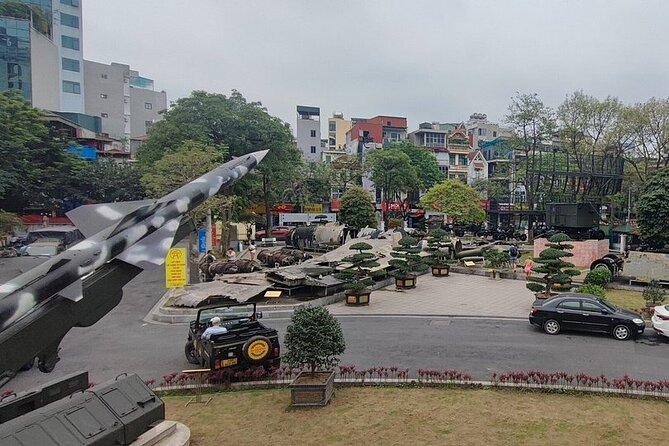
The next stop lasts about 20 minutes and is free of admission charges. Huu Tiep Lake is known for the remains of a downed B-52 aircraft, an unusual wartime sight set within an ordinary Hanoi neighborhood.
This stop changes the tone of the tour. Instead of a grand monument or carefully arranged historic complex, you see a piece of military history in a local setting. The contrast is striking: a large aircraft wreck connected with the Vietnam War sits beside the everyday life of the city.
The short visit is probably enough to see the site and hear its basic story. It is not designed as a long museum session. You may spend more time observing the surrounding streets than standing beside the lake itself, which is part of the appeal.
The narrow neighborhood setting also explains why the jeep route can reach places a larger vehicle might not handle easily. Keep your expectations sensible. This is a brief, atmospheric stop, not a full battlefield tour.
B52 Victory Museum
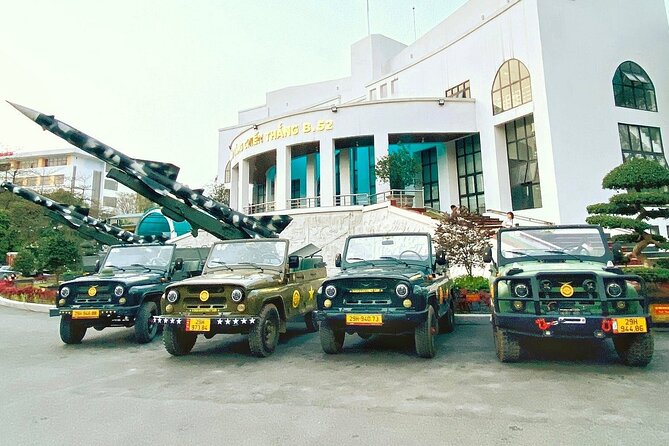
The B52 Victory Museum follows with about 50 minutes and included admission. It is described as the only museum in the world dedicated to the downfall of B-52 aircraft, making it one of the more unusual stops on the route.
The museum covers a large area and focuses on wartime events, military equipment, and the story of the B-52 campaign from a Vietnamese point of view. That perspective matters. You are not simply looking at old machinery. You are entering a place where national memory, military history, and local identity meet.
An hour is a sensible amount of time for a first visit. You can see the main displays and ask your guide for context without letting the museum consume the rest of the day. If you have a strong interest in military history, you might wish for more time, but the wider route would suffer if this stop became a long standalone visit.
The museum also gives useful context to Huu Tiep Lake. Seeing the aircraft remains first, then visiting a museum dedicated to the wider story, creates a clearer connection between the physical site and the historical events.
Long Bien Bridge, Hanoi’s old steel crossing
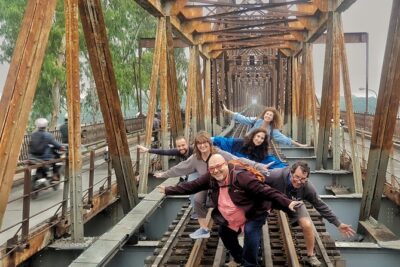
The jeep then heads to Long Bien Bridge for about 30 minutes. Built more than a century ago during the French colonial period, the bridge is one of Hanoi’s best-known pieces of old infrastructure.
Its importance is not only architectural. The bridge has witnessed changing governments, wars, repairs, and the steady movement of the city around it. From here, you get a sense of how Hanoi grew around the Red River and how older structures remain part of daily transport.
The half-hour stop should give you time to look, take photographs, and hear the bridge’s basic story. It will not allow for an extended walk across the full span, and the precise viewing point may depend on traffic and the day’s route.
I like this stop because it makes history feel practical. You are not looking at a relic sealed behind glass. You are seeing a working piece of the city, surrounded by traffic and ordinary movement. That is often more revealing than a polished monument.
Duong Tau and the railway through the city
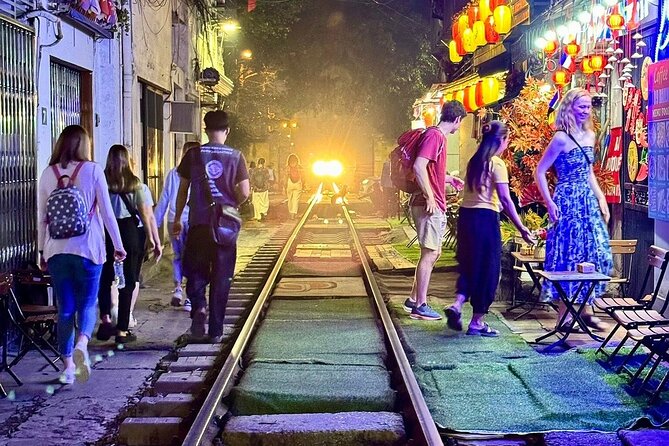
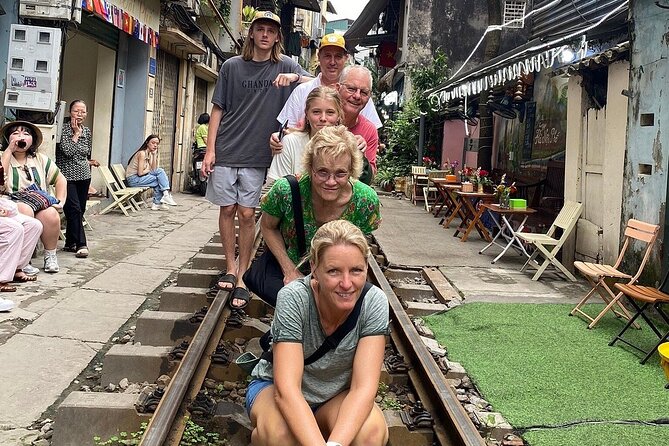
The final major stop focuses on Duong Tau, the old Reunification Railroad track that runs through Hanoi and is surrounded by local homes and businesses. About 50 minutes are allocated, with admission included as part of the tour.
The railway is famous for the way it passes through a tightly settled part of the city. Here, transport infrastructure and neighborhood life occupy the same narrow space. You may see a very different side of Hanoi from the formal avenues around Ba Dinh Square.
This is one of the tour’s most distinctive sections because it shows how the city has adapted around an old railway corridor. Your guide can help explain the track’s place in Vietnam’s north-south rail story and point out details you might miss if you simply passed through by car.
The wording of the experience does not promise a train passing during your visit, so do not book this stop expecting a scheduled railway spectacle. The value is the setting, the history, and the chance to see how local life fits around the line.
Some visitors may feel uneasy about narrow streets or crowded surroundings. Stay close to your guide and follow any instructions about where to walk or stand. This is a place for careful observation, not careless photography.
Food, coffee, and the final taste of Hanoi
The experience promises a street food feast and a drink at a rooftop bar at the end. The supplied details do not name the exact dishes, restaurant, or rooftop venue, so you should ask the operator if you have allergies, dietary restrictions, or strong food preferences.
The food element adds real value because Hanoi is best understood at street level. Several guide experiences connected with this provider have included local food, coffee, restaurants, and stops such as embroidery workshops. One food-focused outing with Viet included careful explanations of the dishes and coffee, while another city route included a local restaurant and Banana Island.
Do not assume every departure follows the same food sequence. The core tour information promises food and a rooftop drink, but it does not guarantee particular dishes or extra shopping and craft stops. Think of these as possible additions rather than fixed parts of every departure.
A rooftop finish is a good way to slow down after several historic stops. You can compare the formal city you have seen in museums with the real city spread around you. It also gives the guide a natural moment to answer questions before returning you to the Old Quarter.
The guides and what makes the commentary useful
The strongest praise goes to the guides’ energy, care, and ability to make Hanoi understandable. Sunny is repeatedly described as friendly, funny, energetic, and proud of the city. Viet is praised for detailed explanations, warmth, and strong knowledge of food and coffee. Banh Mi is noted for being thoughtful and engaging, while Sonny and Peter are credited with making city travel feel less stressful.
Those details help you know what kind of service to expect. The guide is not there only to point at buildings. The best version of this tour connects a monument, a wartime site, a bridge, and a railway to the wider story of Hanoi.
Driver quality matters too. Tony is praised for safe driving, which is important in a city where traffic can feel chaotic from the passenger seat. No transport service can remove Hanoi’s traffic, but a careful driver makes the ride far more comfortable.
Guide assignments can change, so you should not book solely to meet a particular person. Still, the repeated focus on clear explanations and friendly care is a good sign for anyone who values conversation over a silent sightseeing transfer.
Is $85 a fair price?
At $85 per person, this is not the cheapest way to move around Hanoi. It is also not simply a ride. The price includes Old Quarter pickup and return, an Army jeep with an experienced driver, an English-speaking guide, entrance fees, street food, and a rooftop drink.
The value is strongest if you want many parts of Hanoi covered in one half-day. Paying separately for several taxis, entrance tickets, and a food outing could become inconvenient, even if the final total were lower. The small group limit also gives the tour more personal attention than a standard coach trip.
The value is weaker if you are happy using local transport and visiting only one or two sites at your own pace. You are paying for convenience, route planning, interpretation, and the jeep itself. If you dislike fixed schedules, the same money could support a slower independent day.
The tour is booked an average of eight days ahead, so reserve early if your Hanoi dates are fixed. Free cancellation is available when you cancel at least 24 hours before the start time. Inside that period, the payment is not refunded, and late changes are not accepted.
Who should choose this tour?
I would recommend it most to first-time visitors who want a broad introduction without spending a full day in a large group. It suits couples, friends, and small families who enjoy history but also want local streets, food, and a little adventure.
It is especially useful early in a Hanoi stay. After one ride, you will have a mental map of several districts and can decide where to return for a slower visit.
The tour may be less suitable for anyone who needs a quiet, climate-controlled vehicle or wants long, detailed time at each museum. It also may not suit people who prefer to avoid open-air transport in uncertain weather.
Should you book the Hanoi Army Jeep tour?
Book it if you want variety, local texture, and efficient sightseeing in a small group. The route covers major national sites, wartime evidence, colonial-era infrastructure, railway life, food, and a rooftop drink. That is a lot of Hanoi in four to five hours.
Skip it if your priority is a slow museum day, a carefully controlled itinerary, or the lowest possible cost. Before paying, confirm the pickup point, food arrangements, weather plan, and any personal mobility or dietary needs.
For a first look at Hanoi, the Army jeep format offers something a standard city bus cannot: the city arrives at your shoulder, noisy and imperfect, with history mixed into ordinary streets.
FAQ
How long does the Hanoi Army jeep tour last?
The tour lasts approximately 4 to 5 hours, including the listed sightseeing stops, food, rooftop drink, and return to the Old Quarter.
Where does the tour start?
Pickup is offered from hotels and stays in Hanoi’s Old Quarter. The listed meeting point is 41 P. Lương Văn Can, Hàng Gai, Hoàn Kiếm, Hà Nội 100000, Vietnam.
Where does the tour end?
The tour returns to the Old Quarter for hotel drop-off. The listed activity end point is also the meeting point, so confirm the exact return arrangement when booking.
What is included in the price?
The price includes Old Quarter pickup and drop-off, transport by Army jeep with an experienced driver, an English-speaking guide, entrance fees, a street food feast, and a rooftop drink.
How many people can join the tour?
The maximum group size is six people.
Can I cancel for a full refund?
Yes. You can receive a full refund if you cancel at least 24 hours before the experience start time. Cancellations and changes made within 24 hours are not refunded or accepted.
New around Hanoi
- Private LUXURY Hanoi City Full day guided tour★ 4.5 · 21 reviews
- Private transfer between Hanoi and Sapa★ 5.0 · 27 reviews
- Private Transfer Hanoi <=> Mai Chau One Way (Free hotel pickup)★ 5.0 · 22 reviews
- Private Transfer from Ninh Binh to Halong or Halong to Ninh Binh★ 5.0 · 21 reviews
- Private Transfers Hanoi <=> Halong One Way (Free Hotel Pickup)★ 5.0 · 31 reviews
- Hanoi Airport See-off (Private Ride from Hotels to Hanoi Airport)★ 4.5 · 70 reviews
- Thang Long Water Puppet Theater★ 4.5 · 45 reviews
- Private transfer Ninh Binh <=> Halong One Way (Free Hotel Pickup)★ 5.0 · 21 reviews
Hanoi Tours, compared.
Hanoi Jeep Tour: Food, Culture and Fun by Vietnam Army Jeep
Read our review →
Full-Day Ninh Binh Highlights Tour from Hanoi
Read our review →
Ha Long Bay Day Cruise – Swimming, Meal, Kayaking
Read our review →
Hanoi Motorbike Tour: Food, Culture and Fun by Vintage Motorbike
Read our review →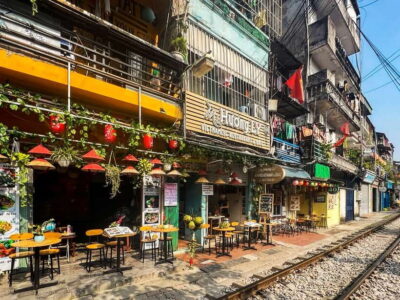

Hanoi Cooking Class: Culture, Local Market & Meaning CSR Impact
Read our review →