
Reviewed · STREET FOOD TOURS IN HANOI
The 10 Tastings of Hanoi With Locals: Private Street Food Tour
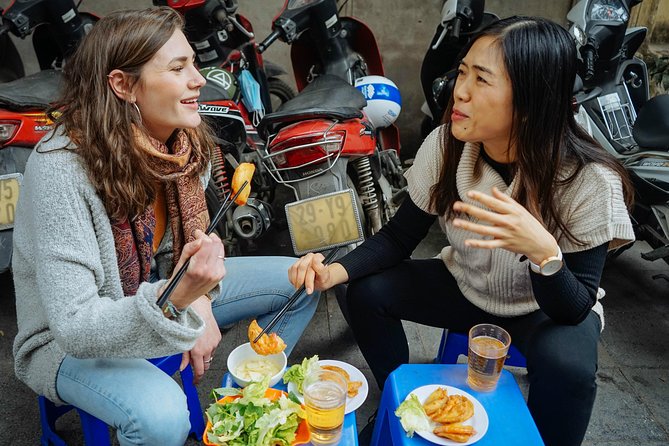
Taste Hanoi one bite at a time. This private Old Quarter walk pairs 10 food and drink tastings with local stories, from pho rolls and banh mi to egg coffee. I like the one-on-one format, which gives your guide room to adjust the menu, explain unfamiliar dishes, and answer questions without a crowd. I also like that the route includes temples, old streets, French-style buildings, and traditional medicine shops, so you get more than a meal crawl. The main drawback is the pace: with many stops packed into about three hours, you may need to eat lightly before starting.
The tour costs $78.52 per person, a fair price if you value personal guidance and want help finding small local eateries you might otherwise pass by. It is less attractive if you already know Hanoi’s food scene or prefer to linger over full meals. Dietary alternatives, including vegetarian options, are available, but anyone with a serious restriction should explain it clearly when booking and again to the guide.
In This Review
- Key points at a glance
- Why this Hanoi food walk works so well
- Meeting at the Water Puppet Theater
- Ba Da Temple and the first Old Quarter stories
- Phở Lý Quốc Sư: rolls and shrimp pastry
- French architecture at 8 P. Chân Cầm
- Bún chả on Phố Đường Thành
- Steamed rice rolls on Hàng Điếu
- The national favorite on Phố Hàng Vải
- Bánh mì and the French connection
- Traditional medicine along Phố Lãn Ông
- Fruit dessert on Phố Tố Tịch
- Egg coffee near Đinh Tiên Hoàng
- What the $78.52 price really buys
- Who should book this private tour?
- Practical details before you go
- FAQ
- How long does the Hanoi food tour last?
- Where does the tour begin?
- Where does the tour end?
- Is this a private tour?
- How many tastings are included?
- Are vegetarian alternatives available?
- Is transportation included?
- Can I cancel for a full refund?
- Should you book it?
Key points at a glance
- Private from start to finish: Only your group and a local guide take part, so the route and food choices can be adjusted more easily.
- Ten tastes in roughly three hours: Expect small servings of Hanoi specialties rather than ten full restaurant meals.
- A useful Old Quarter route: The walk links food stops with Ba Da Temple, French-style architecture, traditional medicine streets, and the area around Hoàn Kiếm.
- Strong guide-led experience: Guides named in the feedback include Lien, Jessica, Leanne, Há, and Anh, also called Annie.
- Good for first-day orientation: You receive suggestions about what and where to eat during the rest of your time in Hanoi.
- Vegetarian alternatives are offered: Other dietary needs can be discussed, though the tour does not include extra food or drinks beyond the planned tastings.
Why this Hanoi food walk works so well
Hanoi’s Old Quarter is best understood on foot, and food gives the walk a clear purpose. Instead of simply passing shops and temples, you stop to taste what people in the city actually eat. The route moves through narrow streets and small eateries, with a local guide helping you decide what to try and how to approach each place.
The private format matters. A guide working only with your group can order less if you are getting full, explain ingredients at your pace, or spend more time on a dish that interests you. One useful tip from the feedback is to ask for smaller portions if you are not very hungry. Ten tastings can add up quickly, especially when noodles, grilled pork, bread, dessert, and coffee all appear in one evening.
The experience also works well at the start of a Hanoi stay. You get practical food suggestions while the city is still new, and the route can help you understand where the Old Quarter sits around Hoàn Kiếm Lake. Some people have returned to favorite food stops the next day, which is a good sign that the tour is not only about checking dishes off a list.
The guide makes or breaks the evening. Lien receives especially warm praise for her friendly manner, careful handling of gluten-free needs, and smooth movement between stops. Jessica, Leanne, Há, and Anh, also known as Annie, are other guides named in the feedback. Most comments describe the guides as friendly, energetic, and well informed about food and local life, though one account describes a quieter guide who spent too much time on a phone. The private format cannot fully solve a weak guide match, so it is worth contacting the operator if you have important dietary or communication needs.
More Street Food Tours in Hanoi
- Hanoi: Guided Food Tour with Train Street Visit
★ 4.9 · 6,239 reviews - Small Group Hanoi Street Food Tour with a Real Foodie
★ 5.0 · 4,682 reviews - Hanoi: Street Food Tour with Train Street & Hidden Alleyways
★ 5.0 · 2,831 reviews
Meeting at the Water Puppet Theater
The tour begins at 16 P. Lê Thái Tổ, near the Thang Long Water Puppet Theater in the Hoàn Kiếm area. You meet your guide at the entrance, then spend a short time getting acquainted before walking toward the first cultural stop.
This is a sensible meeting point because it is central and near public transportation. You do not receive hotel pickup or drop-off, so plan to reach the start point yourself. The activity returns to the same meeting point at the end, which makes the arrangement simple if you are staying nearby.
The opening walk also gives your guide a chance to learn what you eat, what you avoid, and how hungry you are. Use that moment well. Tell the guide about gluten, meat, seafood, dairy, allergies, or strong dislikes before the first dish appears.
Ba Da Temple and the first Old Quarter stories
Early in the route, you visit Chua Ba Da, also called Ba Da Temple. It is described as one of Hanoi’s four sacred temples, and the stop adds a quiet change of mood before the food begins in earnest.
Later, the route returns to Ba Da Pagoda, described as a modest Buddhist pagoda built in 1056. The supplied route lists both a temple visit and a pagoda visit, so the exact order or amount of time spent there may vary. Do not expect a long guided temple tour. The stops are short, about 15 minutes each in the listed plan, and function as cultural pauses between food tastings.
These brief visits are valuable because they keep the experience from becoming a string of restaurant tables. You see how religious spaces sit beside commercial streets, food stalls, homes, and busy city life. Dress and behave respectfully, and follow your guide’s lead if a space is active with worship.
Phở Lý Quốc Sư: rolls and shrimp pastry
The food begins around Phố Lý Quốc Sư, an area associated with well-known Hanoi dishes. One tasting is a pho roll, made with noodles, beef, and herbs. It offers the familiar flavors of pho in a different form, with the noodles wrapped rather than served in broth.
A shrimp pastry is also listed among the early specialties. The exact food sequence can change based on availability and your preferences, but the idea is clear: you are sampling dishes that show the range of Hanoi cooking, not eating the same bowl of soup ten times.
This is where a local guide adds real value. A menu translation can tell you ingredients, but it cannot easily explain how a food fits into local eating habits or which combination of herbs, dipping sauce, and texture makes the dish work. If you have never eaten a particular item, ask before taking a large bite. Your guide can also help manage portions so you do not fill up too soon.
More street food walks in Hanoi:
- Hanoi: Guided Street Food Tour with Train Street Experience
★ 4.9 · 2,479 reviews - [HOT] Hanoi Old Quarter Walking Street Food – Small Group Tour
★ 5.0 · 2,163 reviews - Hanoi Street Food Tour with local delicacies
★ 5.0 · 1,506 reviews - Hanoi Coffee Workshop: Taste Salt, Coconut and Egg Coffee
★ 5.0 · 1,286 reviews
French architecture at 8 P. Chân Cầm
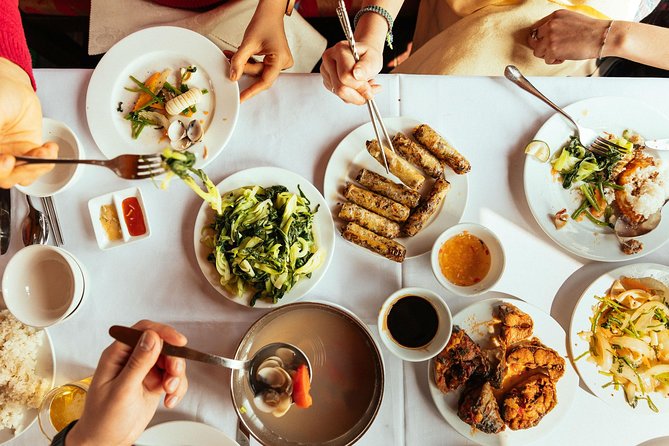
At 8 P. Chân Cầm, the route pauses at a villa built in 1930 in the French architectural style. The guide explains its past and how local people use or gather around the area today.
This is a small but useful bit of context. Hanoi’s streets reflect Chinese, Vietnamese, and French influences, and the tour places that architecture beside everyday food culture rather than treating it as a separate sightseeing subject. You get a quick story, a look at the building, and then keep walking.
The stop is not a formal architecture visit, and admission is not included because no paid entry is part of the plan. Think of it as a street-side explanation that helps you read the Old Quarter with sharper eyes.
Bún chả on Phố Đường Thành
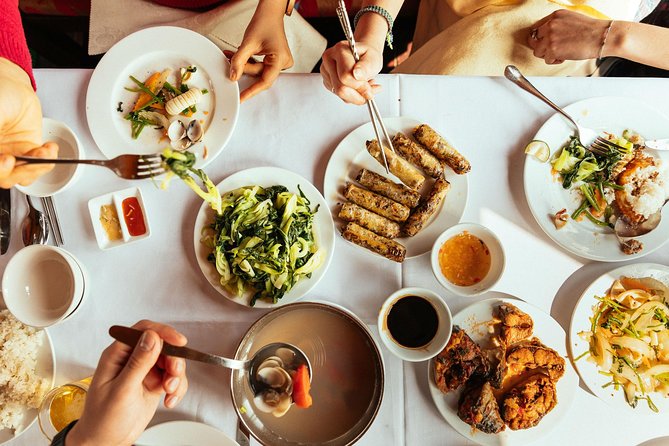
Next comes bún chả, one of Hanoi’s signature meals. It combines grilled pork, rice noodles, fresh pickled vegetables, and a dipping sauce. The usual way to eat it is to bring the noodles, herbs, pork, and sauce together in each bite.
This is one of the more filling stops, so pace yourself. The tour is designed around tastings, but bún chả can feel close to a full meal depending on the serving size. If you are traveling with family or friends, sharing can make it easier to reach the later stops without surrendering dessert and coffee.
The dish also shows why local guidance helps. The sauce, herbs, and pickles are not side decorations. They balance the smoky pork and add acidity and freshness. If you are unsure how to combine everything, watch your guide or ask for a quick demonstration.
Steamed rice rolls on Hàng Điếu
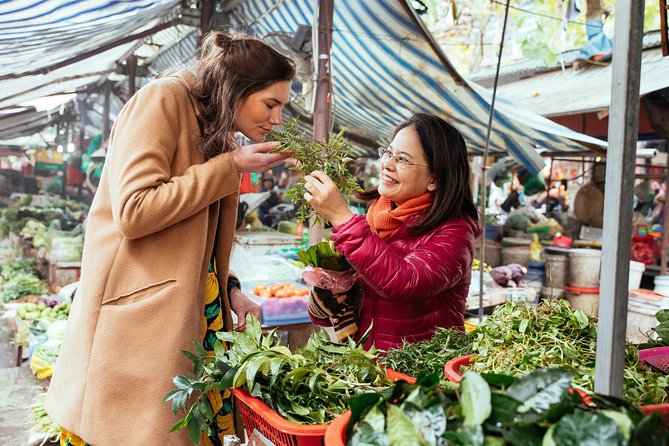
On Hàng Điếu, you enter a typical Hanoian eatery for steamed rice rolls. These rolls are filled with pork, mushrooms, or both, and commonly come with fried shallots and other accompaniments.
The stop offers a different texture from the grilled pork and noodles. The rice sheet is soft and delicate, while the filling and fried shallots provide more flavor and crunch. It is a good example of how ten tastings can show variety even when many dishes use familiar ingredients.
Small eateries may feel informal, and that is part of the point. You are not being guided through a polished fine-dining room. You are seeing the kind of compact food businesses that make the Old Quarter such a rewarding place to eat. Keep your expectations practical: seating, service, and menus may be simple.
The national favorite on Phố Hàng Vải
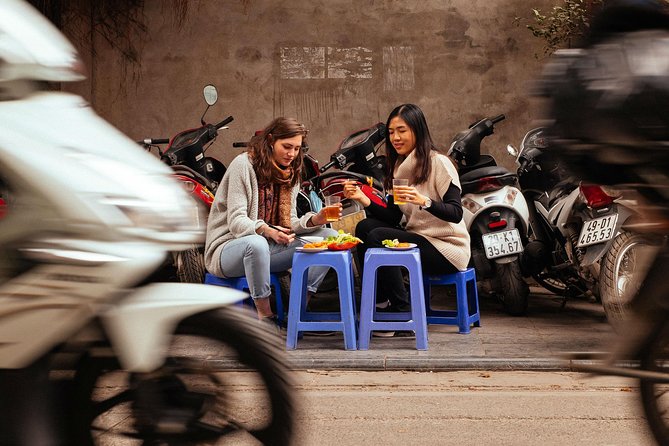
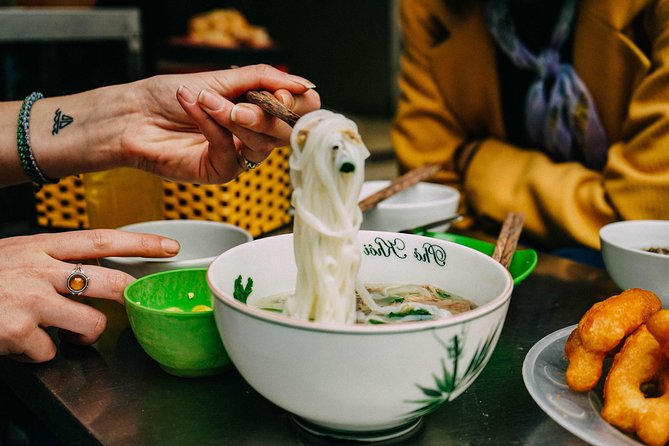
The pho stop on Phố Hàng Vải brings you to one of Vietnam’s best-known dishes. The broth is served with beef or chicken, vinegar, spring onions, pepper, and lime juice.
For many people, this is the dish they most want to try in Hanoi. The guide can help you notice the balance between broth, meat, herbs, acidity, and spice. You may also get advice about how much lime or pepper to add rather than seasoning the bowl heavily at once.
Pho is another reason not to eat a large meal before the tour. Even a tasting portion can be satisfying, and it arrives after several earlier bites. The tour description does not promise that every dish is served as a miniature portion, so plan for a substantial evening of eating.
Bánh mì and the French connection
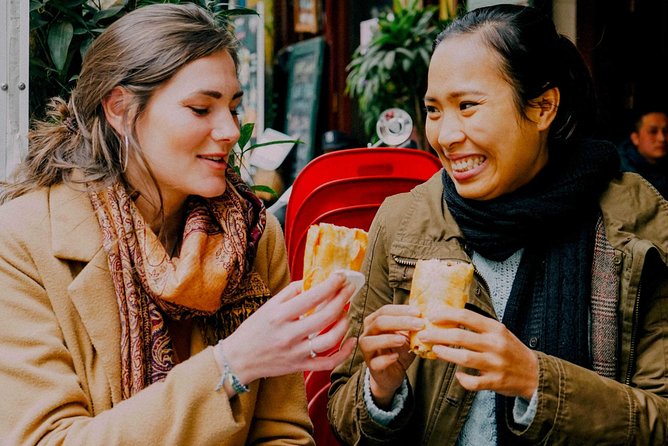
On Phố Bát Sứ, you taste bánh mì, Vietnam’s famous baguette sandwich. The bread reflects the French influence introduced during the colonial period, but the sandwich itself became a distinctly Vietnamese food, combining the baguette with local fillings and seasonings.
This stop connects neatly with the earlier French-style villa. You are not just tasting a sandwich. You are seeing how outside influences were adapted into ordinary local food. The result is one of Hanoi’s easiest foods for first-time diners because it is familiar in shape, yet still distinctly Vietnamese in flavor.
If you have dietary restrictions, ask what is inside before accepting the sandwich. The tour includes vegetarian alternatives, but the exact substitute is not specified. Gluten-free travelers should be especially direct, since the standard bánh mì depends on bread.
Traditional medicine along Phố Lãn Ông
Phố Lãn Ông is known for traditional medicine, and its name comes from a famous physician. The guide tells you more about him and the street’s specialized trade as you walk.
This is one of the route’s best non-food pauses. The street gives you a look at an old commercial tradition and shows how different trades have long clustered in particular parts of the Old Quarter. You may find the aromas and displays quite different from the food streets, which helps break up the tasting schedule.
The stop is mainly observational. There is no stated purchase or formal medicine consultation, so treat it as a guided walk and local-history explanation rather than a health service.
Fruit dessert on Phố Tố Tịch
After the savory dishes, Phố Tố Tịch supplies something sweet. The dessert combines different fruits with coconut milk, condensed milk, and crushed ice.
This is a refreshing change after grilled meat, noodles, broth, and bread. It is also a useful reminder that Vietnamese street food is not only about savory dishes. The cold fruit, rich milk, and ice create a simple but satisfying finish before the final drink.
The ingredients may vary because the dessert uses different kinds of fruit. If you need to avoid dairy, ask about the condensed milk and coconut milk before eating. Vegetarian diners should find this stop suitable, but specific dietary substitutions should still be confirmed with the guide.
Egg coffee near Đinh Tiên Hoàng
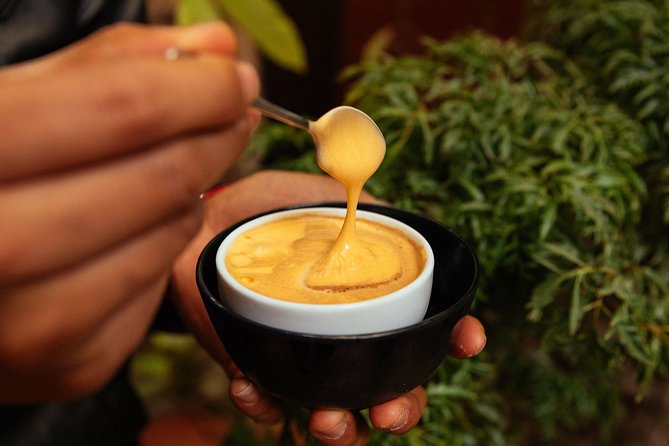
The final major tasting is egg coffee at a family-run café on Phố Đinh Tiên Hoàng. Egg coffee was invented in 1940, when a bartender whisked egg into coffee as a substitute for milk. The result is a sweet, creamy topping over strong coffee.
It is a fitting final stop. After walking and eating, you can sit for a short pause and talk with your guide about what you liked. The café is described as a familiar address for both local people and Hanoi fans, so this is not simply a quick drink grabbed on the pavement.
Egg coffee is rich, and not everyone will love it. If you prefer black coffee or dislike sweet drinks, ask your guide what alternatives are available, but do not assume another drink is included. The tour covers ten planned food and drink tastings, while extra items cost more.
What the $78.52 price really buys
At $78.52 per person, this is not the cheapest way to eat in Hanoi. Local food can be very inexpensive when you order directly, and a confident eater with a phone translation app could visit several places alone.
The price makes more sense if you place value on convenience, private attention, and food confidence. Your guide handles the route, helps order, explains dishes, points out cultural details, and adjusts for preferences. You also avoid the guesswork that can make a first food outing stressful.
The strongest value comes when you book early in your stay. You can use the guide’s recommendations for later meals, and the walk helps you decide which dishes deserve a second visit. The tour is booked an average of 19 days ahead, so it is sensible to reserve before your Hanoi dates are full.
Group discounts may be available, but the listed price is per person. Ask about the total cost for your party before booking. Extra food and drinks are not included, and the tour does not cover transportation to or from the meeting point.
Who should book this private tour?
I would choose this tour for a first visit to Hanoi, especially if you want to try local food but are unsure how to order it. It is also a good match for couples, families, and small groups that want a guide’s full attention rather than a large shared outing.
It suits people who enjoy walking, tasting several dishes, and learning small pieces of city history along the way. The route includes ordinary eateries, temples, old streets, architecture, and a traditional medicine district, so it gives you a useful first look at the Old Quarter.
I would hesitate if you want long meals, formal restaurant service, or a slow photography walk. The short stops and repeated tastings keep the evening moving. It also may not suit someone who dislikes trying unfamiliar textures or who needs a highly specialized medical diet without advance discussion.
The experience has a 5 out of 5 rating from 243 reviews and a 99 percent recommendation rate, which fits its main strengths: food variety, friendly guiding, and private attention. Still, the one quiet-guide account is worth remembering. A food tour depends heavily on the person leading it, so speak up if you want more explanation or interaction.
Practical details before you go
The tour lasts about three hours and ends back at the starting point. The listed itinerary gives many stops about 15 minutes each, though the actual timing may shift depending on food service, walking speed, and your group’s preferences.
You receive confirmation when booking, and a mobile ticket is available. The route is near public transportation, but pickup and drop-off are not included. Wear comfortable shoes, arrive ready to walk, and avoid a heavy meal beforehand.
Free cancellation is available if you cancel at least 24 hours before the local start time. Cancellations within 24 hours are not refunded, and late changes are not accepted.
FAQ
How long does the Hanoi food tour last?
The experience lasts approximately three hours.
Where does the tour begin?
It begins at 16 P. Lê Thái Tổ, Hàng Trống, Hoàn Kiếm, Hanoi, near the Thang Long Water Puppet Theater.
Where does the tour end?
The activity ends back at the meeting point.
Is this a private tour?
Yes. Only your group and your local guide take part.
How many tastings are included?
The tour includes ten food and drink tastings.
Are vegetarian alternatives available?
Yes. Vegetarian alternatives are offered. Other dietary restrictions can also be discussed with the guide.
Is transportation included?
No. Pickup and drop-off are not included, though the meeting area is near public transportation.
Can I cancel for a full refund?
Yes, if you cancel at least 24 hours before the experience’s local start time. Cancellations within 24 hours are not refunded.
Should you book it?
Book this private food walk if you want a friendly local guide, a broad sampling of Hanoi dishes, and a useful introduction to the Old Quarter. I especially recommend it for your first day or two, when advice about pho, bún chả, cafés, and smaller eateries can shape the rest of your visit.
At $78.52 per person, you are paying for guidance and ease, not just food. If that sounds worthwhile, reserve ahead and tell the operator about dietary needs before you arrive. If you prefer to eat slowly and cheaply on your own, skip the tour and spend the same money across several independent meals.
More Food Tours in Hanoi
- Hanoi Jeep Tour: Food, Culture and Fun by Vietnam Army Jeep
★ 5.0 · 15,222 reviews - Hanoi Motorbike Tour: Food, Culture and Fun by Vintage Motorbike
★ 5.0 · 6,699 reviews - Hanoi Half-day with Food + Fun + Culture By Russian Jeep
★ 5.0 · 1,243 reviews - Hanoi: Small-Group Street Food Walking Tour
★ 4.8 · 1,165 reviews
New around Hanoi
- Private LUXURY Hanoi City Full day guided tour★ 4.5 · 21 reviews
- Private transfer between Hanoi and Sapa★ 5.0 · 27 reviews
- Private Transfer Hanoi <=> Mai Chau One Way (Free hotel pickup)★ 5.0 · 22 reviews
- Private Transfer from Ninh Binh to Halong or Halong to Ninh Binh★ 5.0 · 21 reviews
- Private Transfers Hanoi <=> Halong One Way (Free Hotel Pickup)★ 5.0 · 31 reviews
- Hanoi Airport See-off (Private Ride from Hotels to Hanoi Airport)★ 4.5 · 70 reviews
- Thang Long Water Puppet Theater★ 4.5 · 45 reviews
- Private transfer Ninh Binh <=> Halong One Way (Free Hotel Pickup)★ 5.0 · 21 reviews
Street Food Tours in Hanoi, compared.
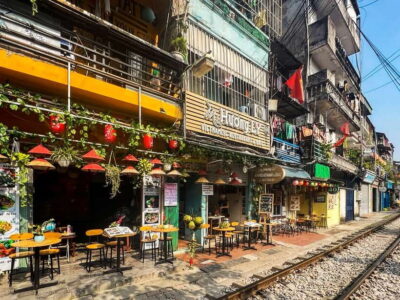
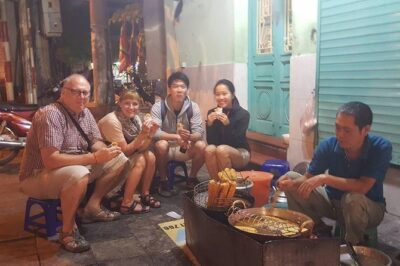
Small Group Hanoi Street Food Tour with a Real Foodie
Read our review →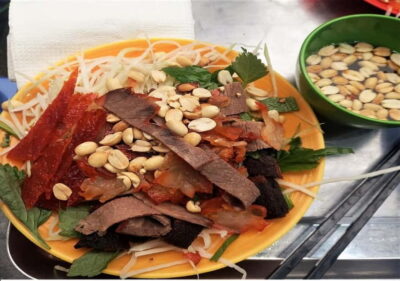
Street Food Tour with Train Street & Hidden Alleyways
Read our review →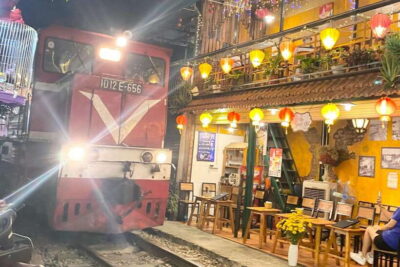
Guided Street Food Tour with Train Street Experience
Read our review →![[HOT] Hanoi Old Quarter Walking Street Food – Small Group Tour](https://i3.thevietnamexplorer.com/wp-content/uploads/hot-hanoi-old-quarter-walking-street-food-small-group-tour-400x267.jpg)
[HOT] Hanoi Old Quarter Walking Street Food – Small Group Tour
Read our review →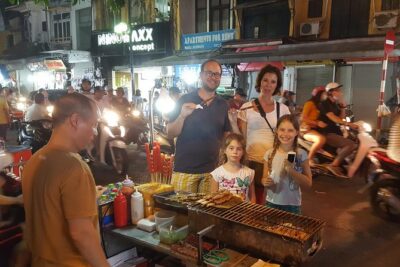
Hanoi Coffee Workshop: Taste Salt, Coconut and Egg Coffee
Read our review →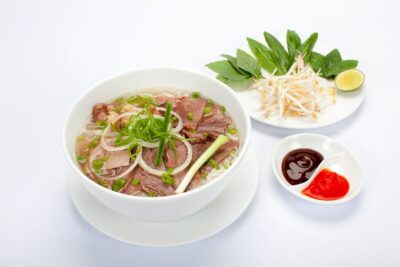
Browse the lists this tour appears in