
Reviewed · MARKET TOURS IN DA NANG
Home Cooking Class: Market, Garden and cooking 4 dishes
Come hungry, leave with useful skills. This four-hour Da Nang experience combines a local market visit, farm work, Vietnamese coffee, and a hands-on meal cooked in a family home. I like that you do more than watch a chef: you help choose ingredients, prepare them, and sit down to eat what you make.
I also like the small-group format, with no more than 9 travelers advertised, or 10 at maximum. Guides such as Lyn, Jane, Nhi, Anna, and Sophia have earned praise for patient instruction and friendly conversation. The main drawback is that the exact menu depends on the day, and pickup details differ between the full tour and the cooking-class-only option.
In This Review
- Key points to know before booking
- Why this class feels more personal than a standard cooking lesson
- Starting with Vietnamese coffee and the Han Market
- Working with local growers in the vegetable garden
- Arriving at the local home around 9:15 or 3:15
- Choosing between the two four-dish menus
- What you actually learn at the cooking table
- Is $26 a good value in Da Nang?
- Who will enjoy this experience most
- Timing, pickup, and cancellation advice
- Should you book the Da Nang Home Cooking Class?
- FAQ
- How long does the cooking class last?
- How many dishes will I cook?
- What dishes are on the Monday, Wednesday, Friday, and Sunday menu?
- What dishes are on the Tuesday, Thursday, and Saturday menu?
- Is hotel pickup included?
- Can I cancel for a full refund?
Key points to know before booking
- Four dishes are cooked from scratch, with a different menu on alternating days.
- The market visit has a practical purpose: you learn about Vietnamese ingredients while helping select what goes into your meal.
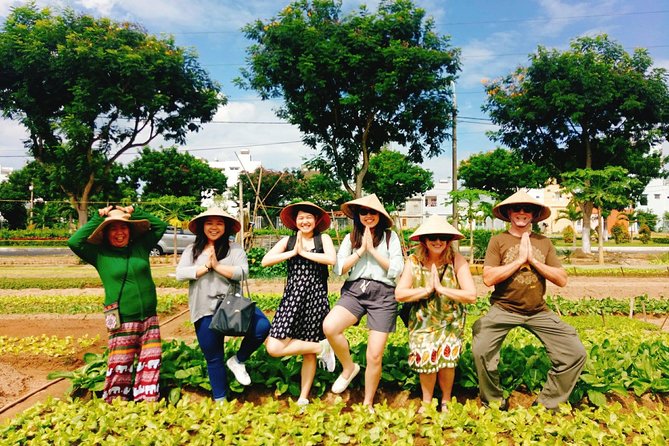
- Farm work is part of the experience, not just a quick photo stop. You join local growers in preparing soil and tending vegetables.
- The family setting makes the class personal, with English instruction, recipes to take home, dessert, and food prepared for you to eat.
- The $26 price covers a full half-day, including ingredients, water, market and farm activities, and pickup when the full tour option is selected.
- The afternoon departure is useful, especially if you prefer dinner after the class or want a slower morning in Da Nang.
Why this class feels more personal than a standard cooking lesson
Many cooking classes begin at a kitchen counter and stay there. This one starts outside the kitchen, where food is bought and grown. That matters because Vietnamese cooking depends heavily on fresh herbs, vegetables, seafood, meat, rice products, and sauces. Seeing ingredients in their everyday setting gives you a better sense of how the meal comes together.
The group size helps, too. A maximum of 9 travelers usually allows the instructor to watch your knife work, answer questions, and correct a recipe before it goes off course. You are not simply standing behind a demonstration table while a chef does everything.
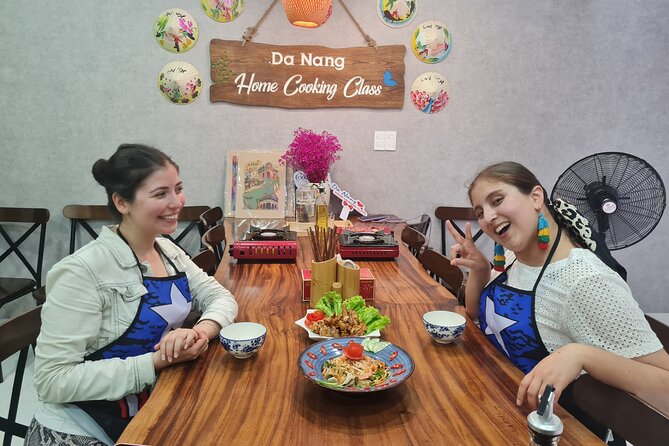
The experience is led by a local family, and the family connection is one of its strongest features. You cook in a local home rather than a formal restaurant kitchen. That creates a more relaxed setting and gives you a chance to talk with the people hosting you.
The English instruction is included, and the recipes are provided in English. That makes the class useful beyond the afternoon itself. You can try to repeat the dishes after returning home, although some ingredients may be harder to find outside Vietnam.
More Cooking Classes in Da Nang
- 5 Dishes Cooking Class with Market Trip in Da Nang
★ 5.0 · 466 reviews - Da Nang Authentic Home Cooking Class
★ 5.0 · 354 reviews - 5 traditional dishes Da Nang cooking class with market trip
★ 5.0 · 331 reviews
Starting with Vietnamese coffee and the Han Market
The full tour begins with hotel pickup in central Da Nang, normally between 8:00 and 8:30 in the morning or between 2:00 and 2:30 in the afternoon. Your first major stop is Han Market, where the guide introduces local ingredients and helps select fresh food for the class.
This is not just shopping as a sightseeing exercise. You see the raw materials before they reach the cooking table, and you learn which items are important to Vietnamese dishes. The market visit also gives you a look at how locals buy food for daily meals.
Vietnamese coffee is part of the early experience. It is strong, sweet, and often served with condensed milk. If you normally drink mild coffee, take this slowly. It is a small but useful cultural detail, and it gives the group time to settle in before the hands-on work begins.
The market can be lively and crowded, so wear comfortable shoes and keep your belongings close. The provided information does not promise a set shopping list or a specific length of time inside the market. The guide’s role is to connect the market to the cooking, which is more valuable than rushing through every aisle.
Han Market is also listed alongside Da Nang Cathedral as a tour stop. The schedule gives the cathedral as a location, but it does not provide a separate guided visit or sightseeing program there. Treat it as a possible route or meeting point rather than the main reason to book this activity.
Working with local growers in the vegetable garden
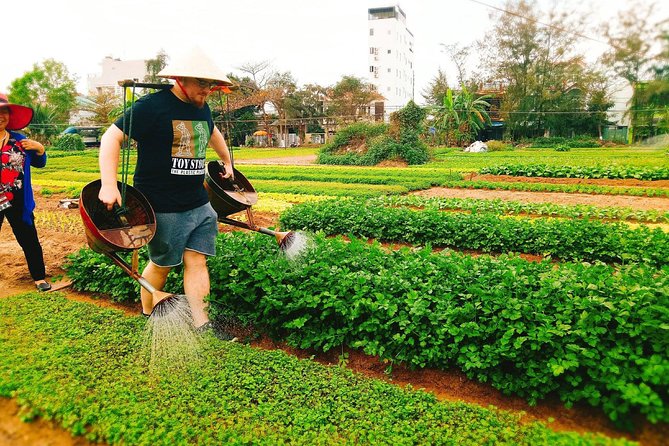
After the market, you join farmers in preparing land and growing vegetables. This gives the experience a second useful layer: you see that Vietnamese food is tied to hands-on work long before it reaches a restaurant bowl.
The farm section may appeal most to people who want contact with everyday life rather than a polished cooking studio. You take part in basic farming activity and meet local people working in the garden. One person described the farm visit as a reminder of village life from childhood, which captures the simple appeal of this part of the day.
Do not expect a full agricultural tour. The supplied details describe helping prepare land and grow vegetables, but they do not promise a long farm lecture, a particular crop, or a set list of tasks. Think of it as a practical introduction to local food production.
This stop also adds physical variety. You are not sitting for four hours. You will move between the market, garden, and cooking area, so light clothing and shoes suited to outdoor work make sense. The activity requires good weather, and the operator may offer another date or a refund if poor conditions cause cancellation.
Arriving at the local home around 9:15 or 3:15
The cooking portion begins at a local house around 9:15 in the morning or 3:15 in the afternoon. The morning class ends around noon, while the afternoon session finishes around 6:00.
The schedule makes this a proper meal, not a quick lesson followed by a sample plate. You prepare lunch or dinner, then eat the food you have made. Ingredients, water, dessert, and recipe copies are included, so the $26 price covers more than instruction.
The home setting is especially useful if you want to understand how dishes are made for ordinary meals. You can focus on technique, seasoning, and preparation instead of watching a chef produce restaurant portions at high speed.
The exact teaching style may depend on the instructor. Jane has been praised for patient guidance through papaya salad, fresh spring rolls, crispy savory pancakes, and beef pho. Lyn has been described as friendly and informative, with strong English skills, while Nhi has received warm praise for being a wonderful instructor. Anna has also guided the market portion for a family group.
That range of names suggests the operator uses several hosts or instructors. Your experience may not be led by the person you have read about, so consider the positive comments as a guide to the general format rather than a guarantee of one specific teacher.
More Market Tours in Da Nang
- Da Nang Cooking Class with Coffee Tasting and Market Visit
★ 5.0 · 310 reviews - Guided Tour to Marble Mountains & Hoi An Walking Tour , Night Market, Boat Ride
★ 5.0 · 218 reviews - Hoi An Night Market with Hoi an walking Tour , Colourful Lanterns, Boat Ride
★ 5.0 · 142 reviews - DaNang Farm-to-Table Cooking Class with Market and Coffee Tasting
★ 5.0 · 131 reviews
Choosing between the two four-dish menus
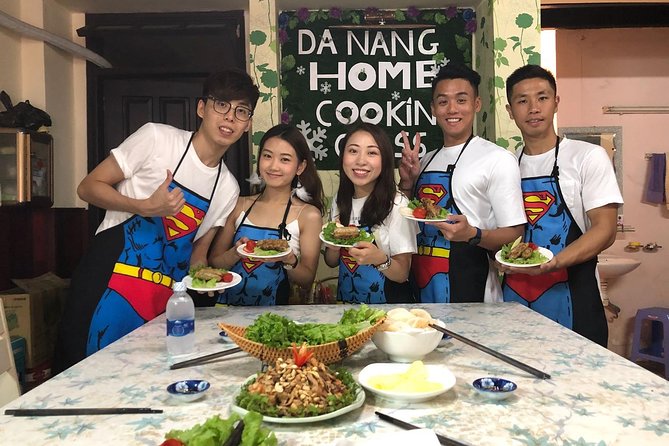
Your menu depends on the day of the week. Monday, Wednesday, Friday, and Sunday use Menu 1:
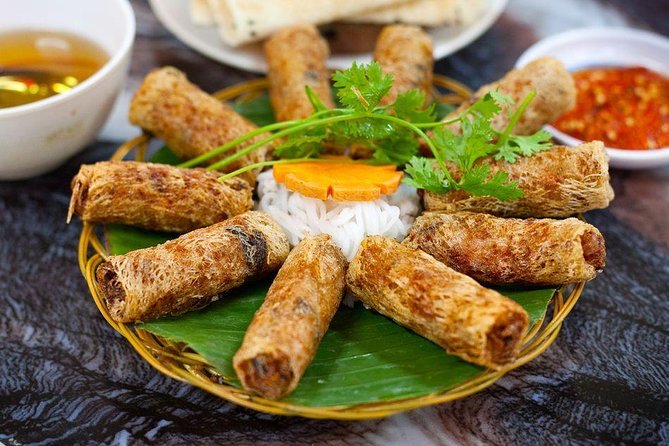
- Quang noodles
- Fish sauce chicken wings
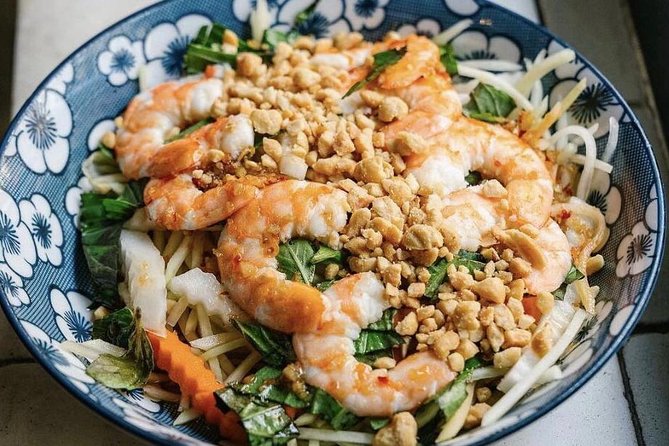
- Green papaya salad with shrimp
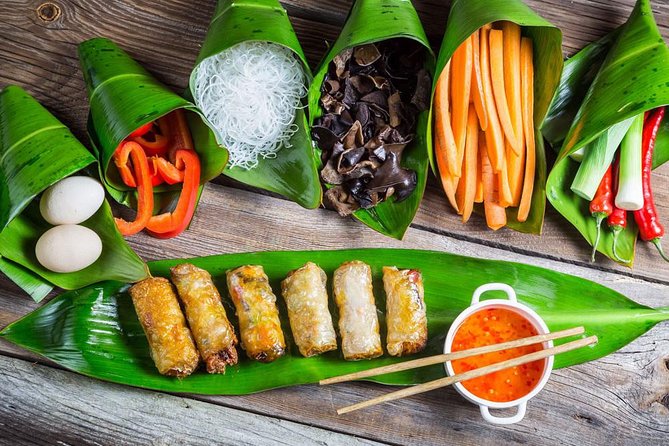
- Deep-fried spring rolls
Tuesday, Thursday, and Saturday use Menu 2:
- Beef noodle soup
- Crispy Vietnamese pancakes, or banh xeo
- Green mango salad with shrimp
- Fresh spring rolls
This alternating schedule is important. If you have your heart set on beef noodle soup or banh xeo, check the calendar before you book. The same applies if you prefer Quang noodles, chicken wings, or deep-fried spring rolls.
Menu 1 gives you a strong introduction to central Vietnamese flavors. Quang noodles are associated with the Da Nang and Quang Nam area, so this is a particularly fitting dish for a class in Da Nang. The combination of noodles, herbs, shrimp salad, chicken wings, and fried rolls also gives you several different cooking methods.
Menu 2 offers a different balance. Beef noodle soup teaches broth preparation, while banh xeo introduces batter, filling, and pan cooking. You also prepare both a fresh spring roll and a mango salad, so the meal includes crisp, uncooked elements alongside hot dishes.
The class is hands-on, but the information does not specify how much of every task each participant performs. You should expect active preparation and instruction, not complete independent cooking of four restaurant-size dishes from start to finish. With so many dishes on the menu, the pace may be brisk.
What you actually learn at the cooking table
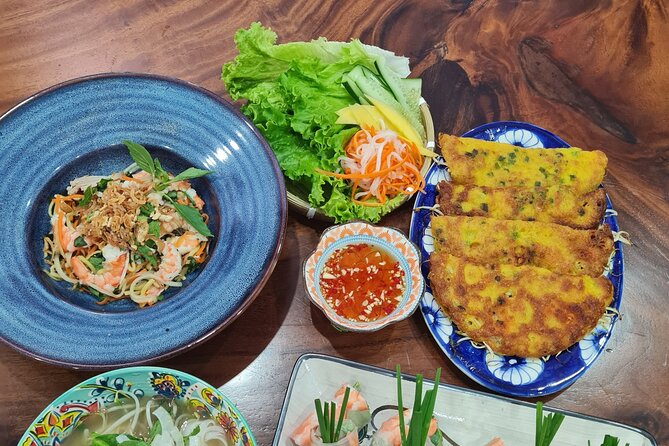
The value here is in the range of basic skills. You work with fresh produce, herbs, noodles, wrappers, seafood or meat, sauces, and cooking methods used throughout Vietnam.
Salad preparation teaches how sour, sweet, salty, and fresh flavors work together. Spring rolls help with handling rice paper and arranging fillings. Deep-fried rolls add frying technique, while banh xeo requires attention to batter and pan heat.
Quang noodles and beef noodle soup offer different lessons in noodle dishes. One centers on a regional noodle preparation, while the other depends on broth and seasoning. Fish sauce chicken wings show how a familiar ingredient can become the main flavor rather than a background condiment.
The class also gives you recipe copies in English. That is a real benefit, since memory fades quickly after a busy cooking session. Take notes about ingredient names and substitutions if you hope to repeat the dishes at home.
You should also expect plenty of food. One participant found the class so generous that the group could not finish everything. Plan your appetite accordingly, especially if you choose the afternoon class and have already eaten a large lunch.
Is $26 a good value in Da Nang?
At $26 per person, this is a strong value for a four-hour activity. The fee includes the market tour, farming activity, cooking instruction, ingredients, water, dessert, recipes, and an English-speaking instructor. Pickup is included when you choose the full tour option.
The value is not only in the food. A meal in Da Nang may cost far less than the class, but a restaurant meal does not give you market access, garden work, cooking practice, family contact, or recipes. You are paying for a full half-day of guided activity.
Check the transport wording carefully before booking. Drop-off is not included, and pickup and drop-off are not included for the cooking-class-only option. The full tour option offers pickup from hotels in central Da Nang, but the details supplied do not promise pickup outside the center.
The experience is also recommended by 95 percent of the people who rated it, with a 4.8 score from 61 reviews. That is a strong record, though it does not remove the practical issues around weather, minimum group size, or menu dates.
Who will enjoy this experience most
I would choose this class if you want to meet local people and learn by doing. It suits couples, families, small groups, and solo visitors who enjoy sharing a meal after working together.
It is also a good choice for a first introduction to Vietnamese food. You get coffee, a market, a garden, several cooking methods, and four dishes in one outing. The menu changes by day, so repeat visitors could even choose a different date for a new set of recipes.
Families should note that the class includes outdoor work and active food preparation. The available information does not state an age limit or specific accessibility arrangements, so ask the operator if you have mobility concerns or need special support.
This may not be right for you if you want a quiet, highly polished kitchen lesson with exact timing for every recipe. The market and garden add character, but they also make the day less controlled than a studio class. You should also be comfortable with a meal that includes shrimp, fish sauce, meat, and fried foods, depending on the menu.
Timing, pickup, and cancellation advice
You can select a morning or afternoon departure. Morning pickup runs approximately from 8:00 to 8:30, with the cooking session beginning around 9:15 and ending at noon. Afternoon pickup runs around 2:00 to 2:30, with cooking at about 3:15 and the tour ending around 6:00.
The activity confirms your booking at the time of reservation. Free cancellation is available up to 24 hours before the start time for a full refund. Changes made less than 24 hours ahead are not accepted, and the paid amount is not refunded for late cancellation.
The tour needs good weather and a minimum number of participants. If the operator cancels for either reason, you can choose another date or experience, or receive a full refund.
Should you book the Da Nang Home Cooking Class?
Book it if you want more than a recipe demonstration. The strongest parts are the market-to-table structure, the family setting, the farm activity, and the chance to eat four dishes you helped prepare. At $26, it offers a lot for a half-day.
Before paying, check two things: the menu assigned to your date and the pickup option you are selecting. If you need hotel transportation, choose the full tour option and confirm that your hotel is in central Da Nang.
I would especially recommend it for food-focused visitors, families, and anyone who prefers a personal local activity over a standard sightseeing stop. If you want a carefully choreographed class with no outdoor work, choose another format. For an affordable, friendly introduction to Vietnamese cooking, this one earns its strong rating.
FAQ
How long does the cooking class last?
The full experience lasts approximately four hours. The morning version runs from about 8:00 or 8:30 pickup until noon, while the afternoon version runs from about 2:00 or 2:30 pickup until 6:00.
How many dishes will I cook?
You will learn to cook four traditional Vietnamese dishes. The menu changes according to the day of the week.
What dishes are on the Monday, Wednesday, Friday, and Sunday menu?
Those days include Quang noodles, fish sauce chicken wings, green papaya salad with shrimp, and deep-fried spring rolls.
What dishes are on the Tuesday, Thursday, and Saturday menu?
Those days include beef noodle soup, crispy Vietnamese pancakes, green mango salad with shrimp, and fresh spring rolls.
Is hotel pickup included?
Pickup is offered for the full tour option from hotels in central Da Nang. Pickup and drop-off are not included for the cooking-class-only option, and drop-off is not included.
Can I cancel for a full refund?
Yes. You can cancel at least 24 hours before the experience start time for a full refund. Late cancellations and changes made less than 24 hours before the start are not accepted.
More Workshops in Da Nang
- Hoi An: Lantern Making, Basket Boat, and Cooking Class
★ 4.9 · 233 reviews - RICE PAPER Noodle Making Experience & Hoi An Cooking Class Class
★ 5.0 · 164 reviews - Surf Lessons
★ 5.0 · 42 reviews - Basket Boat Tour from Da Nang/HoiAn by Lunch & Cafe Class Private
★ 5.0 · 36 reviews
More Shopping Tours in Da Nang
- Market Tour, Basket Boat Ride & Cooking Class by Hangcoconut
★ 4.8 · 95 reviews - Marble Mountain – Hoi An Colour Lanterns & Night Market from DN
★ 5.0 · 67 reviews - Cook 5 Dishes Authentic Vietnam Food and Market Adventure
★ 5.0 · 56 reviews - Da Nang By Night: Seafood dinner, night market and cruise trip
★ 5.0 · 38 reviews
New around Da Nang
- Your Incredible Scooter Adventure On Hai Van Pass★ 5.0 · 67 reviews
- Private car from Danang to Hoi An★ 5.0 · 20 reviews
- Four-Hands Harmony (Perfect · Synchronized · Flow)★ 5.0 · 78 reviews
- Dry Deep Bodywork (Dry | Thai–Shiatsu based)★ 5.0 · 45 reviews
- Da Nang Street Food Private Tour With Local Students★ 5.0 · 24 reviews
- Private Customize car rental 4 hours – 8 hours- 12 hours Da Nang★ 5.0 · 22 reviews
- Monkey mountain-Huge Lady Buddha-Marble mountains & Am Phu caves★ 5.0 · 210 reviews
- Surf Lessons★ 5.0 · 42 reviews
Market Tours in Da Nang, compared.
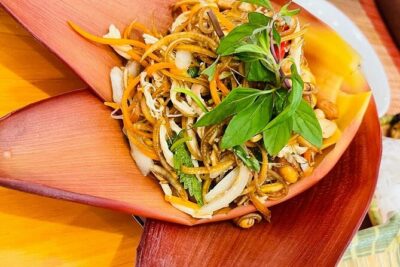
5 Dishes Cooking Class with Market Trip in Da Nang
Read our review →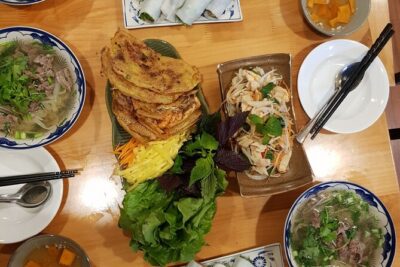
5 traditional dishes Da Nang cooking class with market trip
Read our review →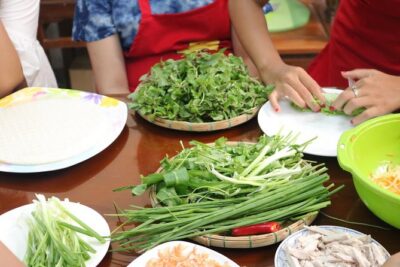
Da Nang Cooking Class with Coffee Tasting and Market Visit
Read our review →
Guided Tour to Marble Mountains & Hoi An Walking Tour , Night Market, Boat Ride
Read our review →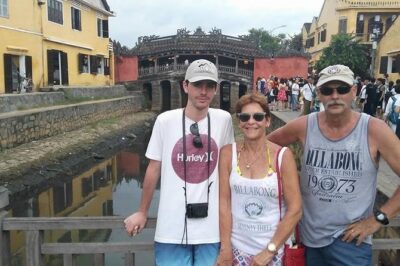
Hoi An Night Market with Hoi an walking Tour , Colourful Lanterns, Boat Ride
Read our review →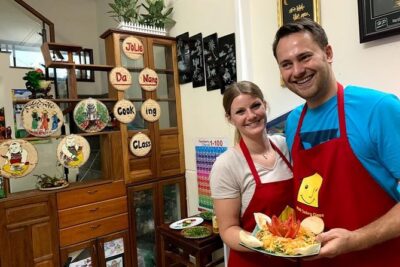
DaNang Farm-to-Table Cooking Class with Market and Coffee Tasting
Read our review →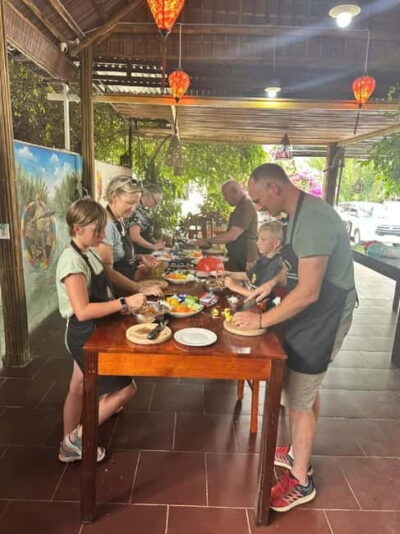
Market Tour, Basket Boat Ride & Cooking Class by Hangcoconut
Read our review →
Marble Mountain – Hoi An Colour Lanterns & Night Market from DN
Read our review →Browse the lists this tour appears in