Reviewed · MARKET TOURS IN DA NANG
DaNang Farm-to-Table Cooking Class with Market and Coffee Tasting
Fresh food tells Da Nang’s story.
This farm-to-table cooking class combines a vegetable village, local market, Vietnamese coffee tasting, and a hands-on lunch in one well-paced morning. I like the direct connection to everyday food, and I like that your English or French-speaking guide can explain both ingredients and cooking methods. The main point to consider is that hotel pickup is not included, so you need to reach the meeting point at 9 Hàm Tử yourself.
The small group, capped at 10 people, should keep the class personal without making it feel too private. The experience costs $60 per person and lasts about four and a half hours, a fair price for transport during the activity, ingredients, equipment, refreshments, and the meal you prepare.
In This Review
- Key points at a glance
- Why this Da Nang cooking class works
- A short walk through Da Nang’s vegetable village
- Vietnamese coffee before the market
- Reading the market like a local shopper
- Cooking in a local home
- The lunch you make yourself
- How much value do you get for $60?
- Timing, meeting point, and what to plan
- Who should book this experience?
- Final call: book it for the food lesson, not just lunch
- FAQ
- How much does the Da Nang farm-to-table cooking class cost?
- How long does the cooking class last?
- Where does the experience begin?
- Where does the experience end?
- Is hotel pickup included?
- What is included in the price?
- How many people can join the class?
- Is the guide available in English or French?
- Can I cancel for a full refund?
Key points at a glance
- Start with a real vegetable village: See how herbs and produce are grown near Da Nang before cooking with similar ingredients.
- Shop like a local: The market visit helps you recognize the everyday ingredients behind Vietnamese home cooking.
- Coffee is part of the lesson: The tasting adds a useful piece of Vietnamese food culture beyond the cooking bench.
- Cook and eat your own lunch: You prepare traditional dishes step by step, then sit down for a family-style meal.
- Small group, bilingual guidance: A maximum of 10 people and English or French instruction make it easier to ask questions.
- Strong value at $60: Transport during the class, food, equipment, refreshments, and lunch are included, while hotel transfers and personal spending are not.
Why this Da Nang cooking class works
Many food classes begin with a pile of ingredients on a counter. This one starts earlier, with the source of those ingredients. You first walk to a nearby vegetable village, then visit a market, and only after that move into a local home for the cooking session.
I like that order. It gives you a reason for each herb, leaf, and vegetable before you start chopping. Vietnamese food can look simple on the plate, but its flavor often depends on fresh herbs, crisp produce, sauces, and contrasting textures. Seeing those ingredients in their growing and shopping stages helps the meal make more sense.
The class is run by Jolie Danang Cooking Class. The teaching team includes Hana and Blue, names connected with the class experience, and the guide can speak English and French. That matters in a cooking class, where a quick question about texture or timing can make the difference between following a recipe and understanding it.
You should also know what this is not. It is not a restaurant meal with a cooking demonstration added on. You do the work yourself. That makes it more rewarding, but it also means you need to be ready to participate rather than simply watch.
More Cooking Classes in Da Nang
- 5 Dishes Cooking Class with Market Trip in Da Nang
★ 5.0 · 466 reviews - Da Nang Authentic Home Cooking Class
★ 5.0 · 354 reviews - 5 traditional dishes Da Nang cooking class with market trip
★ 5.0 · 331 reviews
A short walk through Da Nang’s vegetable village
The first stop is a nearby vegetable-growing area. The description points to a small local garden plot and time with the family connected to it. This is a modest setting, not a grand agricultural attraction, and that is part of its appeal.
You get a look at the herbs and leaves used in Vietnamese cooking and hear about local farming life. The stop is especially useful for anyone who has wondered why a Vietnamese dish arrives with so many greens or why certain leaves are served fresh rather than cooked.
This part also puts Da Nang’s food in context. The ingredients are not abstract items from a supermarket shelf. They are plants grown, selected, and carried into ordinary kitchens. A short walk through the village can make familiar dishes feel less mysterious.
Keep your expectations practical. The farm visit is brief enough to fit into a half-day class, so you should not expect an extended agricultural tour. Its value comes from the link it creates between growing, shopping, cooking, and eating.
Vietnamese coffee before the market
The coffee tasting gives the morning a distinctly Vietnamese pause. Coffee is not just a drink here. It is part of daily life, and tasting it during a food-focused outing adds another layer to the class.
The provided details do not specify the exact coffee preparation or the number of samples. You can expect a tasting rather than a full coffee workshop. If coffee matters to you, ask your guide questions about the style being served and how it fits into local routines.
This is also a useful break between the garden walk and the market visit. A little refreshment helps keep the morning comfortable, especially when you are moving between stops and then preparing lunch.
Reading the market like a local shopper
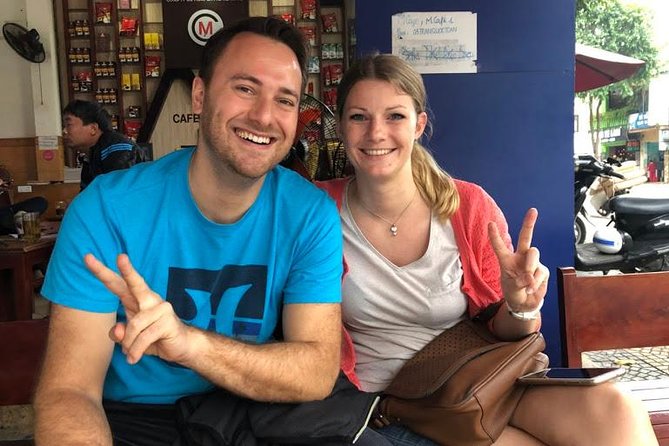
Next comes a visit to a local market, including the Han Market in the experience praised by one French-speaking participant. The purpose is not simply to look around. You learn how to select fresh ingredients and identify the items used in everyday Vietnamese cooking.
That practical focus is one of the best reasons to book this class. A recipe is easy to forget. Knowing what fresh herbs, vegetables, and other ingredients look like gives you a better chance of recreating Vietnamese food at home.
Markets can also be crowded and visually busy, though the supplied details do not describe the exact market conditions during your visit. Stay close to your group and listen carefully when the guide points out ingredients. The group limit of 10 should help prevent the visit from becoming impersonal.
The market stop also connects nicely with the vegetable village. At the first stop, you see how produce grows. Here, you see how it is selected and sold. By the time you reach the cooking class, you have followed the food from plant to shopping basket.
More Market Tours in Da Nang
- Da Nang Cooking Class with Coffee Tasting and Market Visit
★ 5.0 · 310 reviews - Guided Tour to Marble Mountains & Hoi An Walking Tour , Night Market, Boat Ride
★ 5.0 · 218 reviews - Hoi An Night Market with Hoi an walking Tour , Colourful Lanterns, Boat Ride
★ 5.0 · 142 reviews - Market Tour, Basket Boat Ride & Cooking Class by Hangcoconut
★ 4.8 · 95 reviews
Cooking in a local home
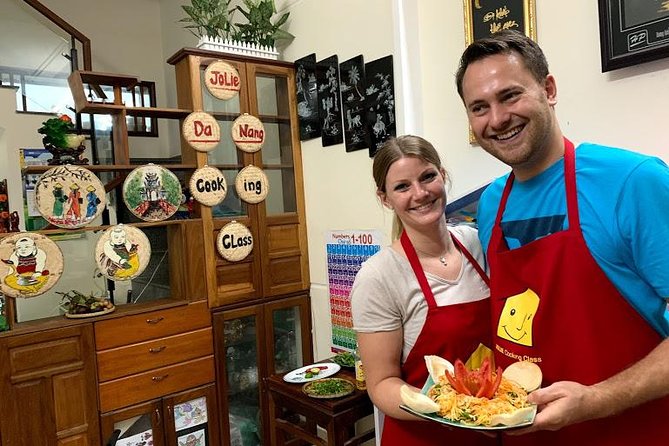
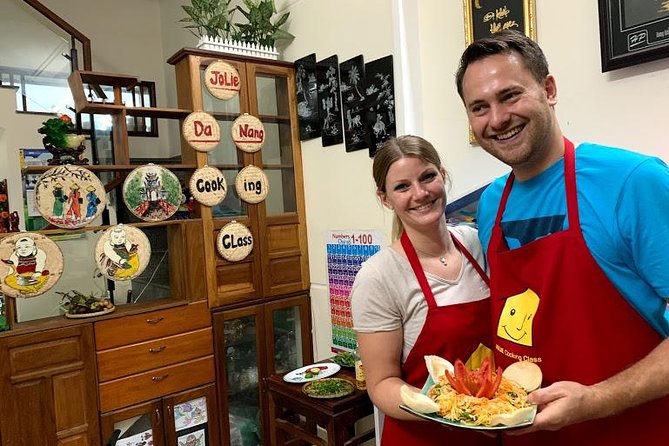
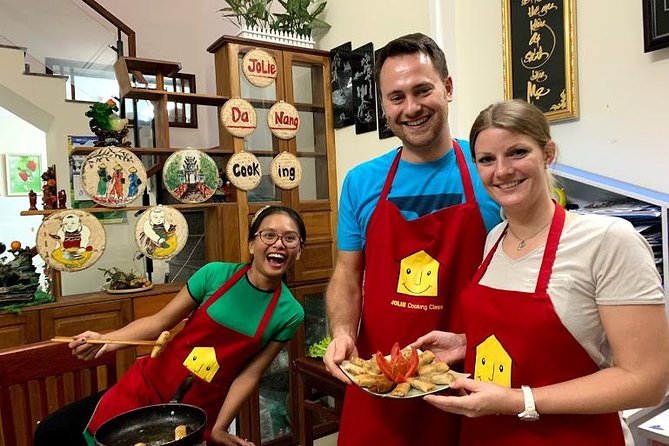
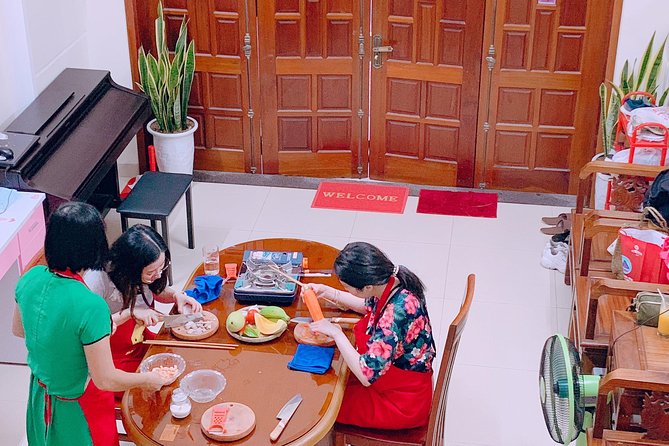
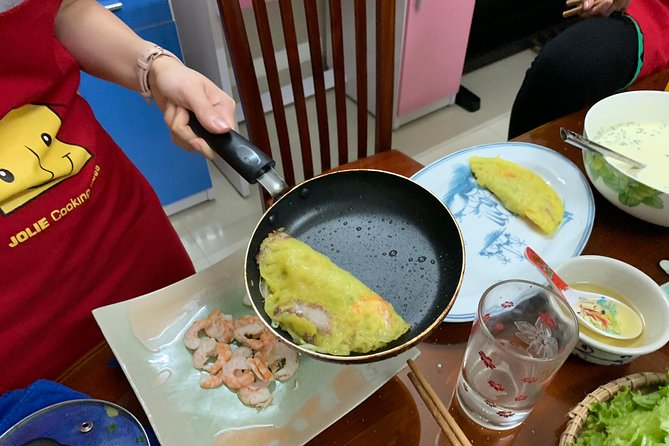
The final part takes place in a welcoming local home. This setting gives the class a more personal feel than a large commercial kitchen. You prepare traditional Vietnamese dishes step by step, with the guide explaining what to do and answering questions in English or French.
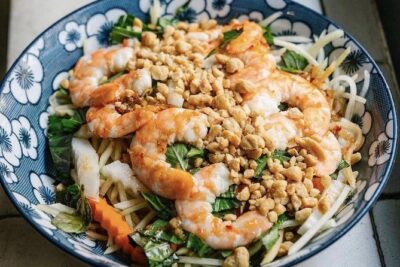
The exact menu may vary, but dishes associated with this class include Pho Bo, papaya salad, pancake rolls, and aubergine hot pot. That mix gives you several useful techniques: working with herbs and fresh vegetables, assembling rolls, balancing a salad, and handling a cooked dish with a deeper sauce or broth.
I particularly like the range. You are not learning one complicated centerpiece and calling it a day. You get several types of Vietnamese food, which gives you more ideas for meals at home.
The class is hands-on, so you should expect to chop, mix, assemble, and cook. Your results may not look exactly like a professional cook’s plate, but that is not the point. The guide’s job is to give you enough confidence to repeat the dishes without needing a restaurant kitchen.
One participant described the classroom as clean and well organized, and praised the instructor’s high energy. That combination is important. A clean work area makes food preparation more comfortable, while an upbeat teacher can keep the class moving when several people are cooking at different speeds.
The lunch you make yourself
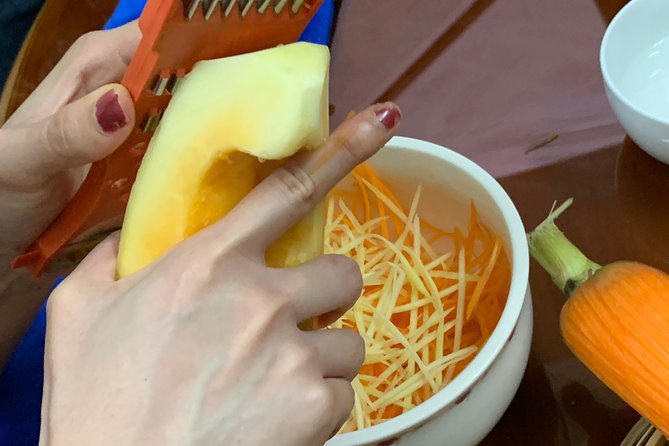
After the cooking, you sit down to eat the meal you prepared. This family-style ending gives the class a proper payoff. You are not just collecting recipes or taking photographs of ingredients. You get to taste the results while the methods are still fresh in your mind.
The meal is included, as are the ingredients and equipment. That makes the $60 price easier to assess. You are paying for instruction, a market and village visit, refreshments, kitchen use, food, and transport during the activity, not just for a short demonstration.
The meal may also reveal where your technique needs work. A sauce that seems balanced during cooking may taste different once served with the rest of the meal. That is useful information if you plan to cook Vietnamese food after returning home.
How much value do you get for $60?
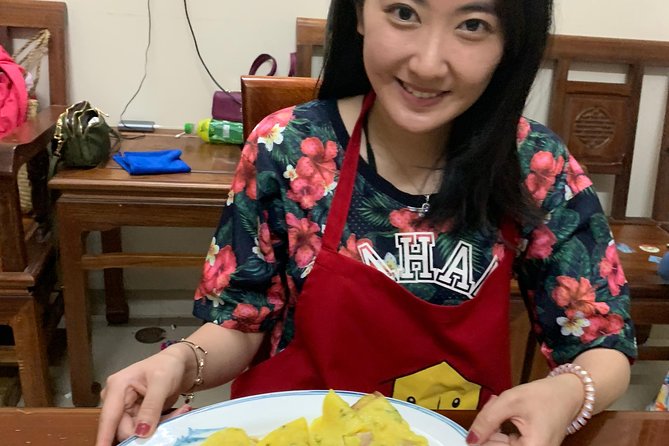
At $60 per person, this is not the cheapest possible food activity in Da Nang. It is also more than the cost of ordering a local lunch. The comparison is not quite fair, because the price covers about four and a half hours of activity and several separate components.
You receive:
- A vegetable village visit
- A local market visit
- Vietnamese coffee tasting
- A hands-on cooking class
- All ingredients and equipment
- Refreshments
- Transport during the experience
- The lunch you prepare
- Small-group instruction
That is solid value if you want a full morning built around food. The strongest value comes from the teaching and the market connection. If you only want to eat Vietnamese dishes, a restaurant will cost less and require less time. If you want to understand how the food is selected and prepared, this class gives you much more.
The maximum of 10 people is another plus. It does not guarantee one-on-one instruction every minute, but it is a reasonable size for a practical class. You should have room to ask questions without being lost in a large crowd.
Timing, meeting point, and what to plan
The experience begins at 9 Hàm Tử, Bắc Mỹ Phú, Ngũ Hành Sơn, Da Nang 550000. It ends back at the same meeting point. Hotel pickup and drop-off are not included, so you need to arrange your own way to the start.
The activity lasts approximately 4 hours and 30 minutes. Plan your morning around that full block, especially because the class ends with lunch rather than just a short tasting.
Transportation during the experience is included. This is helpful as the morning moves between the garden, market, and cooking location, but it does not remove the need to reach the starting point independently.
A mobile ticket is provided, and confirmation arrives at booking. The class is near public transportation. Since the experience is usually booked about 32 days ahead, reserve early if your Da Nang dates are fixed, particularly if you want a specific morning.
Free cancellation is available when you cancel at least 24 hours before the start time. Changes or cancellations inside that window are not accepted for a refund. The class also requires a minimum number of participants, and if that minimum is not reached, you are offered another date or experience, or a full refund.
Who should book this experience?
I would recommend it to food-focused visitors who want more than a restaurant meal. It is a good match if you enjoy asking questions, working with your hands, and learning how ingredients fit together.
It also suits couples, families, and small groups who want a shared activity. The cooking itself gives everyone something to do, while the market and garden stops keep the morning from feeling like a single stationary lesson.
The class is especially useful for people who plan to cook Vietnamese food at home. The market visit can be as valuable as the recipes because it teaches you what to look for when buying produce.
French-speaking participants should find the bilingual guide helpful, while English-speaking participants have a clear reason to ask about ingredients, cooking steps, and local food habits. The class is not limited to expert cooks. Beginners can take part because the dishes are prepared step by step.
You may want to skip it if you dislike group activities, have no interest in cooking, or prefer a quick food tour with no practical work. The four-and-a-half-hour schedule is a commitment, and hotel transport is not part of the package.
Final call: book it for the food lesson, not just lunch
I would book this Da Nang cooking class if I wanted a practical introduction to Vietnamese home cooking. Its best feature is the full path from vegetable village to market to kitchen table. That sequence gives the meal meaning.
The strongest reasons to choose it are the small group, the included food and equipment, the bilingual instruction, and the chance to prepare several traditional dishes. The main drawbacks are the self-arranged meeting point and the fact that the class requires active participation.
At $60, it is good value for a half-day food experience with transport during the activity and lunch included. Book it if you want to return home with more than a pleasant memory: you will also have a better eye for ingredients and a few Vietnamese dishes to try in your own kitchen.
FAQ
How much does the Da Nang farm-to-table cooking class cost?
The experience costs $60 per person.
How long does the cooking class last?
The activity lasts approximately 4 hours and 30 minutes.
Where does the experience begin?
It begins at 9 Hàm Tử, Bắc Mỹ Phú, Ngũ Hành Sơn, Da Nang 550000, Vietnam.
Where does the experience end?
The activity ends back at the meeting point.
Is hotel pickup included?
No. Hotel pickup and drop-off are not included.
What is included in the price?
The price includes the vegetable village and market visits, Vietnamese coffee tasting, hands-on cooking class, ingredients, equipment, transportation during the experience, refreshments, the meal you prepare, and the small-group format.
How many people can join the class?
The activity has a maximum of 10 participants.
Is the guide available in English or French?
Yes. The guide speaks both English and French.
Can I cancel for a full refund?
Yes, if you cancel at least 24 hours before the experience start time. Cancellations or changes made less than 24 hours before the start time are not accepted for a refund.
More Food Tours in Da Nang
- Da Nang & Hoi An: Food, Sightseeing, Culture & Hidden Gems
★ 5.0 · 806 reviews - Da Nang Evening Food Tour
★ 5.0 · 231 reviews - Da Nang Food Tour Motorbike & Sightseeing By Ao Dai Lady Rider
★ 5.0 · 121 reviews - Cook 5 Dishes Authentic Vietnam Food and Market Adventure
★ 5.0 · 56 reviews
More Coffee Experiences in Da Nang
- Da Nang Coffee Making Workshop
★ 5.0 · 26 reviews - Hoi An: Vietnamese Coffee Culture and Coffee Making Class
★ 4.9 · 4,006 reviews - Hanoi Coffee Experience: 6 Brews, 9 Recipes & 3 Liquor Tastings
★ 5.0 · 2,945 reviews - Hanoi Coffee Workshop: Taste Salt, Coconut and Egg Coffee
★ 5.0 · 1,286 reviews
New around Da Nang
- Your Incredible Scooter Adventure On Hai Van Pass★ 5.0 · 67 reviews
- Four-Hands Harmony (Perfect · Synchronized · Flow)★ 5.0 · 78 reviews
- Private car from Danang to Hoi An★ 5.0 · 20 reviews
- Dry Deep Bodywork (Dry | Thai–Shiatsu based)★ 5.0 · 45 reviews
- Da Nang Street Food Private Tour With Local Students★ 5.0 · 24 reviews
- Private Customize car rental 4 hours – 8 hours- 12 hours Da Nang★ 5.0 · 22 reviews
- Monkey mountain-Huge Lady Buddha-Marble mountains & Am Phu caves★ 5.0 · 210 reviews
- Surf Lessons★ 5.0 · 42 reviews
Market Tours in Da Nang, compared.
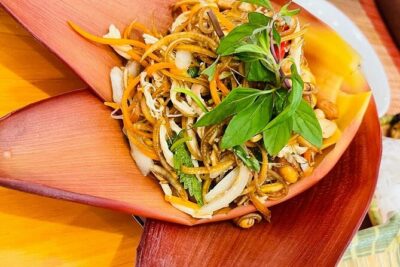
5 Dishes Cooking Class with Market Trip in Da Nang
Read our review →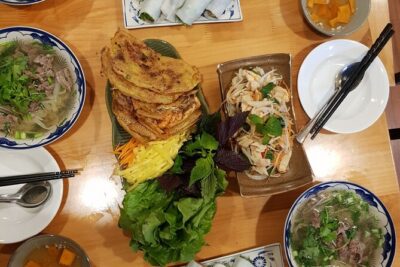
5 traditional dishes Da Nang cooking class with market trip
Read our review →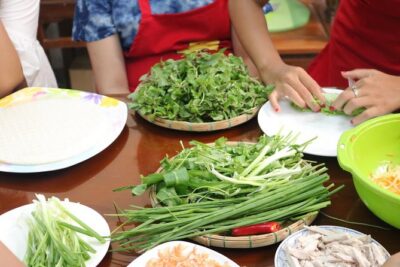
Da Nang Cooking Class with Coffee Tasting and Market Visit
Read our review →
Guided Tour to Marble Mountains & Hoi An Walking Tour , Night Market, Boat Ride
Read our review →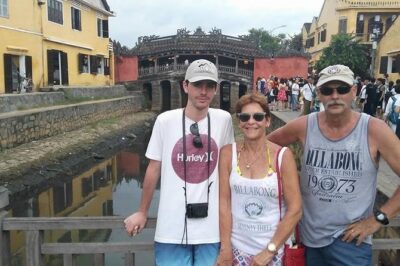
Hoi An Night Market with Hoi an walking Tour , Colourful Lanterns, Boat Ride
Read our review →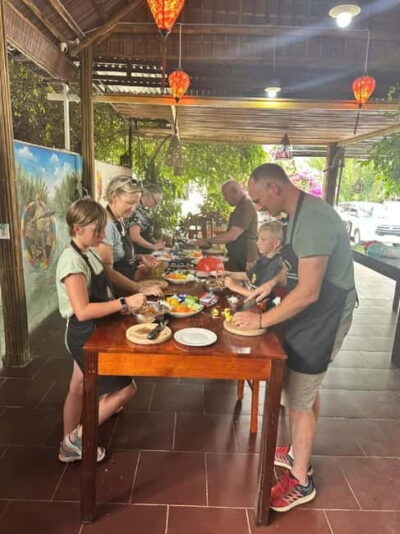
Market Tour, Basket Boat Ride & Cooking Class by Hangcoconut
Read our review →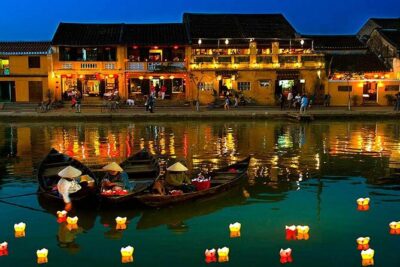
Marble Mountain – Hoi An Colour Lanterns & Night Market from DN
Read our review →