
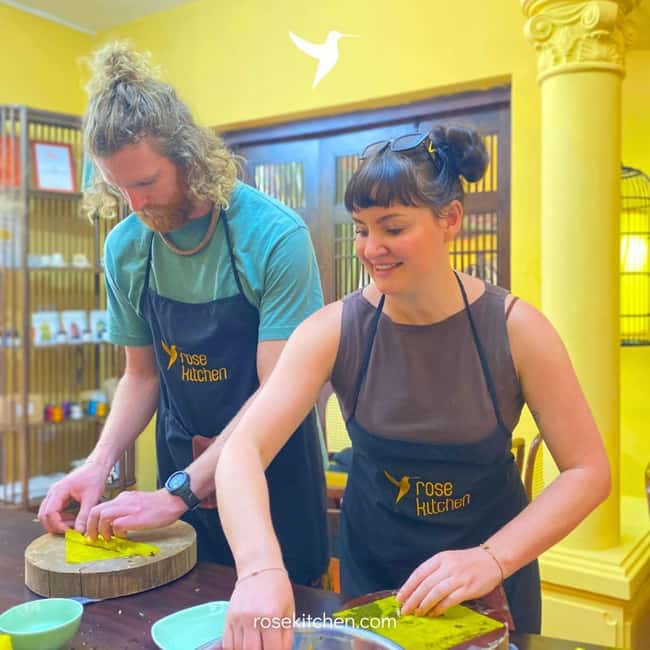
Reviewed · HANOI TOURS
Hanoi: Rose Kitchen: Pho/Bun Cha/Nem+ Free Egg/ Salt Coffee
Hanoi’s best lessons may begin beside a beer sign. Rose Kitchen leads you from a crossroads on Hoang Hoa Tham Street into a quiet garden villa, where you cook one Vietnamese classic, hear the stories behind it, and finish with complimentary Hanoi coffee. I especially like the small-scale setting and the patient English-speaking guides, including Simon, Maxi, Aroma, Kim, Colin, and Oanh. The main thing to note is that the class is built around one chosen dish, so you should not expect a full menu unless the provider confirms otherwise.
At $21 per person for two hours, this is a fair deal if you want more than a meal. You receive a welcome herbal drink, ingredients, equipment, a full lunch or dinner, unlimited mineral water, coffee, and help from a dedicated butler. The meeting point takes a little care to find, but a staff member meets you at the yellow Bia Hoi Mau Dich sign and walks you to the kitchen.
In This Review
- Key Details Before You Book
- Finding the Villa Near Hoang Hoa Tham Street
- Choosing Between Pho, Bun Cha, and Spring Rolls
- What the Two-Hour Class Feels Like
- The Food: From Preparation to Full Meal
- Vietnamese Coffee Makes the Right Ending
- Why the Cultural Side Matters
- Price, Comfort, and Who Gets the Most Value
- Small Drawbacks to Keep in Mind
- Booking and Cancellation Tips
- FAQ
- How long does the Rose Kitchen cooking class last?
- What dishes can I choose to cook?
- Is Vietnamese coffee included?
- Where is the meeting point?
- Is the class suitable for vegetarians or people avoiding gluten?
- Can I cancel the booking?
- Should You Book Rose Kitchen Hanoi?
Key Details Before You Book
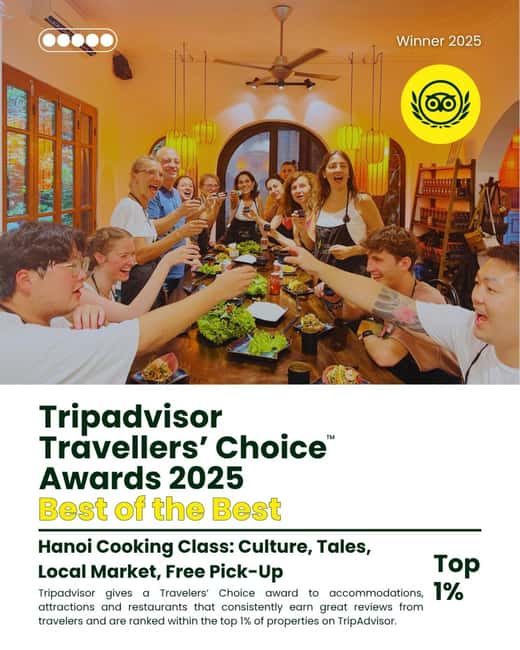
- Two garden villas, each 250 square meters: You cook in a spacious, air-conditioned setting rather than a cramped demonstration room.
- Choose one Vietnamese dish: Options include pho, bun cha, banh xeo, spring rolls, or cha ca la vong, with vegetarian versions available.
- Cultural stories come with the chopping board: Your guide explains customs, ingredients, and why particular dishes matter in Hanoi.
- Coffee is part of the finish: Pick egg, coconut, salt, or classic Vietnamese drip coffee for the group.
- The strongest praise goes to the guides: Simon, Maxi, Aroma, Kim, Colin, and Oanh are repeatedly described as warm, patient, clear, and fun.
- Your booking supports elder women: The kitchen provides steady work for older women from rural communities.
Finding the Villa Near Hoang Hoa Tham Street
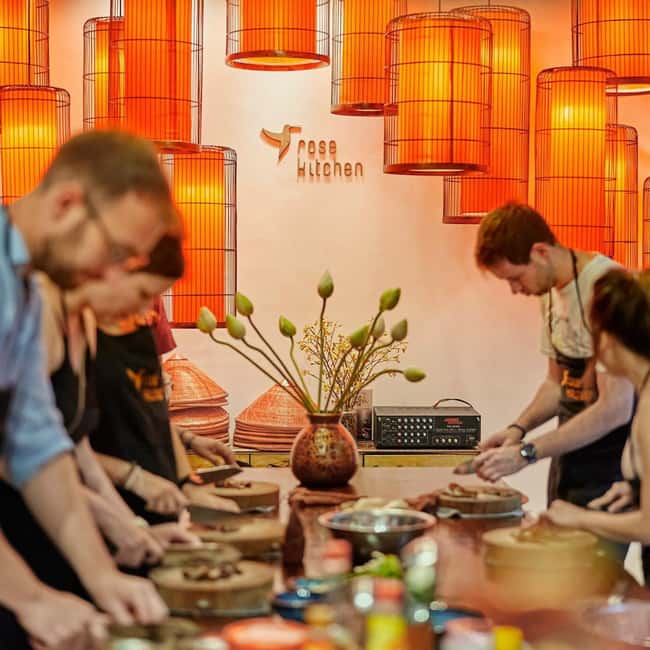
Rose Kitchen does not meet you at a large tourist attraction. You need to take a taxi or Grab to Alley 75, Lane 173, Hoang Hoa Tham Street, at a crossroads. Look for the large yellow sign marked Bia Hoi Mau Dich.
That meeting point matters because the kitchen itself is only a short walk away. A cultural storyteller waits at the sign and escorts you in, so you are not left wandering through Hanoi’s lanes with a phone in one hand and cooking expectations in the other.
I would save the meeting point in your phone before leaving. If you book a car, show the driver the full alley and lane details rather than relying only on Rose Kitchen Hanoi. The exact sign is your best landmark.
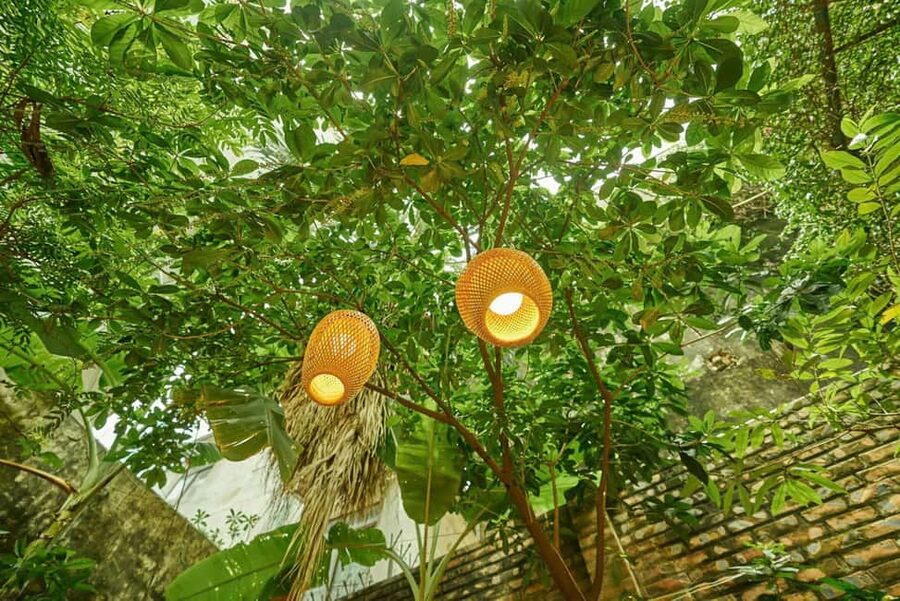
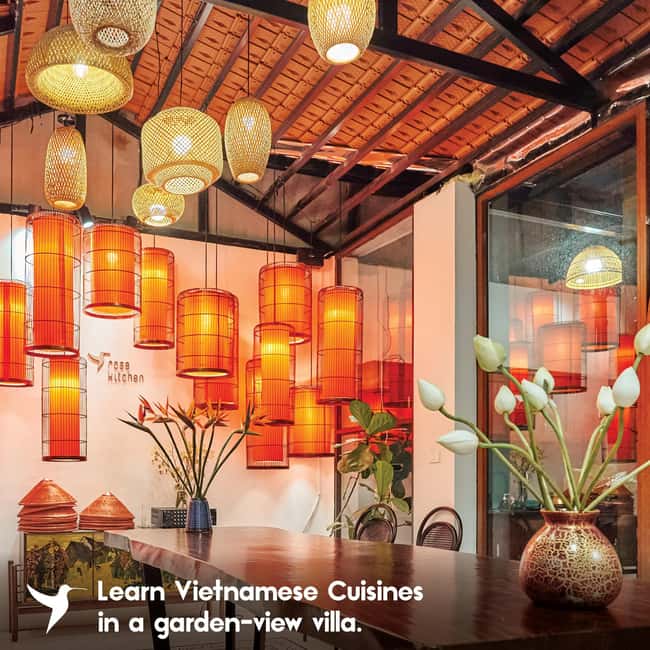
The arrival feels more personal than a standard cooking school reception. You are welcomed with an herbal drink, then shown into one of two garden villas. Each villa is listed at 250 square meters, giving the class room to breathe.
The air conditioning is a useful touch in Hanoi. Cooking over heat, preparing broth, or standing at a work surface can become tiring in warm weather, so the cool indoor setting makes the two-hour session easier for families and older participants.
A few more Hanoi runs to compare on price
- Hanoi Coffee Experience: 6 Brews, 9 Recipes & 3 Liquor Tastings
★ 5.0 · 2,945 reviews - Hanoi Coffee Workshop: Taste Salt, Coconut and Egg Coffee
★ 5.0 · 1,286 reviews - Hanoi: Salt Coffee Workshop Awake Your Senses With 6 Brews
★ 5.0 · 792 reviews
Choosing Between Pho, Bun Cha, and Spring Rolls
The class asks you to choose one main dish for your group. That choice shapes the whole lesson, so think about what you actually want to understand, not simply what you most enjoy eating.
The choices cover several corners of Vietnamese cooking:
- Pho bo or pho ga: Beef or chicken noodle soup, with a focus on the dish Hanoi is famous for. One particularly useful cultural point is why pho is commonly eaten for breakfast.
- Bun cha: Grilled pork served with noodles, herbs, and dipping sauce. This is an excellent Hanoi choice because the dish is closely tied to the city’s food culture.
- Nem ran: Hanoi-style fried spring rolls. You work with fillings and wrappers before frying them.
- Goi cuon: Fresh spring rolls with herbs and dipping sauce. This gives you a lighter, uncooked option.
- Banh xeo: A crisp, sizzling pancake associated with southern Vietnam.
- Cha ca la vong: Grilled fish with dill, a well-known Hanoian specialty.
Vegetarian versions are available for all listed dishes. That is more useful than a vague promise of dietary flexibility, but I would still state your needs when booking and again at the start of class. One vegetarian participant received bun cha adapted to her diet, while another gluten-free participant had ingredients checked and preparation kept clean.
The menu description centers on one dish. Some individual class experiences have included bun cha with fried spring rolls, so if you want to prepare two items, ask before booking rather than assuming. The practical difference is simple: one dish lets the guide spend more time on technique and cultural explanation, while two dishes may give you more variety but less detail.
What the Two-Hour Class Feels Like
The format is hands-on from the start. You are not simply seated while a chef does the work in front of you. You cut vegetables, season ingredients, prepare components, and follow each stage with guidance from an English-speaking cultural storyteller.
This matters because Vietnamese cooking depends on balance. Herbs, salty seasonings, sweetness, acidity, texture, and heat all have a role. A good teacher can show you not only what to add, but why it belongs there.
The guides are the heart of the experience. Simon receives especially strong praise for clear English, cooking skill, humor, and patience. Maxi is described as kind and easy to follow, while Aroma brings a warm, lively manner. Kim is praised for explaining each step while helping with vegetables and meat. Colin and Oanh are also singled out as effective teachers.
The language level appears well suited to international visitors. You can expect explanations in English, with room to ask questions and receive one-on-one help. That personal support is reinforced by a dedicated butler, who can help during the session and with practical needs.
Do not confuse the cultural storyteller title with a formal lecture. The cultural material is woven into the cooking. You learn through the dish in front of you, the ingredients you handle, and the habits connected with eating it.
For pho, that may include breakfast culture and the place of noodle soup in everyday life. For bun cha, the lesson connects grilled pork, noodles, herbs, and dipping sauce. For coffee, you learn about a drink that is as much a part of Hanoi’s daily rhythm as the meal itself.
The Food: From Preparation to Full Meal
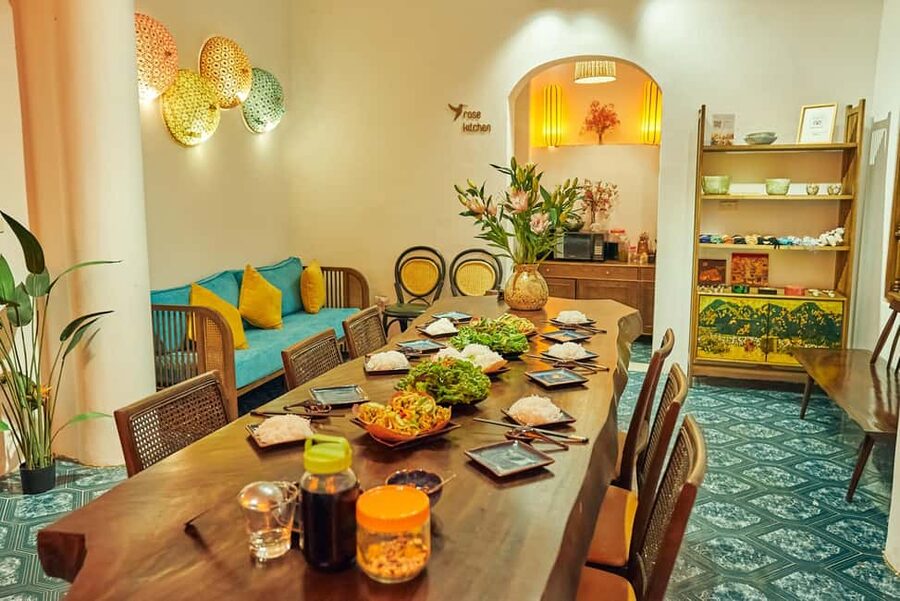
The final meal is included, either lunch or dinner depending on your time slot. That makes the activity more than a quick lesson followed by a small taste. You prepare the food, then sit down to eat what your group has made.
Pho is likely to appeal most to first-time visitors who want to understand Vietnam’s best-known dish. The lesson can help you see the work behind a bowl that often arrives at the table looking effortless.
Bun cha is a strong pick if Hanoi is your focus. The combination of grilled pork, noodles, herbs, and dipping sauce gives you several textures and flavors to balance. It also makes a satisfying meal after a morning of sightseeing.
Nem ran is a good choice if you enjoy practical kitchen work. Folding and frying spring rolls gives the class a clear sense of progress, and the crisp result is easy to share.
Fresh spring rolls are a better fit if you prefer herbs and lighter preparation. Banh xeo offers a more dramatic cooking moment, with the crisp pancake cooked in a pan. Cha ca la vong is the most specialized option, especially appealing if you want to explore a dish tied closely to Hanoi.
The food receives repeated praise for taste, including one claim that the pho bo was the best pho of a Vietnam visit and another that the bun cha was the best meal in Hanoi. I would treat those as personal judgments rather than a guarantee, but they point to an important strength: the guides do not treat the meal as an afterthought.
Same city, a very different kind of morning:
- Hanoi Jeep Tour: Food, Culture and Fun by Vietnam Army Jeep
★ 5.0 · 15,222 reviews - Full-Day Ninh Binh Highlights Tour from Hanoi
★ 5.0 · 7,761 reviews - Hanoi: Ha Long Bay Day Cruise – Swimming, Meal, Kayaking
★ 4.7 · 7,415 reviews - Hanoi: Water Puppet Show Tickets
★ 4.6 · 7,029 reviews
Vietnamese Coffee Makes the Right Ending
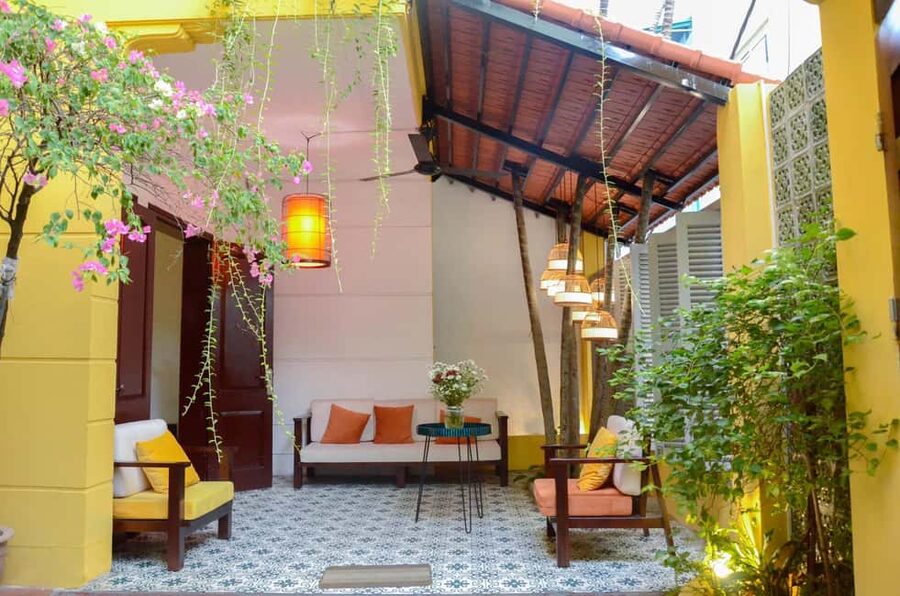
After cooking and eating, you choose one complimentary coffee style for your group. The options are egg coffee, coconut coffee, salt coffee, or classic ca phe nau or ca phe den.
Egg coffee is Hanoi’s signature choice. It is creamy and sweet, and several classes have finished with a homemade version. One participant called the egg coffee the best of the trip, while another specifically enjoyed learning to make pho and egg coffee in the same private session.
Coconut coffee is the softer, sweeter option. Salt coffee is a bolder choice with roots in Hue. Classic Vietnamese drip coffee, served black or with condensed milk, is best if you want the strong, straightforward version.
The wording presents the coffee as one complimentary choice for the group, so confirm serving arrangements if everyone in your party wants a separate drink. This is a small point, but it avoids disappointment, especially for larger groups.
The coffee also gives the class a natural cultural finish. You have already prepared a meal connected to place and habit, then end with a drink that has its own regional styles and familiar role in Vietnamese life.
Why the Cultural Side Matters
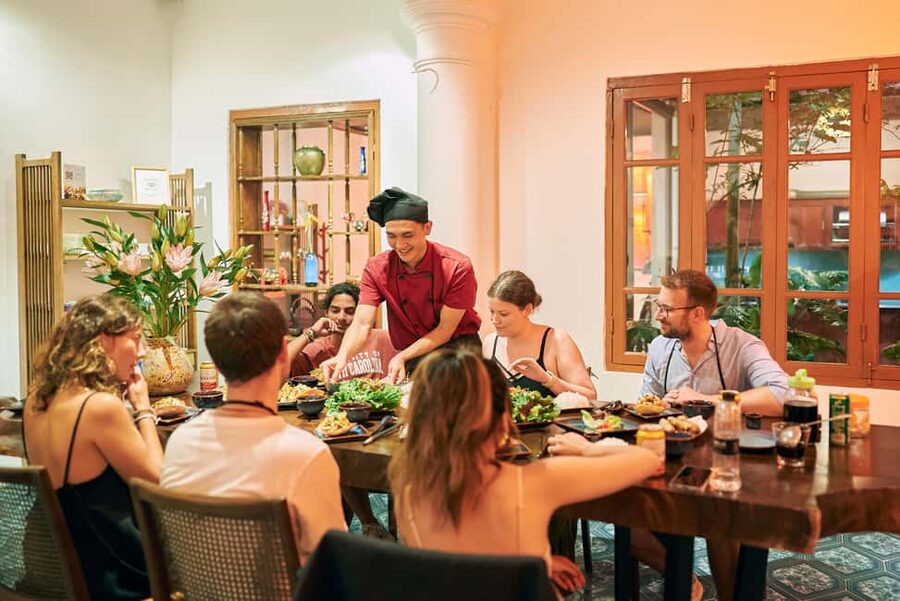
A cooking class can easily become a recipe exchange with a nice lunch attached. Rose Kitchen tries to make the food a doorway into local customs, family habits, and regional identity.
That approach is most useful when you are curious about why Vietnamese food works as it does. You may leave with more than a list of ingredients. You may also understand why breakfast pho matters, how herbs shape a meal, and how a dish changes across Vietnam.
The social purpose adds another layer. The kitchen says that bookings provide steady, respectful work for elder women from rural communities. That gives the $21 price a practical benefit beyond your own meal and entertainment.
You should still judge the experience by the teaching and food first. A social mission does not replace good organization. Here, the repeated praise for clear instruction, kind staff, clean preparation, and tasty results supports the idea that the community purpose is paired with a well-run activity.
Price, Comfort, and Who Gets the Most Value
At $21 per person, the value is strong for a two-hour session. Your fee covers the class, ingredients, tools, a full meal, welcome drink, unlimited mineral water, air-conditioned villa use, coffee, butler support, and luggage storage.
The price makes the most sense if you want an activity with several parts. You are paying for instruction, not just food. You also receive a quieter setting than a busy street restaurant and time with a local English-speaking guide.
Families should find the format approachable, particularly because guides are described as patient and friendly. One family rated the experience highly after learning about cooking, food customs, and breakfast pho together.
Solo participants can also benefit. Last-minute booking has led to a private one-on-one session, including vegetarian bun cha and pho with egg coffee. That kind of individual attention cannot be promised, but the villa setup appears capable of handling a more personal class.
The experience also suits visitors with dietary needs, provided you communicate clearly. Vegetarian and gluten-free preparation are specifically supported, but you should not leave those details until the cooking begins.
Wheelchair access is listed, which widens the audience. Free luggage storage is handy if you are fitting the class between hotel checkout and a later departure, though you should still confirm your own storage needs when booking.
Small Drawbacks to Keep in Mind
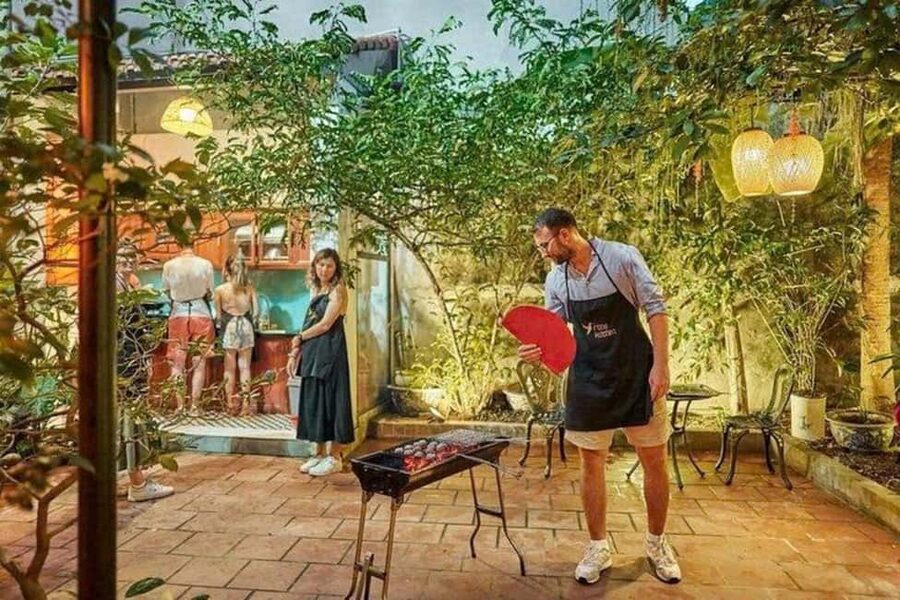
The location is not self-explanatory. The yellow Bia Hoi Mau Dich sign solves the problem, but only if you know to look for it. Allow enough time to reach the crossroads, and keep the meeting instructions available offline.
The class lasts two hours, so it cannot cover every dish on the menu in detail. Choosing pho means less time for spring rolls, and choosing banh xeo means you will not also learn the full bun cha process unless the provider arranges an extra item.
The coffee choice may be shared by the group rather than served as a separate drink to every person. Ask if that matters to you.
Finally, the experience is in a garden villa, not a major historic sight. If you want a tour packed with monuments and photo stops, this is the wrong activity. Its appeal is the quiet kitchen, the food, the stories, and the human contact.
Booking and Cancellation Tips
The activity runs for two hours, with starting times based on availability. It can be booked with payment later, which helps if your Hanoi schedule is still shifting.
Cancellation is free up to 24 hours in advance for a full refund. That gives you some protection if weather, transport, or changing plans affect your day.
English is the stated teaching language. Transport is not listed as included, so plan to take a taxi or Grab to the meeting point. Once you arrive at the yellow sign, the escort to the villa is provided.
FAQ
How long does the Rose Kitchen cooking class last?
The class lasts two hours. Starting times depend on availability.
What dishes can I choose to cook?
You can choose one dish for your group from banh xeo, Hanoi-style nem ran, goi cuon, bun cha, cha ca la vong, pho bo, or pho ga. Vegetarian versions are available for all dishes.
Is Vietnamese coffee included?
Yes. One complimentary coffee choice is included for the group. Options are egg coffee, coconut coffee, salt coffee, and classic ca phe nau or ca phe den.
Where is the meeting point?
Take a taxi or Grab to Alley 75, Lane 173, Hoang Hoa Tham Street, at the crossroads. Look for the large yellow Bia Hoi Mau Dich sign. A cultural storyteller meets you there and walks you to the villa.
Is the class suitable for vegetarians or people avoiding gluten?
Vegetarian options are available for every listed dish. Gluten-free preparation has also been accommodated, but you should tell the provider about your dietary needs in advance.
Can I cancel the booking?
Yes. You can cancel up to 24 hours before the activity for a full refund. You can also reserve now and pay later.
Should You Book Rose Kitchen Hanoi?
I would book this class if you want a relaxed, practical introduction to Vietnamese food, especially if you value conversation as much as cooking. The combination of a spacious air-conditioned villa, full meal, coffee, cultural explanation, and patient English-speaking guides gives you good value for $21.
Choose pho if breakfast culture interests you, bun cha if you want a distinctly Hanoian meal, nem ran if you like hands-on work, or egg coffee if you want the city’s most recognizable drink. Tell the kitchen about dietary needs, confirm how many coffee servings are included, and ask in advance if you hope to prepare more than one dish.
Skip it only if your priority is a packed sightseeing itinerary or a long professional chef course. For most visitors who want to cook, eat, and understand a little more about Hanoi, Rose Kitchen is an easy choice.
New around Hanoi
- Private LUXURY Hanoi City Full day guided tour★ 4.5 · 21 reviews
- Private transfer between Hanoi and Sapa★ 5.0 · 27 reviews
- Private Transfer Hanoi <=> Mai Chau One Way (Free hotel pickup)★ 5.0 · 22 reviews
- Private Transfer from Ninh Binh to Halong or Halong to Ninh Binh★ 5.0 · 21 reviews
- Private Transfers Hanoi <=> Halong One Way (Free Hotel Pickup)★ 5.0 · 31 reviews
- Hanoi Airport See-off (Private Ride from Hotels to Hanoi Airport)★ 4.5 · 70 reviews
- Thang Long Water Puppet Theater★ 4.5 · 45 reviews
- Private transfer Ninh Binh <=> Halong One Way (Free Hotel Pickup)★ 5.0 · 21 reviews
Hanoi Tours, compared.
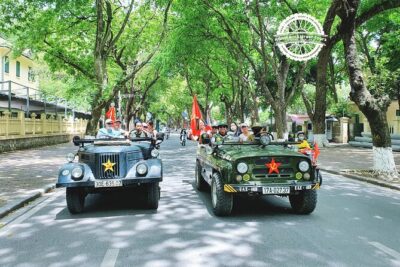
Hanoi Jeep Tour: Food, Culture and Fun by Vietnam Army Jeep
Read our review →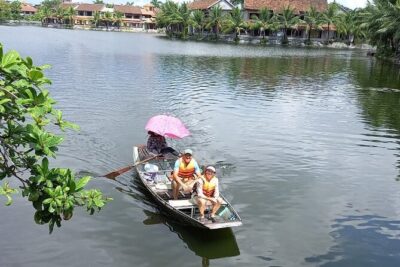
Full-Day Ninh Binh Highlights Tour from Hanoi
Read our review →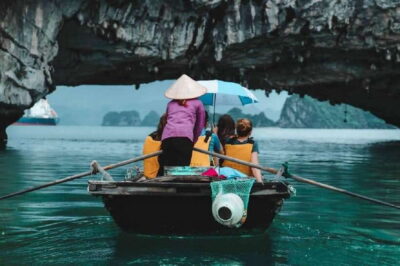
Ha Long Bay Day Cruise – Swimming, Meal, Kayaking
Read our review →
Hanoi Motorbike Tour: Food, Culture and Fun by Vintage Motorbike
Read our review →
Hanoi Cooking Class: Culture, Local Market & Meaning CSR Impact
Read our review →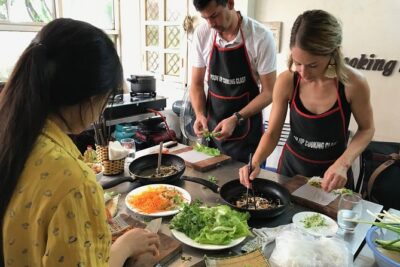
5 Traditional Dishes Hanoi Cooking Class with Market Trip
Read our review →Browse the lists this tour appears in