
Reviewed · HANOI TOURS
Hanoi Ultimate Coffee Workshop: Make, Learn & Taste
Coffee tells Hanoi’s story in small cups. This hands-on workshop moves from coffee farming and roasting to egg coffee, coconut coffee, salt coffee, and more. I like the practical teaching, especially the chance to use Vietnamese filters, grinders, and other local tools rather than simply watching a demonstration. I also like the mix of coffee culture and local wine, which gives the session a little extra character. The main catch is simple: you may drink six coffees in one sitting, so this is not the place for a caffeine-sensitive afternoon.
You’ll meet English-speaking instructors with more than ten years in the coffee trade. Hosts such as Luka, Lin, Giang, Lyon, and Jonathan have received particularly warm praise for clear explanations, humor, and patience. Old Quarter pickup is available, but the exact timing can shift by 15 to 20 minutes with traffic or rain, and pickup outside the Old Quarter may cost extra.
In This Review
- Key points at a glance
- Why Hanoi coffee deserves a full workshop
- Meeting at Hoang Hoa Tham Street
- The first lesson: beans, farms, roasting, and coffee history
- Learning to judge coffee before you drink it
- Making five Vietnamese coffees by hand
- Vietnamese salt coffee
- Vietnamese egg coffee
- Original Vietnamese brown coffee
- Coconut coffee
- Pour-over coffee
- Coffee cocktails, local wine, snacks, and a meal stop
- How much coffee will you actually drink?
- The instructors make the difference
- Price, value, and what you receive
- Who should book this Hanoi coffee class?
- Practical booking advice for Hoan Kiem and the Old Quarter
- Should you book the Hanoi Ultimate Coffee Workshop?
- FAQ
- How long does the Hanoi Ultimate Coffee Workshop last?
- How much does the workshop cost?
- Which coffees can I make?
- Is wine included?
- Where is the meeting point?
- Is hotel pickup available?
- Is the workshop taught in English?
Key points at a glance
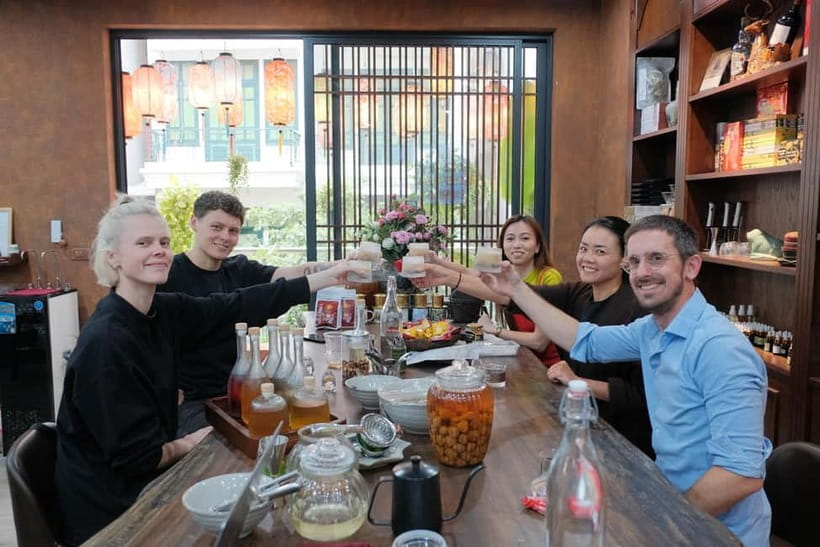
- Five Vietnamese coffee styles to make yourself: Prepare salt coffee, egg coffee, brown coffee, coconut coffee, and pour-over coffee with guidance at each stage.
- Coffee tools are part of the lesson: You work with filters, grinders, roasting equipment, and other tools used in Vietnamese coffee preparation.
- The history has a practical focus: Learn how coffee reached Vietnam, how local growing and roasting work, and how to spot poor or counterfeit coffee.
- Wine and coffee cocktails add variety: The session can include signature coffee cocktails with jam and local wine, plus a selection of homemade Vietnamese wines.
- A useful take-home package: You receive a recipe book, digital coffee books, and a professional certificate if you request one.
- Good value at $23: For three to five hours of teaching, tasting, equipment use, snacks, and possible transport, the price is modest for Hanoi.
Why Hanoi coffee deserves a full workshop
Vietnamese coffee is not just strong coffee poured over ice. It is shaped by local beans, slow brewing, sweetened condensed milk, compact metal filters, and a distinctly social café culture.
This workshop gives you the background needed to understand what you are drinking. You begin with coffee’s arrival in Vietnam and its spread around the world, then move into cultivation, green beans, roasting, and brewing technique. That order matters. Once you understand the bean and roast, the familiar dark, powerful cup in Hanoi makes more sense.
I especially like the attention to authenticity. The session explains how to recognize good coffee and how to avoid counterfeit or low-quality products. That is useful beyond the class. Hanoi has coffee shops on nearly every major street, and a little basic knowledge helps you choose with more confidence.
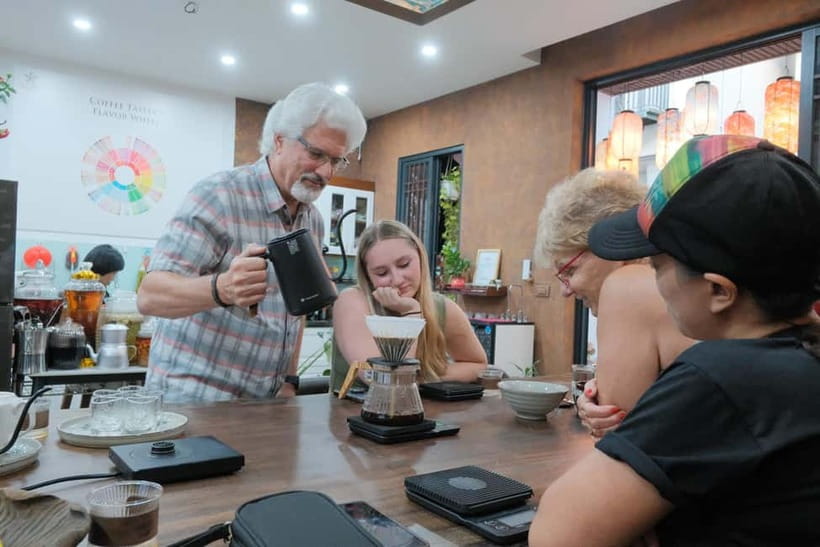
You also get to handle the equipment. Instead of treating coffee as a finished product, the workshop shows you how the pieces fit together: grinding, filtering, balancing sweetness, and adjusting technique. You do not need to arrive with specialist knowledge. The instructors are there to guide each drink from start to finish.
A few more Hanoi runs to compare on price
- Hanoi Coffee Experience: 6 Brews, 9 Recipes & 3 Liquor Tastings
★ 5.0 · 2,945 reviews - Hanoi Coffee Workshop: Taste Salt, Coconut and Egg Coffee
★ 5.0 · 1,286 reviews - Hanoi: Salt Coffee Workshop Awake Your Senses With 6 Brews
★ 5.0 · 792 reviews
Meeting at Hoang Hoa Tham Street
The stated meeting point is at Alley 75, Lane 173, Hoang Hoa Tham Street, near the large yellow Bia Hoi Mau Dich sign. You should wait at the intersection, not simply enter an alley and hope you have found the right door. A Google Maps pin is supplied for the location, which is helpful in Hanoi’s dense street network.
If you choose pickup, the service covers hotels within the Old Quarter area. Allow a little flexibility. Pickup and return usually fall within a 15 to 20 minute window, but Hanoi traffic and bad weather can change that timing.
Staying outside the French Old Quarter? You can request pickup for an additional fee. Private groups receive more generous transport terms, with complimentary pickup within 10 kilometers of the Hanoi Post Office. Private sessions can also adjust the start time, finish time, pickup point, and menu items.
That flexibility is worth considering if you have a particular drink in mind or want a quieter session. The standard format is likely better for solo visitors, couples, and small groups who want a social class at the lowest price.
The first lesson: beans, farms, roasting, and coffee history
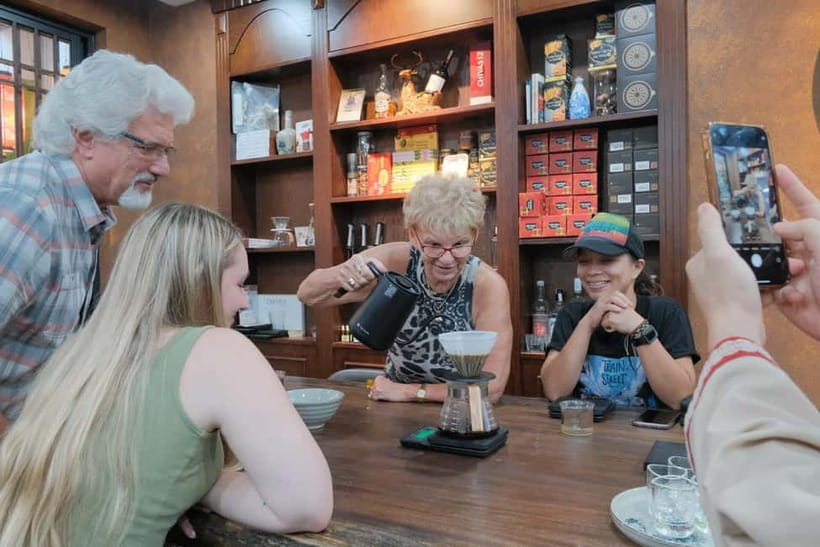
The workshop opens with an overview of coffee’s place in Vietnam and the wider world. You see different beans and brewing equipment, then learn about coffee trees, cultivation, green coffee beans, and roasting.
This is more than background filler. Green beans can look surprisingly different from the dark roasted coffee most people recognize, and the roasting process helps explain why Vietnamese coffee often tastes so bold. You gain a basic vocabulary for talking about beans, roast levels, and brewing methods without needing to become a coffee professional.
The instructors also use visual material and storytelling. Jonathan, for example, was praised for using prepared slides while explaining coffee production and roasting. Luka has been described as both entertaining and well informed, which matters during a long tasting session. A good coffee class must keep the pace moving, and humor helps when several cups are still ahead.
The historical section is useful for first-time visitors because it connects coffee to everyday life in Vietnam. You are not studying dates for their own sake. You are learning why Vietnamese coffee is prepared in the way it is, and why certain combinations, such as coffee with egg or coconut, became popular.
Learning to judge coffee before you drink it
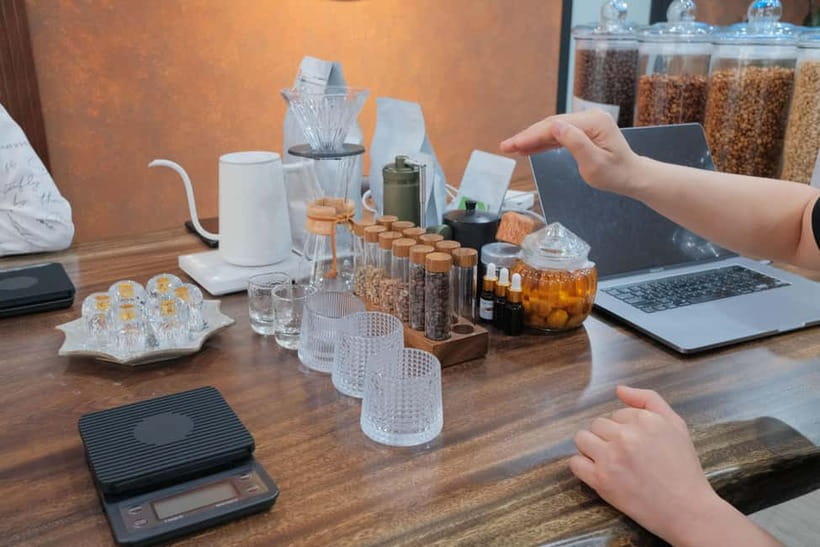
A particularly useful part of the workshop is the discussion of authentic coffee. You learn tips for spotting poor or counterfeit coffee, along with the technique needed to prepare a better cup.
The details supplied for the class do not list every test or warning sign, so you should not expect a formal laboratory session. Instead, think of this as practical buying and brewing advice. You will handle ingredients and equipment, compare preparation methods, and get guidance on what affects the final taste.
That makes the class valuable even if you do not plan to roast beans at home. You may simply want to order coffee in Hanoi with a better idea of what you are getting. The lesson also helps you understand why a metal phin filter produces a different experience from pour-over equipment.
Same city, a very different kind of morning:
- Hanoi Jeep Tour: Food, Culture and Fun by Vietnam Army Jeep
★ 5.0 · 15,222 reviews - Full-Day Ninh Binh Highlights Tour from Hanoi
★ 5.0 · 7,761 reviews - Hanoi: Ha Long Bay Day Cruise – Swimming, Meal, Kayaking
★ 4.7 · 7,415 reviews - Hanoi: Water Puppet Show Tickets
★ 4.6 · 7,029 reviews
Making five Vietnamese coffees by hand
The core of the session is the hands-on preparation. You can make up to five named Vietnamese brews, with some sessions also including a sixth coffee or an extra cocktail. The exact selection may depend on the chosen option and the class format, so check the current menu when booking.
The listed coffees include:
- Vietnamese salt coffee
- Vietnamese egg coffee
- Original Vietnamese brown coffee
- Coconut coffee
- Pour-over coffee
Vietnamese salt coffee
Salt coffee may sound strange until you understand its purpose. The salt is not meant to make the drink taste salty. Used carefully, it can balance bitterness and sharpen sweetness.
Here, you get to make the drink yourself, which lets you see how small changes affect the result. It is a good example of the workshop’s larger lesson: Vietnamese coffee traditions often use familiar ingredients in clever ways.
Vietnamese egg coffee
Egg coffee is one of Hanoi’s signature drinks, and making it is far more interesting than ordering one already prepared. The workshop guides you through the method and explains how the creamy topping works with the strong coffee below.
This is a sweet drink, so it may not suit anyone seeking a plain black cup. Still, it is one of the best reasons to book the class. You learn the technique, taste the result, and take home a recipe you can try later.
Original Vietnamese brown coffee
This is the classic local combination of coffee and condensed milk. It is powerful, sweet, and closely tied to the everyday café experience in Vietnam.
The class gives you a chance to understand the balance rather than treating the drink as a fixed recipe. You can see how brewing strength and sweetness work together. If you have already ordered iced brown coffee in Hanoi, this session gives you a clearer sense of what is in your glass.
Coconut coffee
Coconut coffee brings a softer, sweeter profile to the lineup. It provides a useful contrast with the darker brown coffee and the richer egg version.
I like having this variety in one sitting because you are not tasting five minor variations of the same drink. You move across different textures and levels of sweetness. That keeps the class lively, although it also adds to the total amount of sugar and caffeine.
Pour-over coffee
Pour-over coffee gives the session a more familiar point of reference for many international coffee drinkers. The method highlights the brewing process and lets you compare a lighter, more controlled approach with the slower Vietnamese phin style.
You do not need to be an expert with a gooseneck kettle or specialist gear. The value comes from trying the method under supervision and comparing the cup with the other Vietnamese styles.
Coffee cocktails, local wine, snacks, and a meal stop
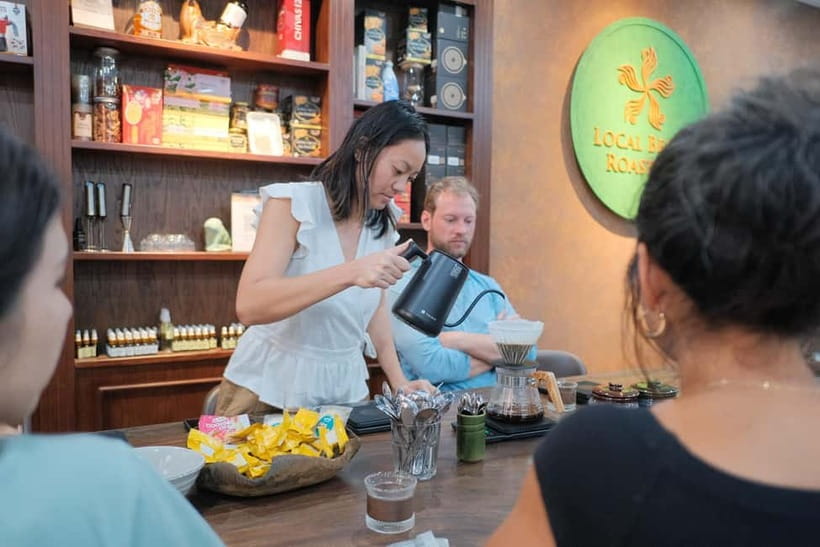
The workshop may include signature coffee cocktails made with jam and local wine. A selection of Vietnamese wines is also included, and several sessions have featured a separate wine tasting.
This is a playful part of the class rather than a traditional coffee lesson. It shows how local flavors can be used in drinks beyond the standard café menu. The order is sensible: coffee comes before wine, so the caffeine tasting does not get mixed with alcohol too early.
Welcome refreshments and snacks are provided. That matters because three to five hours of tasting can feel like a long stretch on an empty stomach. Some sessions also include a stop at a local restaurant for lunch or dinner, listed as about 1.5 hours. The exact meal arrangement depends on the option you select, so confirm whether food is included in your chosen booking rather than assuming every format has the same restaurant stop.
The wine and food make the activity feel broader than a technical class. Still, keep your expectations realistic. The main focus is coffee preparation, not a full Vietnamese cooking course or a formal wine education.
How much coffee will you actually drink?
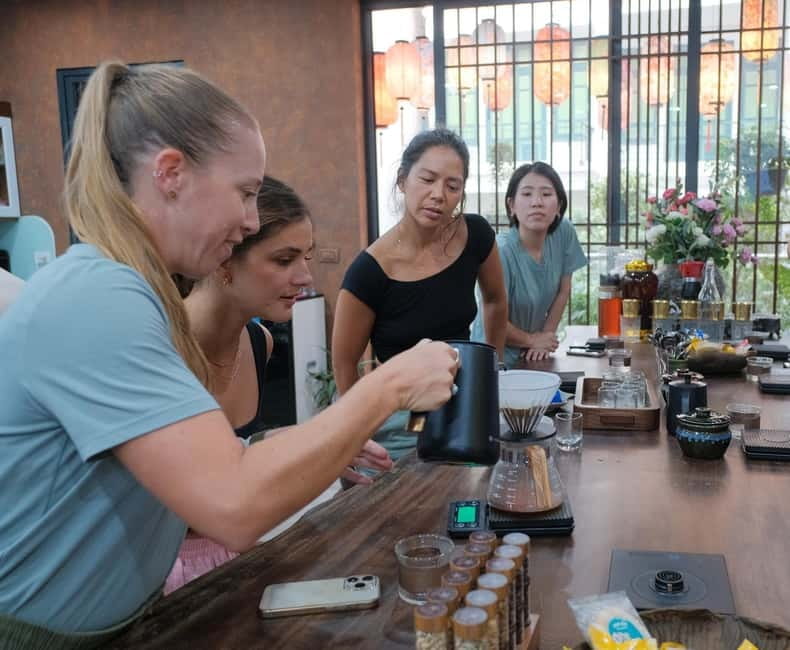
Plan for a lot. Several sessions have included six coffees, even though the main description focuses on five brews. Water and snacks are available, which helps, but caffeine remains the main practical concern.
I would book this in the morning if possible. One person described the class as a good start to the day, leaving the afternoon free. That timing also gives you a chance to walk around Hanoi afterward instead of trying to sleep after a late caffeine session.
Coffee lovers will probably see the quantity as part of the fun. If you are sensitive to caffeine, ask the instructor about smaller pours or tasting rather than finishing every cup. The supplied details do not promise decaffeinated options, so you should not count on them.
Rain is another reason the workshop can work well in a Hanoi itinerary. It takes place indoors, giving you a useful plan for a wet day. One particularly difficult pickup still went ahead despite flooded roads, but that should not lead you to ignore weather warnings. Allow extra time for transport when rain is expected.
The instructors make the difference
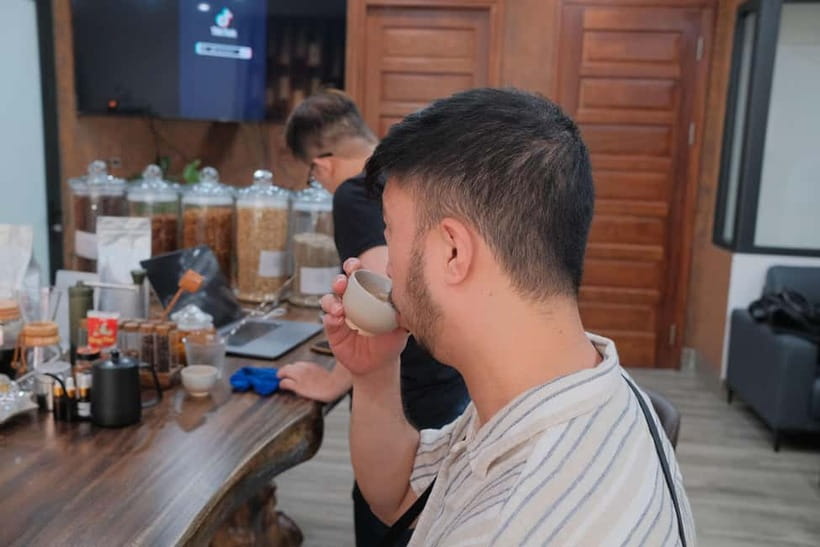
The coffee equipment and recipes are useful, but the teaching is what gives the workshop its value. The strongest praise has focused on the instructors’ explanations, humor, friendliness, and ability to answer questions.
Luka has been singled out for entertaining explanations about coffee and its origins. Lin has been praised for making people feel welcome and for explaining each coffee carefully. Giang has been described as both educational and fun, while Lyon has been noted for answering questions clearly. Jonathan’s prepared slides and storytelling add structure to the history and roasting sections.
Names and staffing can change, so do not book with the expectation of meeting one specific host. The important point is that the experience is led in English by people with more than ten years of coffee-industry experience.
Private sessions offer the most room for personal questions. A private booking has previously allowed a couple to focus on specific drinks they wanted to learn. That option makes sense for serious coffee fans, couples celebrating something, or small groups with dietary or menu preferences to discuss.
Price, value, and what you receive
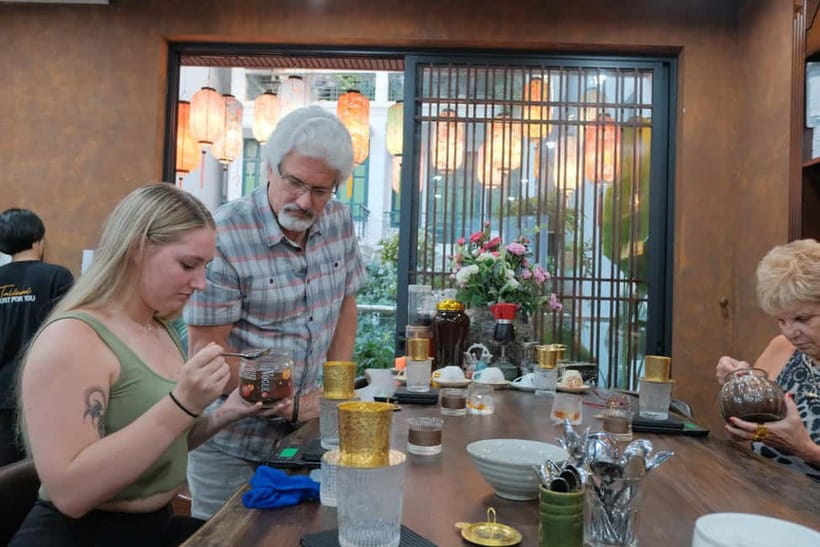
At $23 per person, this is inexpensive for a three to five hour experience. You are paying for instruction, coffee ingredients, equipment use, snacks, wine, recipes, digital coffee books, and possibly transport within the Old Quarter.
The real value is not the number of cups alone. You leave with repeatable recipes and a better understanding of Vietnamese coffee. The recipe book means you can try the drinks again at home, while the digital books give you more reading after the class.
A professional certificate is available if requested. It is unlikely to matter to most holidaymakers, but it may be a nice extra for someone building coffee skills or documenting culinary training.
The price is strongest for a standard group session with Old Quarter pickup. If you stay farther away and need paid transport, the final cost rises. A private group also costs more than the headline rate may suggest, but customization can justify that for the right occasion.
Who should book this Hanoi coffee class?
I would recommend it first to coffee lovers, curious food-minded visitors, and anyone who wants more than a quick café stop. It also suits people who enjoy learning by doing. You grind, filter, mix, taste, compare, and ask questions.
It is a good indoor choice on a rainy Hanoi day, and the morning schedule leaves room for sightseeing later. Couples and small private groups may appreciate the chance to request specific drinks or adjust the timing.
I would be more cautious if you dislike sweet drinks, avoid caffeine, or want a quiet, slow coffee tasting. The class is active and generous with samples. The wine tasting may also not appeal to you, although it is only one part of the experience.
English is the stated teaching language. If you need another language, the supplied information does not promise one, so ask before booking.
Practical booking advice for Hoan Kiem and the Old Quarter
Choose the morning if you can handle several coffees before lunch. Keep your schedule loose around pickup and return, especially during rain or heavy traffic.
If you are meeting at the venue, use the yellow Bia Hoi Mau Dich sign as your visual marker and check the map pin before leaving. Hanoi alleys can be confusing, and the meeting instructions are specific for a reason.
Cancellation is flexible: you can cancel up to 24 hours ahead for a full refund. You can also reserve now and pay later, which helps if your Hanoi plans are still shifting.
Should you book the Hanoi Ultimate Coffee Workshop?
Book it if you want to understand Vietnamese coffee from bean to cup and prefer making drinks yourself. The mix of history, equipment, five or six recipes, local wine, snacks, and a take-home recipe book gives you a lot for $23.
Skip it if caffeine is a serious problem or if you only want one excellent cup in a traditional café. For everyone else, this is a friendly, useful way to spend a morning in Hanoi, especially on a rainy day. Just arrive ready for plenty of coffee, and plan the rest of your day accordingly.
FAQ
How long does the Hanoi Ultimate Coffee Workshop last?
The activity lasts between three and five hours. Starting times depend on availability and the option you select.
How much does the workshop cost?
The listed price is $23 per person.
Which coffees can I make?
You can make Vietnamese salt coffee, egg coffee, original Vietnamese brown coffee, coconut coffee, and pour-over coffee. Some sessions have also included a sixth coffee or additional drink.
Is wine included?
Yes. The experience includes signature coffee cocktails with jam and local wine, along with a selection of local Vietnamese wines.
Where is the meeting point?
The meeting point is at Alley 75, Lane 173, Hoang Hoa Tham Street. Wait at the intersection by the large yellow sign marked Bia Hoi Mau Dich.
Is hotel pickup available?
Pickup and drop-off are available within Hanoi’s Old Quarter area. Pickup outside that area may require an additional fee. Private groups receive complimentary pickup within 10 kilometers of the Hanoi Post Office.
Is the workshop taught in English?
Yes. English is the listed language for instruction.
New around Hanoi
- Private LUXURY Hanoi City Full day guided tour★ 4.5 · 21 reviews
- Private transfer between Hanoi and Sapa★ 5.0 · 27 reviews
- Private Transfer Hanoi <=> Mai Chau One Way (Free hotel pickup)★ 5.0 · 22 reviews
- Private Transfer from Ninh Binh to Halong or Halong to Ninh Binh★ 5.0 · 21 reviews
- Private Transfers Hanoi <=> Halong One Way (Free Hotel Pickup)★ 5.0 · 31 reviews
- Hanoi Airport See-off (Private Ride from Hotels to Hanoi Airport)★ 4.5 · 70 reviews
- Thang Long Water Puppet Theater★ 4.5 · 45 reviews
- Private transfer Ninh Binh <=> Halong One Way (Free Hotel Pickup)★ 5.0 · 21 reviews
Hanoi Tours, compared.
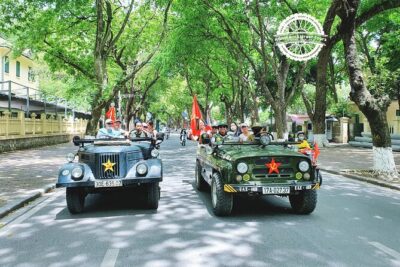
Hanoi Jeep Tour: Food, Culture and Fun by Vietnam Army Jeep
Read our review →
Full-Day Ninh Binh Highlights Tour from Hanoi
Read our review →
Ha Long Bay Day Cruise – Swimming, Meal, Kayaking
Read our review →

Hanoi Motorbike Tour: Food, Culture and Fun by Vintage Motorbike
Read our review →

Hanoi Cooking Class: Culture, Local Market & Meaning CSR Impact
Read our review →
5 Traditional Dishes Hanoi Cooking Class with Market Trip
Read our review →Browse the lists this tour appears in