

Reviewed · WALKING TOURS IN HOI AN
Hoi An Ancient Town – Walking Tour with Local Guide
Hoi An reveals itself one lane at a time. This small-group walk packs the old town’s main sights into about two and a half hours, with a trained local guide explaining the buildings, customs, and stories that are easy to miss when you wander alone. I especially like the group limit of 10 people, which makes it easier to hear and ask questions, and the thoughtful pauses for tea or a local dessert. The main drawback is that you must pay an additional 120,000 VND entrance ticket in cash.
I also like the practical finish. Guides such as Trung, Duy, Tom, Tin, and Trang have been praised for clear English, humor, local insight, and helpful suggestions for restaurants, coffee shops, tailors, and later activities. If you want a gentle introduction before exploring Hoi An on your own, this tour gives you a useful map of the town, both geographically and culturally.
In This Review
- Quick Takeaways
- Why This Walk Works Well as Your First Hoi An Activity
- Meeting at 95 Phan Chu Trinh Street
- Ba Mu Temple Gate and the First Glimpse of Old Hoi An
- Assembly Halls and Hoi An’s Overseas Connections
- The Japanese Covered Bridge, Hoi An’s Signature Landmark
- Kazik Park and the Town’s Public Spaces
- Tan Ky Heritage House and Everyday Historic Architecture
- Traditional Art Performance House and Folk Culture Museum
- Hoi An Market and the Practical End of the Route
- Tea, Dessert, and a Pleasant Finish
- Guide Quality and the Human Side of the Tour
- Is $14 Good Value for 150 Minutes?
- Who Should Book This Hoi An Walk?
- Should You Book It?
- FAQ
- How long does the Hoi An walking tour last?
- What is the meeting point?
- Is the entrance ticket included?
- What sights are included?
- What language is the tour offered in?
- How large is the group?
- Is hotel pickup available?
Quick Takeaways

- A compact old-town overview: See Ba Mu Temple gate, assembly halls, the Japanese Covered Bridge, heritage houses, museums, the market, and more in one route.
- Small groups matter: With no more than 10 participants, the guide can keep the group together and answer questions without shouting across a crowd.
- Local context, not just photo stops: Guides explain Hoi An’s architecture, Vietnamese culture, historical connections, and everyday life.
- A refreshing final pause: The tour includes traditional tea, dessert, or a drink such as the herbal beverage served at Mot.
- Useful advice for the rest of your stay: You can ask for recommendations on local food, cafes, tailor shops, and other things to do.
- Bring cash for admission: The 120,000 VND old-town entrance ticket is separate from the tour price.
Why This Walk Works Well as Your First Hoi An Activity
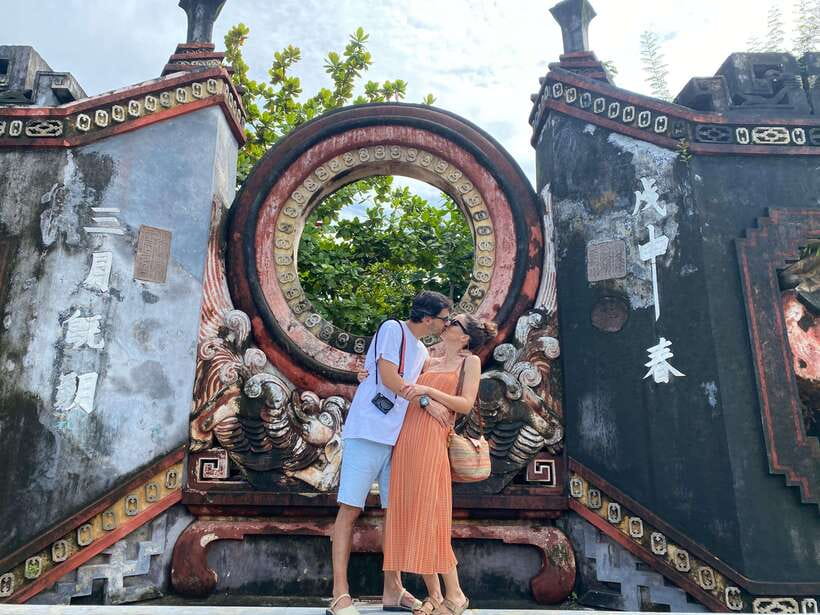
Hoi An’s Ancient Town is easy to enjoy and surprisingly easy to misunderstand. The yellow walls, wooden shutters, lanterns, covered walkways, and narrow lanes make excellent photographs, but the meaning behind them is not always obvious. A guide gives you the basic framework, so the old town becomes more than a pretty collection of buildings.
I would place this tour near the start of your Hoi An stay. It helps you separate the heritage center from the newer parts of town, locate the main streets, and learn which buildings are worth returning to slowly. One participant who had wandered aimlessly the day before wished they had taken the tour first. That is a useful warning: Hoi An rewards wandering, but it rewards informed wandering even more.
The pace appears designed for sightseeing rather than exercise. You walk through the central old town, stop often, enter several heritage sites, and have time for photographs. The tour also includes indoor breaks, a welcome feature in Hoi An’s heat, rain, or crowded festival periods.
The experience is not designed for babies under one year old, and baby strollers are not allowed. For everyone else, comfortable clothing and sensible walking shoes are the practical choice, even though the route is described as easy.
More Walking Tours in Hoi An
- Evening Walking Food Tour, folk game and lantern boat
★ 5.0 · 665 reviews - Hoi An Ancient Town Walking Tour with a Local
★ 5.0 · 517 reviews - Hoi An Street Food Walking Tour with Tastings
★ 5.0 · 317 reviews
Meeting at 95 Phan Chu Trinh Street
The walk begins at 95 Phan Chu Trinh Street, in front of a tailor shop on the corner of the intersection. This is outside the main concentration of old-town sights, so give yourself enough time to find the corner and arrive ready to walk.
There is no hotel pickup or drop-off. That keeps the price low, but you are responsible for reaching the meeting point. The benefit is a clean start: once the group meets, you can enter the historic center with your guide rather than spending the opening minutes collecting people from different hotels.
The group size is capped at 10 participants. That number is small enough for a personal feel without the cost of a private tour. Guides have been praised for making sure nobody gets lost, especially during busy periods such as Tet. One guide, Trung, was described as keeping the group together like sticky rice, a humorous image that also tells you something practical: the guide pays attention to the group, not just the speech.
Ba Mu Temple Gate and the First Glimpse of Old Hoi An
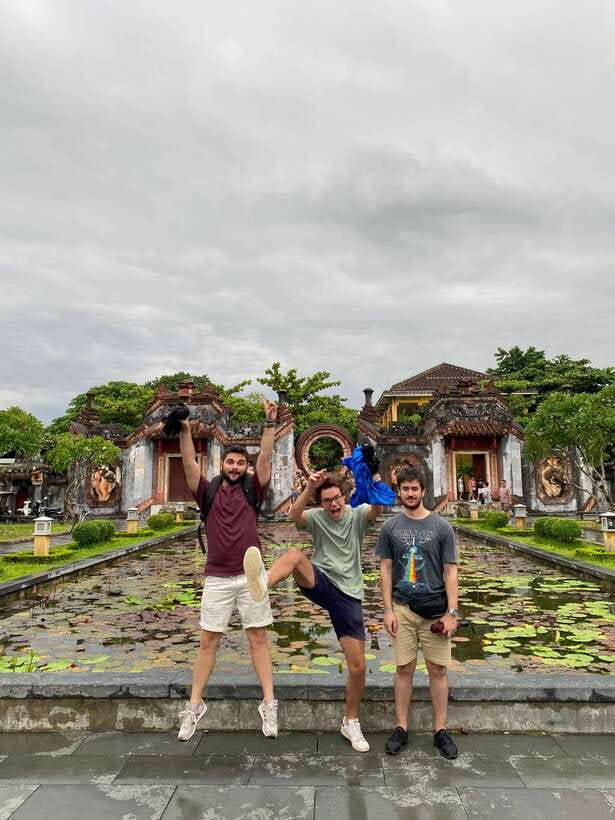
Ba Mu Temple gate is an attractive opening stop and a good place to begin thinking about Hoi An’s religious traditions. The gate gives you an immediate sense of the town’s layered design, where public streets, temples, homes, shops, and courtyards sit close together.
This is also one of the tour’s photo-friendly stops. Your guide can point out details you might otherwise photograph without noticing, then help you understand how sacred buildings fit into local life. The stop is likely brief, but it sets the tone for the rest of the walk: look carefully, listen to the explanation, and then take your pictures.
Assembly Halls and Hoi An’s Overseas Connections

The route continues to a Fujian or Cantonese Assembly Hall. These buildings are among the clearest reminders that Hoi An grew through contact with people from outside Vietnam. Their decoration, layout, and religious use give the town a wider story than its famous lanterns alone.
A local guide is particularly useful here because the details can feel confusing without context. You will hear about the communities connected with the assembly halls and how architecture can show who lived, traded, worshipped, or gathered in Hoi An. The tour does not simply rush you past the entrance for a photograph. It gives the building a place in the town’s story.
The possible limitation is time. A 150-minute walk covering many sites cannot provide the same long, quiet visit as a specialist architecture tour. If an assembly hall catches your attention, note it and return later with more time.
Same city, a very different kind of morning:
- Hoi An: Basket Boat Ride in the Coconut Forest
★ 4.9 · 4,956 reviews - Hoi An: Vietnamese Coffee Culture and Coffee Making Class
★ 4.9 · 4,006 reviews - Hoi An: Vietnamese Foldable Lantern Making Class
★ 4.9 · 3,742 reviews - Cooking Class Hoi An:Local Market, Basket Boat, Fishing & Cooking
★ 5.0 · 3,660 reviews
The Japanese Covered Bridge, Hoi An’s Signature Landmark

The Japanese Covered Bridge is the stop most first-time visitors expect, and it earns its place on the route. Its compact design and strong visual identity make it one of Hoi An’s essential sights. Seeing it with an explanation of its place in the town’s past helps you understand why this bridge is more than a convenient crossing.
Crowds can make the bridge feel less peaceful than its pictures suggest. Your guide’s role is valuable here because the group needs to stay close, especially when the old town is busy. You should have time for photographs, but do not expect to stand alone in the middle of the landmark.
This is one reason I prefer taking the walk early in a Hoi An visit. You can return later at a quieter time, approach from different lanes, and recognize the surrounding streets instead of searching for the bridge from scratch.
Kazik Park and the Town’s Public Spaces
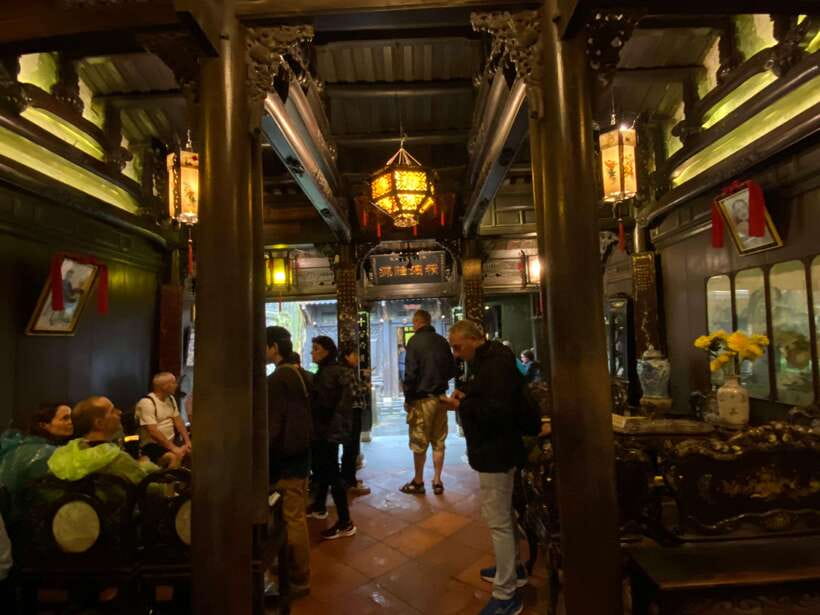
Kazik Park offers a change from enclosed heritage buildings and narrow lanes. The stop helps show how Hoi An’s old center works as a lived-in public place, not merely a museum district.
It is also a useful transition point in the walk. Your guide can connect the architecture you have seen with the way people use the town today. The route balances formal attractions with streets, alleys, and public areas, which gives you a more complete first look.
If you are mainly interested in grand monuments, this stop may feel less dramatic than the covered bridge or a historic house. Its value is in the wider picture, especially if you want to understand how the old town functions beyond its most photographed buildings.
Tan Ky Heritage House and Everyday Historic Architecture
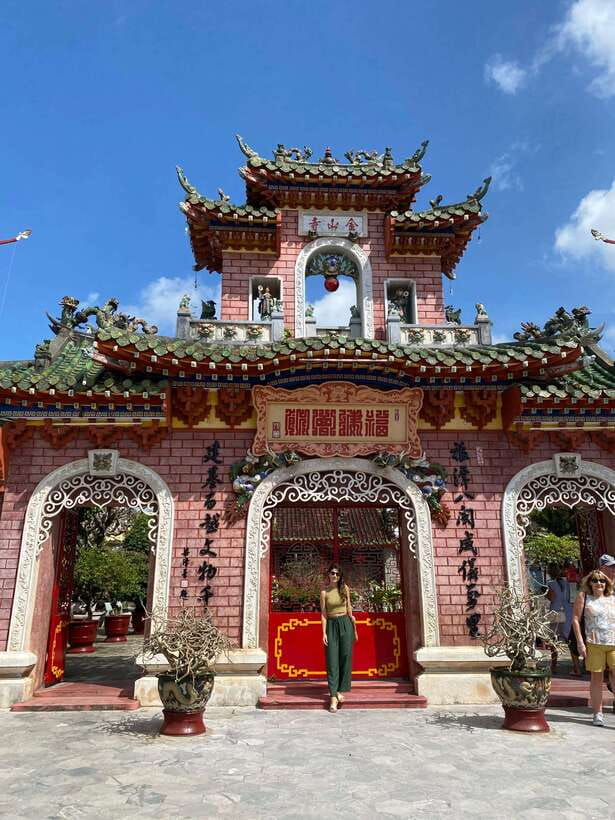
Tan Ky Heritage House is one of the route’s strongest stops for seeing how people once lived and worked inside the old town. The house brings the town’s past down to human scale, with rooms and architectural details that are easier to understand when someone explains their purpose.
A guide can help you notice the relationship between the home, the street, trade, and family life. Without that context, it is easy to see an old house as a series of attractive beams and dark wooden rooms. With a good explanation, you begin to see how a historic merchant town operated.
The house may be crowded, and the visit is not likely to be leisurely because the route includes several other locations. Still, this is exactly the sort of place where a local guide earns the 14 dollar fee. You get the essential context, then you can decide if you want to come back for a slower look.
Traditional Art Performance House and Folk Culture Museum
The Hoi An Traditional Art Performance House adds music, craft, and performance to the walking route. This is important because the town’s identity is not only made of old walls. Traditional arts help connect the physical setting with local customs.
The Museum of Folk Culture broadens that idea. It gives the tour another indoor stop and adds material about everyday Vietnamese life and cultural practices. Several visitors have said the museum was one of the highlights, partly because it is easy to miss when exploring without a guide.
These sites are especially useful if you are planning to attend another cultural performance later. One participant found that taking the walking tour before the Memory Show made the performance easier to understand. The tour can provide background that helps you read local symbols and traditions with more confidence.
Hoi An Market and the Practical End of the Route
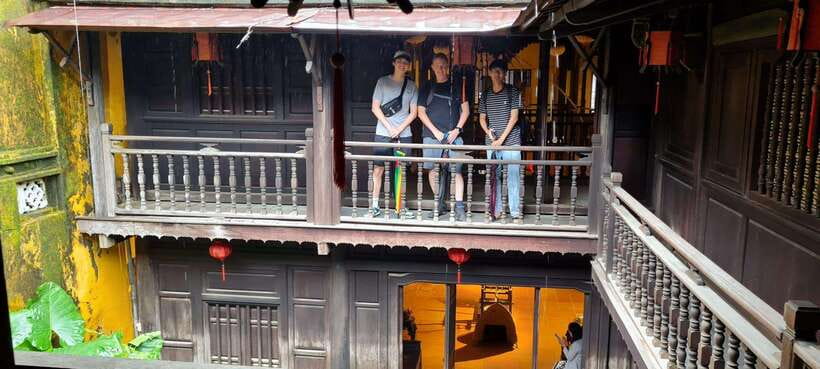
Hoi An Market brings the walk back to daily commerce. Here you get a sense of the food, shopping, and social energy that keep the old town from becoming only a preserved historic zone.
The market is also a natural point for questions. You can ask your guide where to look for local dishes, coffee, tailoring, or other activities. The advice is one of the tour’s most useful extras because Hoi An offers plenty of choices, and a short local suggestion can save you from choosing at random.
Keep in mind that recommendations are guidance, not a guarantee. You should still compare prices and inspect tailoring work before committing. The tour gives you starting points, which is more useful than pretending one shop suits every budget or style.
Tea, Dessert, and a Pleasant Finish
The included food or drink gives the tour a welcome change of pace. Depending on the arrangements, you may enjoy traditional tea, a local dessert, or a herbal drink at Mot. Several participants specifically appreciated finishing with the refreshing beverage.
This pause is small but well judged. After walking through the old town, you can sit or stop indoors, ask final questions, and write down recommendations. It also keeps the tour from feeling like a nonstop sequence of monuments.
Do not book this expecting a full meal. The included treat is a sample and a cultural touch, not lunch or dinner. You will still need to plan your own meal, and the guide can help point you toward local options.
Guide Quality and the Human Side of the Tour
The strongest part of this experience is the guide. Trung receives repeated praise for humor, enthusiasm, clear English, photo help, and his care with the group. Duy is also described as engaging, funny, and good at answering questions about Hoi An and Vietnamese history. Tom, Tin, Trang, and Yui are praised for making the walk relaxed, inclusive, and easy to follow.
The exact guide matters because a walking tour depends heavily on delivery. The information can be accurate, but the best guides make it feel like a friend is showing you a hometown they care about. That personal quality comes through in the comments about guides taking photographs, checking that everyone stays together, and sending further recommendations through WhatsApp after the walk.
One isolated concern involved a stranger following part of a group, which made one participant uncomfortable. The situation ended, but it is worth remembering that the tour takes place in public streets, not behind controlled gates. Your guide can manage the group, but no walking tour can remove every odd moment in a busy town.
Is $14 Good Value for 150 Minutes?
At $14 per person, the tour is strong value if you want a guided introduction to Hoi An rather than a private, highly specialized experience. You receive an English-speaking local guide, a small group, visits to major heritage sites, lesser-noticed alleys and photo spots, and a drink or dessert.
The separate entrance fee of 120,000 VND per person changes the total cost, so budget for that in cash. Even with that extra charge, the price remains reasonable for a route that covers so many important places and gives you practical advice for the rest of your stay.
The value is greatest for first-time visitors, people with only one day in Hoi An, and anyone who likes to understand a place before exploring independently. It is less suitable if you dislike group schedules, want long periods inside each building, or already know the old town well.
Cancellation is flexible up to 24 hours before the tour for a full refund, and you can reserve while paying later. Starting times vary, so check availability when you book.
Who Should Book This Hoi An Walk?
I would recommend it to first-time visitors, couples, solo travelers, families with older children, and anyone who wants a calm orientation to the Ancient Town. The small group makes it more personal than a large coach excursion, while the modest price keeps it accessible.
It also suits anyone who values local recommendations. A good guide can help you plan the next meal, coffee stop, tailor visit, or cultural activity, which gives the tour value after the official walk ends.
I would hesitate only if you need step-free sightseeing, are traveling with a baby stroller, or want a private itinerary built around one subject. The walk covers a lot, so the trade-off is breadth over depth.
Should You Book It?
Yes, I would book this as an early Hoi An activity. The route covers the essential sights, the guides bring humor and local perspective, and the small group keeps the experience manageable. The included tea, dessert, or herbal drink is a nice touch, but the real payoff is knowing what you are looking at and where to go afterward.
Arrive at 95 Phan Chu Trinh Street, bring cash for the 120,000 VND entrance ticket, wear comfortable clothes, and leave room in your schedule to revisit the places that catch your eye. If you only have a short stay, this tour gives you a well-paced first look without asking you to spend a full day on your feet.
FAQ
How long does the Hoi An walking tour last?
The tour lasts 150 minutes, or about two and a half hours. The planned visit through Hoi An Ancient Town is described as taking about three hours, so check the selected starting time and schedule when booking.
What is the meeting point?
The meeting point is 95 Phan Chu Trinh Street, Hoi An. The guide waits in front of a tailor shop located at the corner of the intersection.
Is the entrance ticket included?
No. The UNESCO heritage site entrance ticket costs 120,000 VND per person and must be paid in cash.
What sights are included?
The route includes Ba Mu Temple gate, a Fujian or Cantonese Assembly Hall, the Japanese Covered Bridge, Kazik Park, Tan Ky Heritage House, Hoi An Traditional Art Performance House, the Museum of Folk Culture, and Hoi An Market.
What language is the tour offered in?
The tour is offered in English with a live English-speaking local guide.
How large is the group?
The tour is limited to a maximum of 10 participants.
Is hotel pickup available?
No. Pickup and drop-off are not included, so you need to make your own way to the meeting point.
New around Hoi An
- Thanh Ha Village: Pottery Workshop with Locals★ 4.4 · 223 reviews
- Snorkeling Cham Island: Snorkeling Tour by Speed Boat★ 3.6 · 26 reviews
- Romantic Sunset Dinner Cruise in Hoi An★ 4.7 · 108 reviews
- Hoi An: Rural Cycling Tour to Village with Basket Boat Ride★ 5.0 · 174 reviews
- Private Car Hoi An to Hue Via Hai Van Pass, Lagoon & More★ 5.0 · 22 reviews
- From Hoi An: Day Tour of My Son Temples and Marble Mountain★ 4.8 · 44 reviews
- Market Tour – Cooking Class – Coconut Boat Riding★ 4.4 · 43 reviews
- Mad Monkey Hoi An Pub Craw★ 4.2 · 25 reviews
Walking Tours in Hoi An, compared.

Evening Walking Food Tour, folk game and lantern boat
Read our review →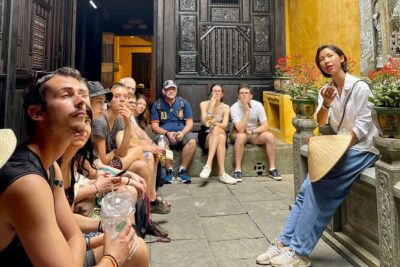


Cham Island: Underwater Walking & Snorkeling Tour
Read our review →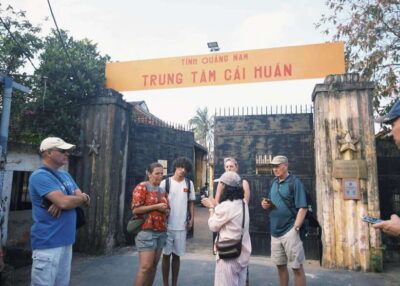
Hoi An Off the Map – Walking Tour in the Backstreets
Read our review →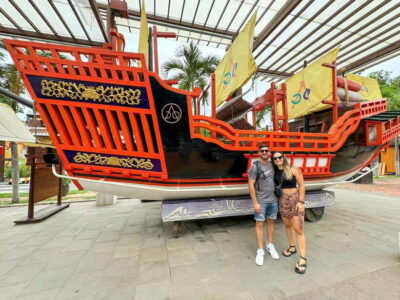
Browse the lists this tour appears in