
Reviewed · WALKING TOURS IN HUE
Hue Imperial City and Forbidden City Walking Private Tour
Royal Hue rewards a closer look. This private 150-minute tour brings the Nguyen Dynasty to life through the Flag Tower, Noon Gate, royal theater, gardens, temples, and restored palaces. I like the private format, since you can ask questions without waiting for a large group, and I like the way the route covers both famous buildings and quieter corners of the Imperial City.
The guides are the main strength. Austin, Ha, Anna, Nhi, Duyen, Quan, and others are praised for clear explanations, friendly service, and a talent for adding small stories to the grand political events. One guide even arrived early so the group could enter before the crowds. The main consideration is time: two to two and a half hours is useful but brisk, especially if you want long photo stops or detailed visits inside every structure.
In This Review
- Key Points to Know Before You Go
- Why This Hue Tour Works So Well
- Meeting the Guide at the Nine Holy Cannons
- The Flag Tower and the First View of the Citadel
- Ngo Mon Gate and Ngu Phung Pavilion
- Thai Hoa Palace and the Nguyen Emperors
- The Forbidden Purple City and Duyet Thi Duong Theater
- Thiệu Phương Garden and Thai Binh Pavilion
- Kien Trung Palace, New Again in 2024
- Dien Tho Palace and the Queen Mother’s Residence
- Hung To Mieu, the Nine Dynastic Urns, and Hien Lam Pavilion
- What the Guides Add to the Experience
- Timing, Pace, and Weather
- Who Should Book This Private Hue Walk?
- Should You Book the Hue Imperial City Tour?
- FAQ
- How long does the Hue Imperial City walking tour last?
- What language is the tour conducted in?
- Is this a private tour?
- Where do I meet the guide?
- Is the Imperial City entrance ticket included?
- Are hotel pickup and drop-off included?
- What sites are included in the walking route?
- Can I cancel the booking?
Key Points to Know Before You Go
- The tour begins at the bronze cannons near Cua Ngan, where your guide waits with an A4 sheet showing your name.
- The route links the key royal buildings, from Ngo Mon Gate and Thai Hoa Palace to the Forbidden Purple City, royal theater, gardens, and dynastic temples.
- Kien Trung Palace was rebuilt in 2024, giving you a rare chance to see one of Hue’s newest restoration projects.
- The private English-speaking guide is the real value, explaining the Nguyen emperors, court life, architecture, and local stories as you walk.
- The Imperial City ticket costs 200,000 VND per adult, and it is not included in the tour price.
- Early starts may offer a quieter visit, while flexible start times make the tour easier to fit around trains, flights, or other Hue sights.
Why This Hue Tour Works So Well
Hue’s Imperial City is not difficult to admire, but it can be difficult to understand alone. There are gates, courtyards, temples, pavilions, gardens, and rebuilt halls spread across a large walled complex. Without context, it is easy to see beautiful timber and bright paint without grasping who used each building or why it mattered.
This tour gives you that missing framework. You learn about the Nguyen Dynasty, which ruled Vietnam for 143 years, and follow the movement from public royal ceremonies to private family life. The guide helps separate the emperor’s working spaces from the queen mother’s residence, religious buildings, entertainment venues, and restricted areas reserved for the royal family.
I especially like the balance between major landmarks and smaller stops. The Flag Tower and Noon Gate provide the grand first impression, while Thiệu Phương Garden, Thai Binh Pavilion, and Duyet Thi Duong Royal Theater show how the court spent time away from formal ceremonies.
At $23 per person, the price is appealing for a private tour. You still pay the Imperial City entrance fee separately, but the cost of the guide is modest if you are traveling with two or more people. Even for a solo visitor, the fee can make sense if Hue is a short stop and you want the site explained rather than simply photographed.
More Walking Tours in Hue
- Hue Imperial Ancient City Walking Tour
★ 4.8 · 308 reviews - Hue Imperial City Walking Tour: Citadel & Forbidden City
★ 4.8 · 245 reviews - Eat like a local with a local – Walking Tour
★ 4.9 · 57 reviews
Meeting the Guide at the Nine Holy Cannons
The meeting point is near the four bronze cannons by Cua Ngan, also called the Nine Holy Cannons area. The cannons were cast in 1803 and are among the first useful reminders that Hue was not merely a collection of palaces. It was the political and military center of the Nguyen court.
Your guide waits with an A4 paper displaying your name. That detail matters because the area has several entrances and open spaces, and a clear meeting signal saves time at the start. If you select the option with transportation, hotel pickup and drop-off are included. Otherwise, you meet at the cannon area.
The guide helps you purchase the entrance ticket before the walk continues. Bring cash in Vietnamese dong if possible. The standard Imperial City ticket is 200,000 VND per adult. Combo tickets may be better value if you also plan to visit royal tombs: 420,000 VND includes the Imperial City and two tombs, while 530,000 VND includes the Imperial City and three tombs, with validity listed as two days.
The Flag Tower and the First View of the Citadel
The Flag Tower, or Ky Dai Hue, sits at the center of the southern face of the Hue Citadel. It served as the flag-bearing point for the royal court and gives the tour a strong opening image.
This is mainly an orientation stop. Your guide explains the relationship between the outer citadel, the Imperial City, and the inner royal precinct. You also get a sense of scale before entering the more intimate spaces beyond the walls.
The stop is planned for about 10 minutes. That is enough for a guided explanation and photographs, but not a long pause. If the tower is one of your main photo goals, you may want to use your free time after the tour to return to the area.
Ngo Mon Gate and Ngu Phung Pavilion
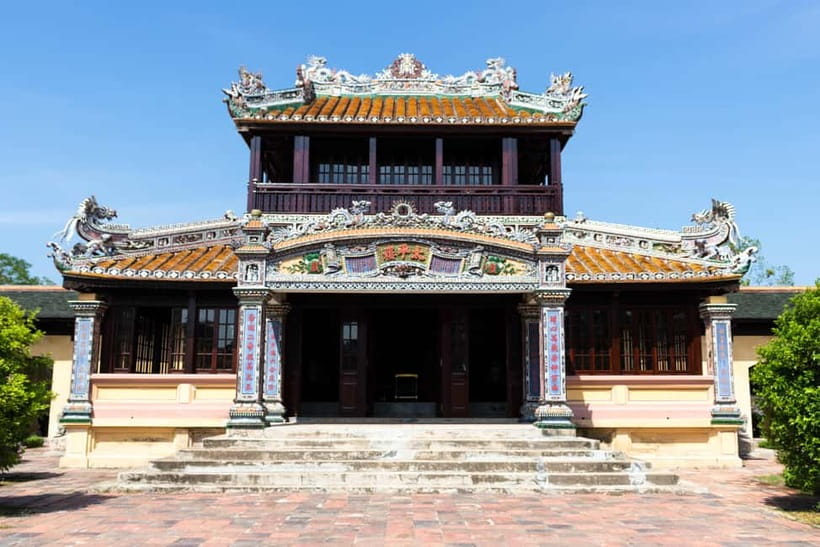
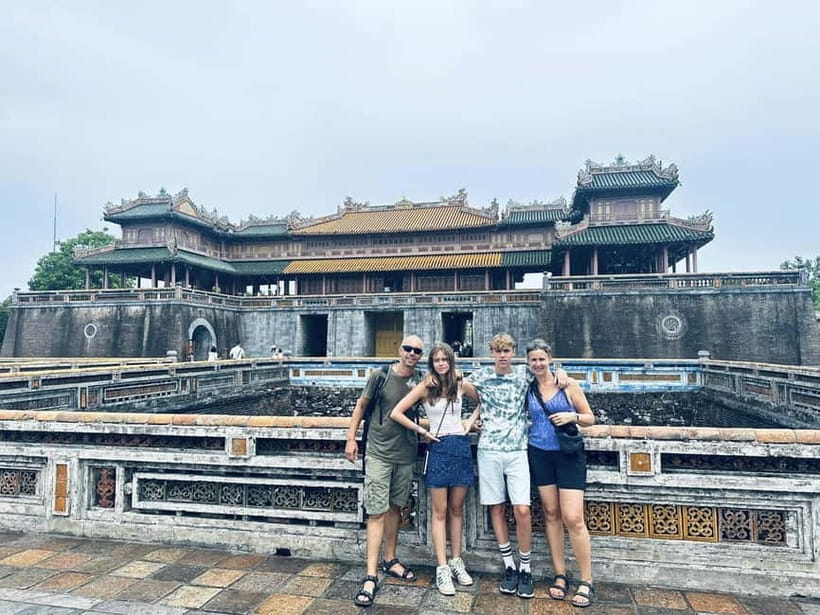
Ngo Mon Gate, or the Noon Gate, was built in 1833 under Emperor Minh Mang. It was reserved for the king and used to receive envoys. That distinction helps explain the carefully controlled movement through the royal compound. In the Nguyen court, architecture was also a system of rank and access.
Above the gate is Ngu Phung Pavilion, a remarkable frame made entirely of ironwood with 100 pillars. The gate and pavilion form one of Hue’s most memorable architectural views, especially when seen from the broad approach.
Your guide spends about 10 minutes here. You should expect a short walk, a formal explanation, and time for photographs. The stop is not intended as a long architectural study, so ask questions while you are here if you want more detail about the timber frame or ceremonial use of the gate.
More walking tours in Hue Vietnam:
- Hue Imperial city walking tour and optional royal tombs
★ 4.7 · 19 reviews - Private Street Food Evening Walking Tour in Ho Chi Minh City
★ 5.0 · 3,175 reviews - [HOT] Hanoi Old Quarter Walking Street Food – Small Group Tour
★ 5.0 · 2,163 reviews - Super Niche Walking Street Food Tour in Ho Chi Minh City
★ 5.0 · 1,636 reviews
Thai Hoa Palace and the Nguyen Emperors
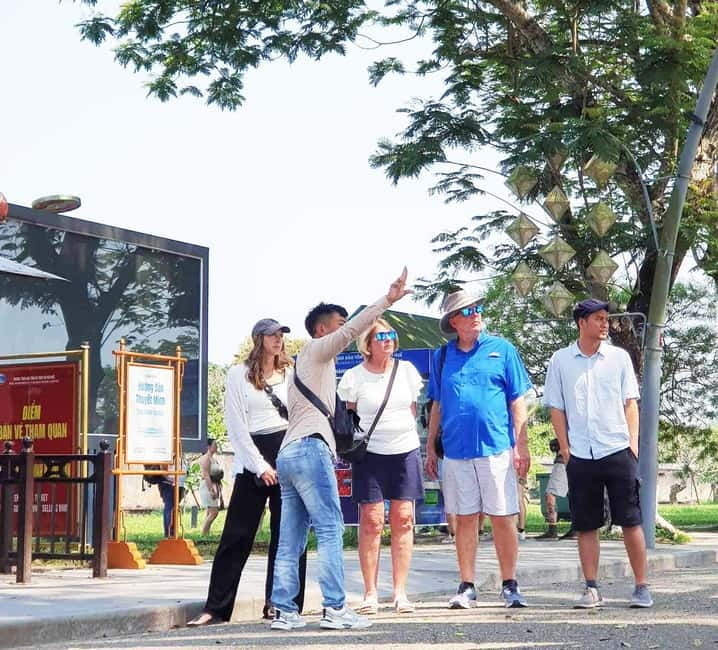
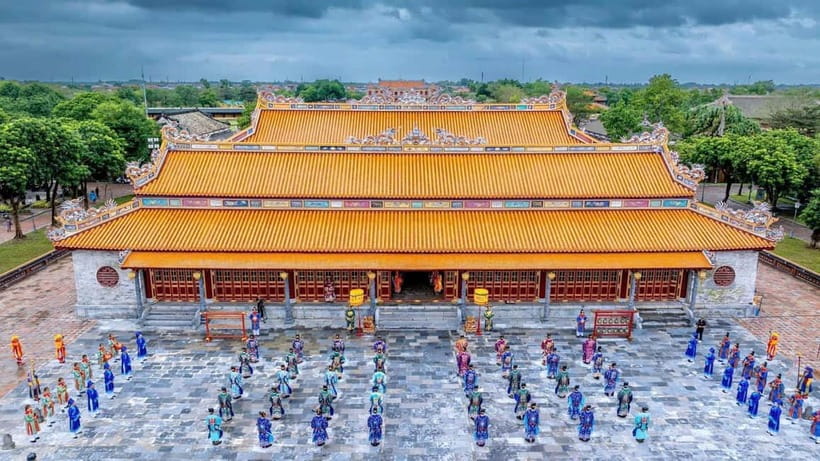
Thai Hoa Palace was the coronation place of all 13 Nguyen kings. This is one of the most important stops because it links the building to the entire dynasty, rather than to one ruler alone.
The palace represents the public face of royal power. Your guide can help you picture the formal ceremonies that took place here and explain why the building was central to the court. The visit lasts about 15 minutes, giving you time to look at the structure and hear the main historical points.
I would pay close attention to the guide’s explanation here instead of rushing toward photographs. Hue’s royal buildings can look similar at first, and this is where the difference between a throne hall, a private residence, and a temple begins to make sense.
The Forbidden Purple City and Duyet Thi Duong Theater
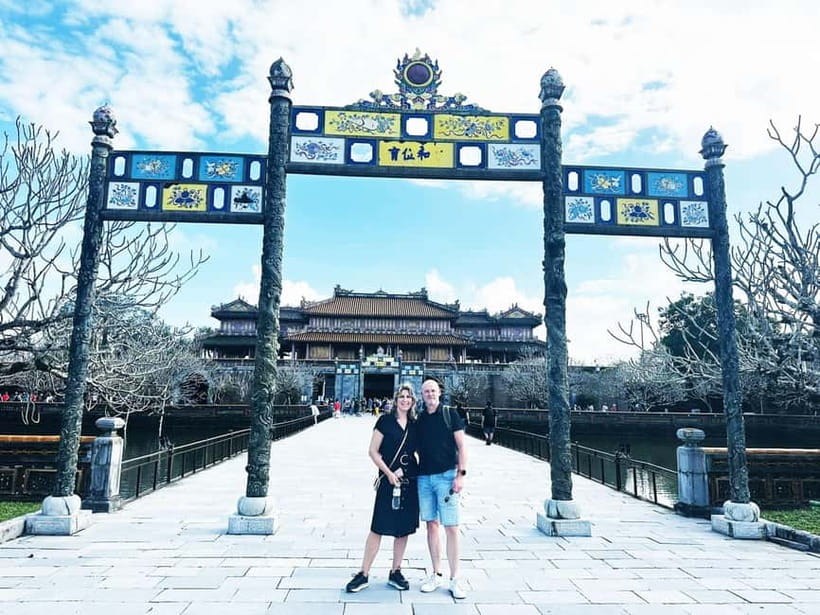
The Forbidden Purple City was reserved for the emperor and royal family. Mandarins and ordinary civilians were not allowed to approach freely. That restriction gives the inner complex a different meaning: it was not simply another courtyard, but the most private zone of the Nguyen court.
Much of Hue’s imperial area has endured war, weather, and long periods of damage. A guide helps you understand the difference between surviving structures, reconstructed areas, and spaces known through historical records.
The route then reaches Duyet Thi Duong Royal Theater, one of four theaters built during the Nguyen Dynasty and the oldest preserved theater of the group. This is a fine reminder that palace life included music, drama, and ritual performance, not just official meetings.
The theater stop lasts about 10 minutes. You may find the visit especially worthwhile if you enjoy traditional performing arts or want a break from a sequence of palace halls. Ask the guide about how the theater fit into court life, since the building’s importance is easy to miss if you only treat it as another photo stop.
Thiệu Phương Garden and Thai Binh Pavilion
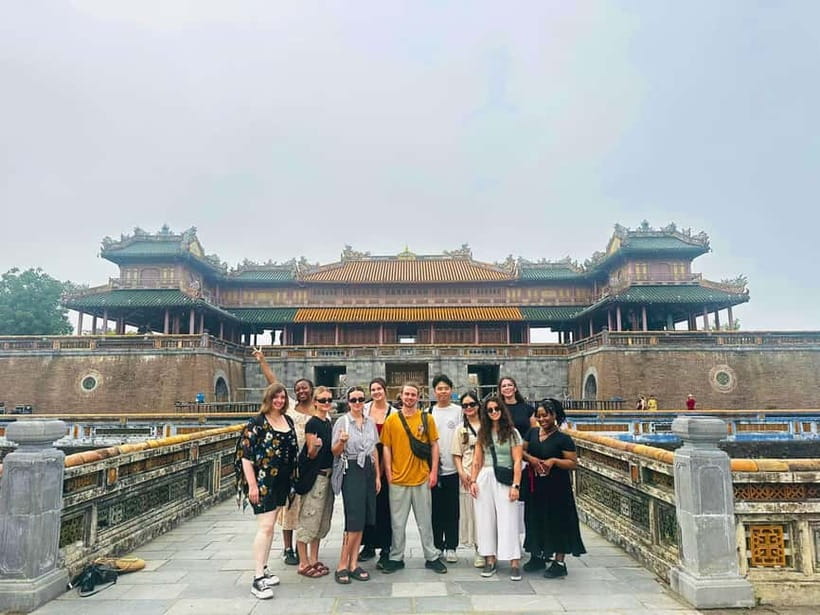
Thiệu Phương Garden was built in 1828 and is one of the classic royal gardens of the Nguyen period. Its value lies in the change of mood. After the formal gates and ceremony halls, you see a more private setting intended for pleasure and relaxation.
The garden also helps you understand how the royal compound was planned. Palace life was not confined to enclosed halls. Gardens, pavilions, water features, and shaded paths gave the court places to read, rest, and enjoy carefully designed surroundings.
Thai Binh Pavilion was built between 1919 and 1921 as a place for the king to relax. Its later date places it near the end of the Nguyen era, when Hue’s court culture was changing under strong French influence.
The two stops receive about 10 and 15 minutes. That is enough for the guide to explain their purpose and for you to take photographs, but the schedule leaves little room for lingering. If gardens are your priority, plan to spend extra personal time in the Imperial City after the guided walk.
Kien Trung Palace, New Again in 2024
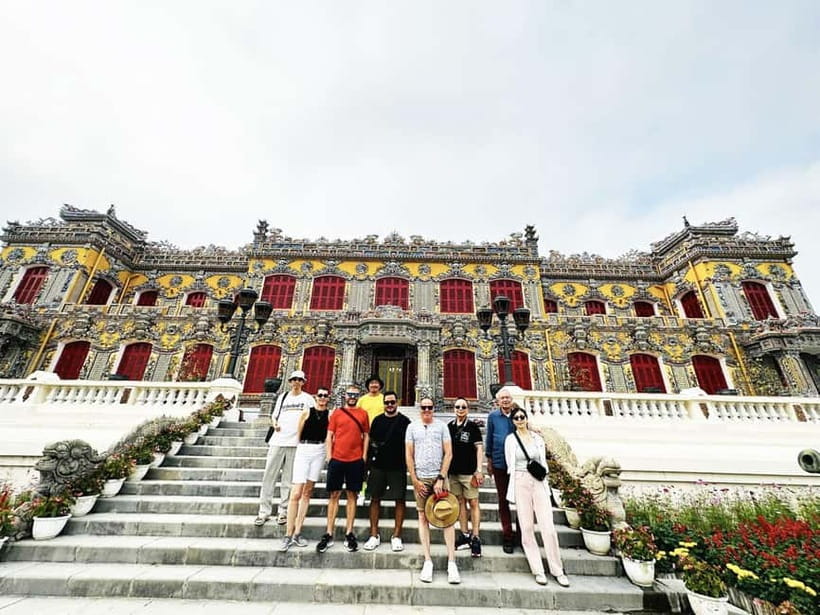
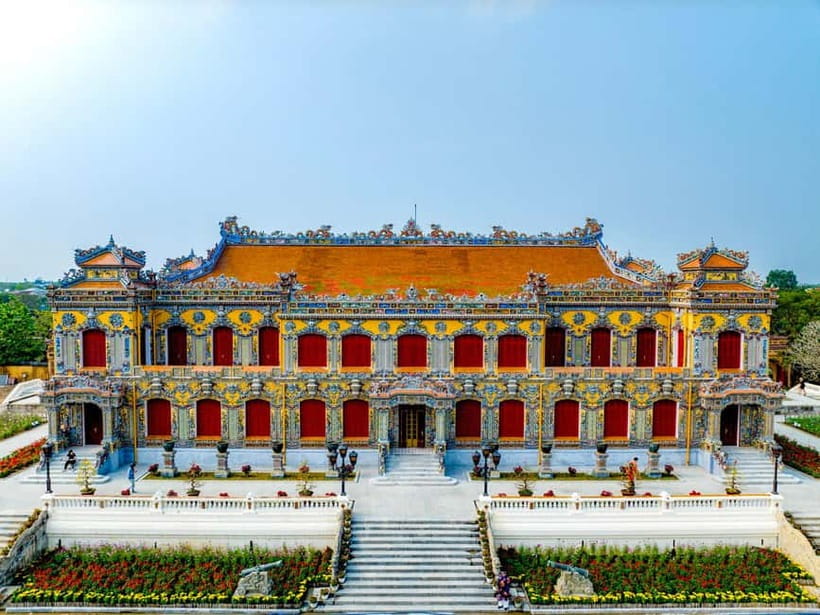
Kien Trung Palace is one of the most distinctive stops on the route. Built in 1923, it combined Asian and European architectural ideas. The result reflects the late Nguyen period, when traditional Vietnamese court design existed alongside outside influences.
The palace completely collapsed and was restored in 2024. That makes the visit unusually timely. You are seeing a recent attempt to recover an important part of the royal compound, not simply looking at an untouched relic.
The guide allows about 15 minutes here. I would use the stop to ask how the restored palace differs in style from older Nguyen buildings. Its mixed architectural language gives you a useful way to think about the final decades of the dynasty.
Restoration can sometimes feel less atmospheric than an aged ruin, and some visitors may prefer structures with more original fabric. Still, Kien Trung Palace adds a valuable late-period chapter to the tour.
Dien Tho Palace and the Queen Mother’s Residence
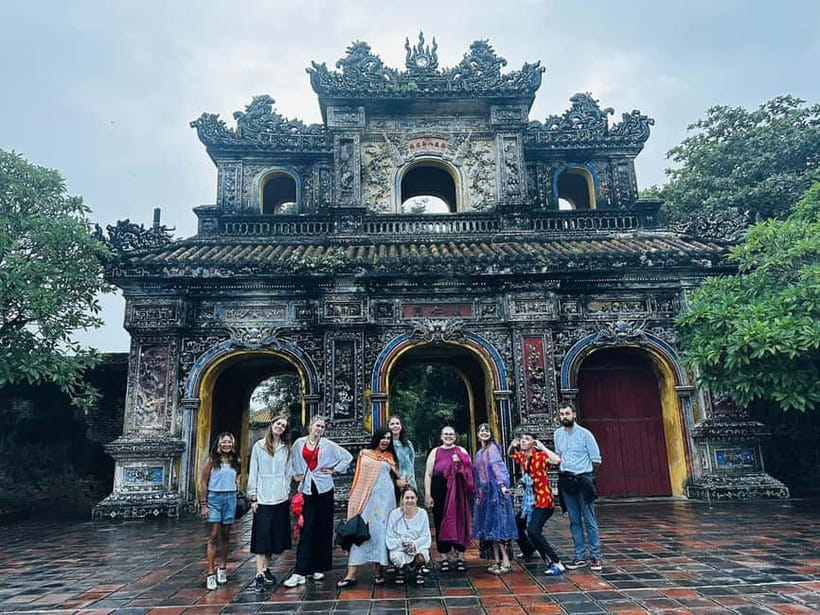
Dien Tho Palace was the residence of the queen mother. It is large in scale, with carved details and a refined style. This stop broadens the story beyond emperors and ceremonies by showing where senior women of the royal family lived.
The palace’s function is important. Court life was organized around family roles and strict rank, and the queen mother held a position of great respect. Your guide can explain how this residence differed from the emperor’s spaces and why its location within the complex mattered.
The planned visit lasts 10 minutes. That is short, but the stop fits well into the route because it shifts your attention from national power to family authority within the court.
Hung To Mieu, the Nine Dynastic Urns, and Hien Lam Pavilion
Hung To Mieu, listed on the route after Dien Tho Palace, adds another religious and family dimension to the walk. The surrounding temple area connects the dynasty with ancestor worship, one of the central ideas in the royal compound.
Nearby, the Nine Dynastic Urns were commissioned by Emperor Minh Mang in 1835. Together, the nine bronze urns carry 162 cast and carved images. Their decoration records animals, plants, objects, and symbols considered important to the country and the royal order.
The urns are not just large bronze objects. They communicate how the Nguyen court wanted to represent Vietnam, its resources, and its authority. Your guide’s explanation is particularly useful here because the images can otherwise be hard to interpret.
Hien Lam Pavilion was built from 1821 to 1822. It is associated with the place where emperors experienced moments of insight. The tour ends at Cua Hien Nhon after this final group of sites.
The closing section receives roughly 10 to 15 minutes at each stop. Once the guided portion ends, you can continue exploring the Imperial City on your own, allowing more time for photographs or buildings that caught your attention.
What the Guides Add to the Experience
The strongest pattern in the feedback is the quality of the individual guides. Austin is praised for making the visit both fun and informative, while Ha is repeatedly described as clear, witty, and able to answer questions about Hue culture. Nhi is praised for thoughtful explanations about the final Vietnamese emperors.
Anna received special praise for practical care during heavy rain. She arrived with a poncho and helmet, and later helped with local food advice, including how to eat authentic Vietnamese dishes and what the ingredients were. That kind of personal help is not guaranteed by every tour, but it shows the level of attention some guides bring.
Other guides named in the feedback include Duyen, Quan, Daniel, Dat, Ly Ly, Long, and Law. Duyen helped make a short stay in Hue worthwhile, while Dat was appreciated for useful photo locations. Communication before the meeting was also praised, especially by visitors who booked close to the start time.
There is one fair caution. One person found the guide’s English difficult to understand at times. The overall rating is 4.9 from 42 reviews, and the praise for explanations is strong, but accents and speaking speed can vary. If a point is unclear, ask the guide to repeat it. A private format makes that much easier than a large group tour.
Timing, Pace, and Weather
The tour runs for 150 minutes, with start times arranged around your needs. That flexibility is useful if you arrive by train, have a short stay in Hue, or want to avoid the hottest part of the day.
The route contains many stops, so the pace is active. Most visits last 10 minutes, with 15 minutes at major sites such as Thai Hoa Palace, Thai Binh Pavilion, Kien Trung Palace, and Hung To Mieu. You will receive a guided overview of many buildings, but you should not expect a slow architectural inspection of every room.
Hue weather can change quickly. Anna’s help during a downpour shows why a rain jacket or umbrella is sensible, even if the forecast looks calm. Comfortable walking shoes and water are also practical choices. Bottled water is included, but food and other drinks are not.
Who Should Book This Private Hue Walk?
I would choose this tour if you want the Imperial City to make sense quickly. It suits first-time visitors, couples, families, solo visitors, and anyone with only a few hours in Hue.
It is especially useful for you if:
- You want a private English-speaking guide.
- You care about dynastic events and royal customs.
- You prefer questions and conversation to a fixed audio guide.
- You want to see restored Kien Trung Palace alongside older royal buildings.
- You need a flexible start time.
- You plan to visit Hue without arranging a full-day city tour.
You may want something longer if you want a slow photography session, extended garden time, or a detailed look at every surviving structure. The short schedule is its strength for a busy itinerary, but also its limit.
Should You Book the Hue Imperial City Tour?
For $23 per person, this is a strong-value way to understand Hue’s most important historic site. The entrance ticket costs extra, but the guide adds the context that turns gates, urns, temples, and palaces into a connected story.
I would book it if you want a focused introduction to the Nguyen Dynasty and prefer a private guide who can adjust the pace. Choose an early start if you want a quieter atmosphere, and bring cash in VND for the ticket. If you already know Hue’s royal history and want hours of independent exploration, buy your ticket directly and use the tour’s final free time instead.
FAQ
How long does the Hue Imperial City walking tour last?
The tour lasts 150 minutes, or about two and a half hours. Some options may run for about two hours depending on the selected start and tour arrangement.
What language is the tour conducted in?
The tour is conducted in English with a live English-speaking guide.
Is this a private tour?
Yes. The experience is for a private group with your own guide.
Where do I meet the guide?
The meeting point is at the four bronze cannons near the Ngan Gate, or Cua Ngan. The guide waits with an A4 paper displaying your name.
Is the Imperial City entrance ticket included?
No. The Imperial City entrance ticket costs 200,000 VND per adult and must be paid separately. The guide can assist with purchasing it.
Are hotel pickup and drop-off included?
Hotel pickup and drop-off are included only if you select the option that offers transportation.
What sites are included in the walking route?
The route includes the Flag Tower, Ngo Mon Gate, Ngu Phung Pavilion, Thai Hoa Palace, the Forbidden Purple City, Duyet Thi Duong Theater, Thiệu Phương Garden, Thai Binh Pavilion, Kien Trung Palace, Dien Tho Palace, Hung To Mieu, the Nine Dynastic Urns, and Hien Lam Pavilion.
Can I cancel the booking?
You can cancel up to 24 hours before the tour for a full refund. A reserve-now-and-pay-later option is also available.
New around Hue Vietnam
- Phong Nha National Park: Paradise Cave Half-Day Tour★ 5.0 · 23 reviews
- Official Hue: Dragon Boat, Imperial Citadel, & Market tour★ 4.7 · 32 reviews
- Hue to Hoi An by bus: Hai Van Pass, Lang Co, Marble mountain★ 4.6 · 27 reviews
- Hue to Hoi An/Da Nang: Private Scenic Motorbike Tour★ 4.9 · 63 reviews
- Hue: Private Transfer to/from Hoi An via Sightseeing Stops★ 4.9 · 111 reviews
- Hue: Royal Tombs Private Tour with 3 Best Tombs & Pagoda★ 4.9 · 213 reviews
- Hue Royal Tombs Tour: Visit Best Pagodas & Mausoleums★ 4.9 · 19 reviews
- Hue : Private Day Trip to DMZ : Vinh Moc tunnel & Khe Sanh★ 5.0 · 26 reviews
Walking Tours in Hue, compared.
Imperial City Walk, Motorbike Tour & Private Car Options
Read our review →
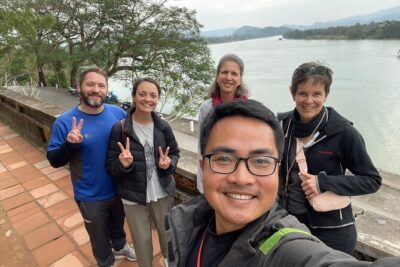
Hue Imperial City Walking Tour: Citadel & Forbidden City
Read our review →Hue Imperial City Walking Tour: Citadel & Forbidden City
Read our review →
Half-Day Guided Street Food Walking Tour at Hue
Read our review →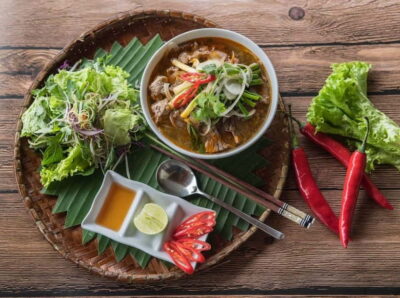
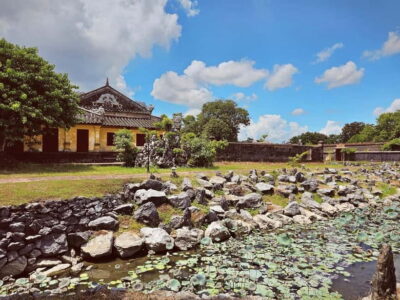
Hue Imperial city walking tour and optional royal tombs
Read our review →Browse the lists this tour appears in