
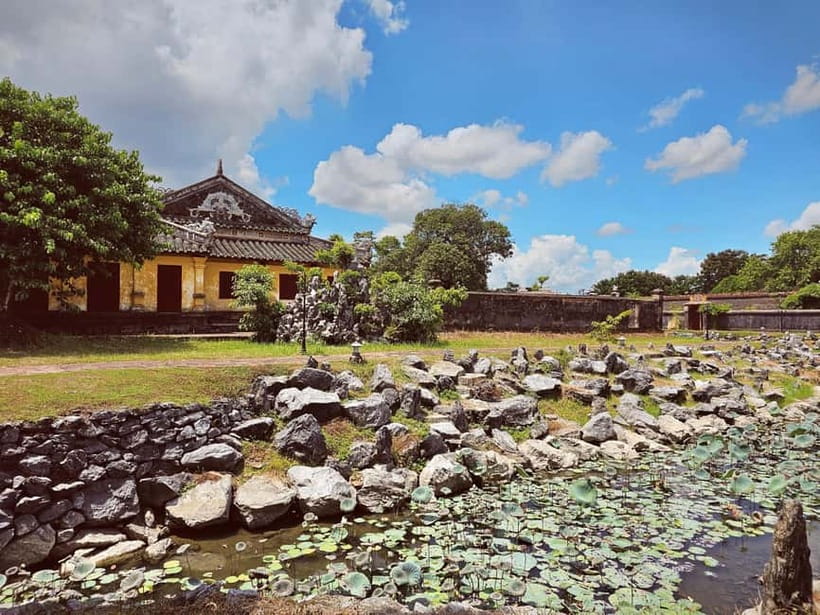
Reviewed · WALKING TOURS IN HUE
Hue Imperial city walking tour and optional royal tombs
History gets personal in Hue. This 2.5-hour walking tour makes the Nguyen Dynasty easier to understand by connecting palace buildings, court intrigue, engineering, and royal customs. I like the focus on small-group guiding and the way the tour explains why Hue became Vietnam’s imperial capital, not just what each gate or temple is called. I also like that guides such as Matthew, Dang, and Tom have earned praise for clear English, warm manners, and detailed storytelling.
The main drawback is simple: the 200,000 VND entrance ticket is extra, so the advertised $26 price covers the guiding fee rather than your full cost. Hue can also be hot and humid from May through August, and two and a half hours of walking takes some planning. Still, for anyone who wants more than a quick photo stop, this is a strong way to see the Imperial City.
In This Review
- Key points before you book
- Why Hue needed an imperial capital
- Meeting at the Nine Holy Cannons
- Entering the Imperial City through its royal design
- Hien Lam Cac Pavilion and The Mieu Temple
- The Queen Mother Residence and the inner court
- The Purple Forbidden City and Kien Trung Palace
- What the guide adds to the experience
- The 8 am Changing Guard Ceremony
- Optional royal tombs and custom plans
- Price, ticket costs, and overall value
- Heat, timing, and what to bring
- Who should book this Hue tour?
- FAQ
- How long does the Imperial City tour last?
- What does the $26 price include?
- How much is the entrance ticket?
- Is the tour conducted in English?
- Can I book a morning tour?
- Where does the tour meet?
- Where does the tour end?
- Will the guide contact me before the tour?
- Are royal tombs included?
- What should I bring in summer?
- Should you book the Hue Imperial City walking tour?
Key points before you book
- The tour centers on the Nguyen Dynasty: You learn why Hue became the capital from 1802 to 1945 and why the dynasty later fell.
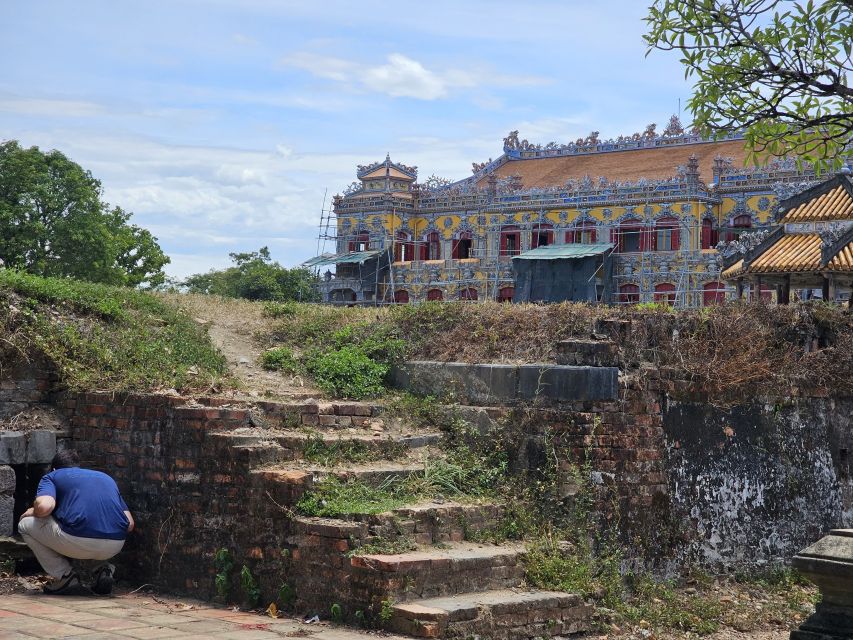
- The Imperial and Forbidden Cities receive the full treatment: Stops include Hien Lam Cac Pavilion, The Mieu Temple, the Queen Mother Residence, Kien Trung Palace, and the Royal Garden.
- The guiding is the real value: The tour focuses on architecture, court life, Feng Shui, weather, flood control, and palace design.
- A morning start includes a useful bonus: Book the morning option and you can watch the Changing Guard Ceremony at 8 am near Ngo Mon Gate.
- The meeting point needs care: Find the four-cannon side of the Nine Holy Cannons, not the opposite side with five cannons.
- Royal tombs are an optional add-on: The supplied details do not give a fixed route or price, so confirm exactly what is included before paying.
Why Hue needed an imperial capital
Hue was selected as the capital under the Nguyen Dynasty, which ruled Vietnam from 1802 to 1945. This tour begins with that basic question: why here?
That question gives the visit a clear shape. Instead of treating the citadel as a collection of disconnected monuments, the guide explains how geography, royal authority, construction choices, and cultural ideas worked together. You learn about the forces that shaped the buildings, including Feng Shui and the practical effects of Hue’s weather.
That mix is useful because Hue’s architecture can look decorative at first glance. A good guide helps you read the site. Walls, gates, courtyards, temples, residences, and gardens begin to show how the imperial court organized power and movement.
The tour also addresses the Nguyen Dynasty’s downfall. That historical arc matters. You are not simply looking at surviving palace buildings. You are following the rise of the dynasty, its court culture, its building projects, and the reasons its rule came to an end.
More Walking Tours in Hue
- Hue Imperial Ancient City Walking Tour
★ 4.8 · 308 reviews - Hue Imperial City Walking Tour: Citadel & Forbidden City
★ 4.8 · 245 reviews - Eat like a local with a local – Walking Tour
★ 4.9 · 57 reviews
Meeting at the Nine Holy Cannons
The tour starts at the four-cannon side of the Nine Holy Cannons. This detail is more important than it sounds. On the opposite side are five cannons, so check your position before assuming you have found the right place.
The guide sends a WhatsApp message before the meeting, which should help settle the meeting point and confirm that the group is in touch. The activity ends back at the same meeting point, so you do not need to arrange a second pickup location at the end.
I would arrive with enough time to identify the cannons and avoid a rushed start. This is a walking tour inside a large historic complex, and the guide’s opening explanation helps you understand what you are about to see.
Entering the Imperial City through its royal design
The Imperial City is a UNESCO World Heritage site, recognized in 1993. The tour uses the site as a classroom for Nguyen Dynasty architecture and royal planning.
The guide explains why particular structures were placed where they were and how the court’s buildings reflected imperial authority. You also learn about the forces behind the design. Was a feature shaped mainly by Feng Shui, by Hue’s weather, or by both? Those questions turn architecture into something practical rather than purely ornamental.
The reviews describe guides explaining ingenious engineering used to manage floodwater and wind currents. That is one of the most useful parts of the experience because Hue’s buildings were not designed in a vacuum. The local climate affected construction, maintenance, and daily palace life.
You should expect plenty of walking and standing. The tour is built around seeing the complex on foot, not riding between monuments. Bring water, especially from May to August, when Hue is often hot and humid.
Hien Lam Cac Pavilion and The Mieu Temple
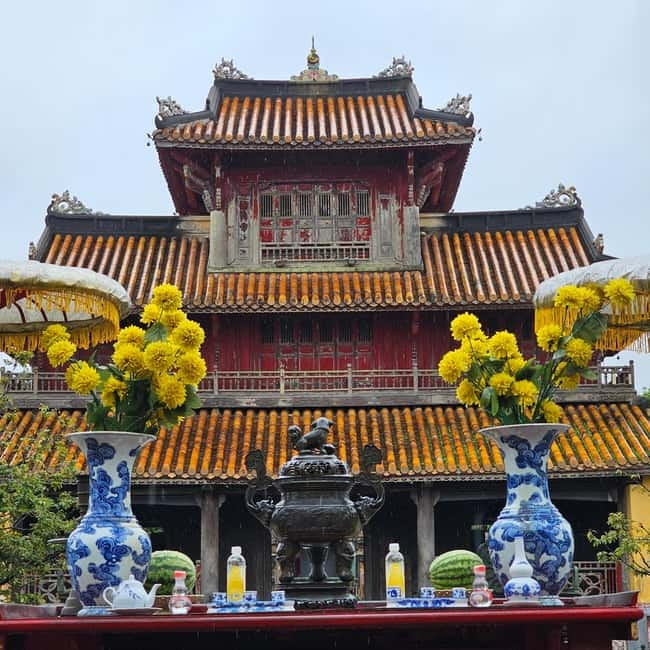
Hien Lam Cac Pavilion is one of the named stops inside the Imperial City. The guide places it within the wider story of the Nguyen court, helping you understand how royal buildings worked together rather than presenting the pavilion as an isolated object.
The Mieu Temple adds another layer. A temple inside the imperial compound tells you about the dynasty’s respect for ancestors and the ceremonial side of royal life. This is where a historian guide can make a major difference. Without context, you might see a beautiful structure and move on. With context, you can connect the building to worship, dynasty, legitimacy, and court ritual.
The tour’s focus on architecture is especially useful here. You learn about design under the Nguyen Dynasty and the ideas that influenced construction. If you enjoy details about planning, symbols, and the relationship between form and function, this portion should be rewarding.
More walking tours in Hue Vietnam:
- Hue Imperial City and Forbidden City Walking Private Tour
★ 4.9 · 42 reviews - Private Street Food Evening Walking Tour in Ho Chi Minh City
★ 5.0 · 3,175 reviews - [HOT] Hanoi Old Quarter Walking Street Food – Small Group Tour
★ 5.0 · 2,163 reviews - Super Niche Walking Street Food Tour in Ho Chi Minh City
★ 5.0 · 1,636 reviews
The Queen Mother Residence and the inner court
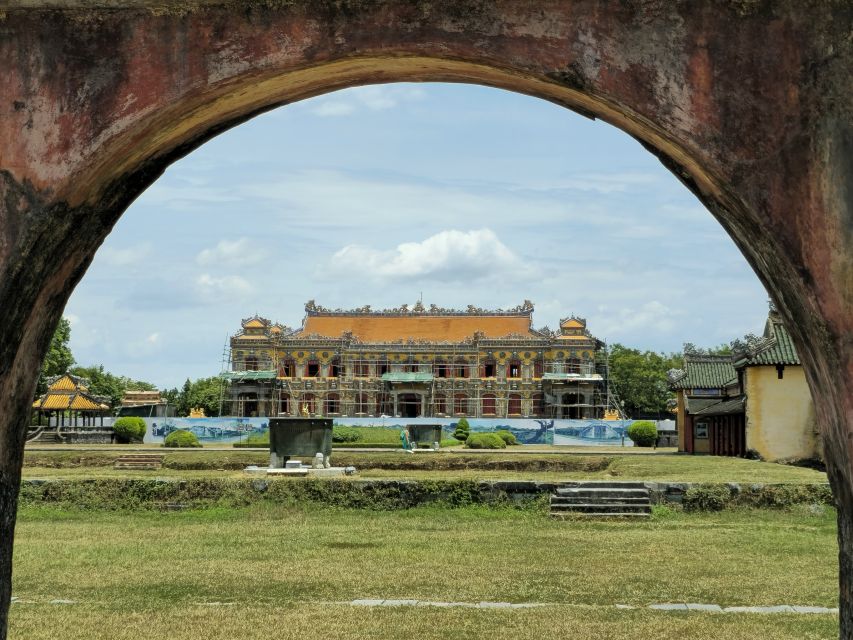
The Queen Mother Residence shifts attention from grand public spaces to the people who lived within the court. A royal residence can reveal a different side of the Nguyen Dynasty, including family roles and the controlled nature of palace life.
The tour is also known for discussing palace intrigue. That makes the history easier to picture. Royal power was not only expressed through gates, ceremonies, and official halls. It also played out through relationships, rank, and decisions within the imperial household.
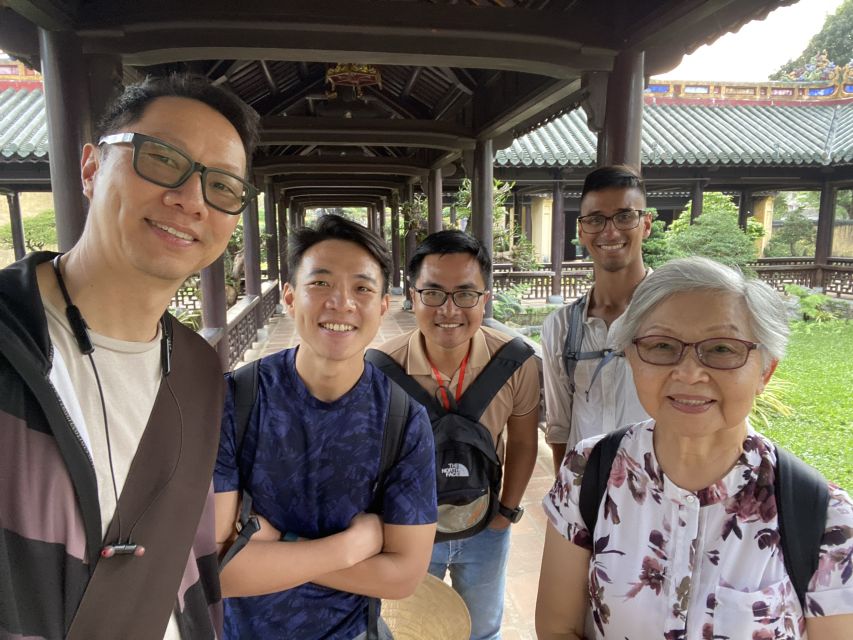
Guide Matthew has been praised for adjusting explanations to match a group’s interests, including giving more attention to palace intrigues when visitors wanted that angle. That flexibility is valuable in a small group. You can ask a question and get an answer tied to the place in front of you, rather than waiting for a fixed speech to end.
Other guides named in the feedback include Dang, who was praised for guiding people through the citadel in a clear and engaging way, and Tom, who was noted for speaking French very well during one visit. The listed tour language is English, so if you need French, confirm the language arrangement before booking.
The Purple Forbidden City and Kien Trung Palace
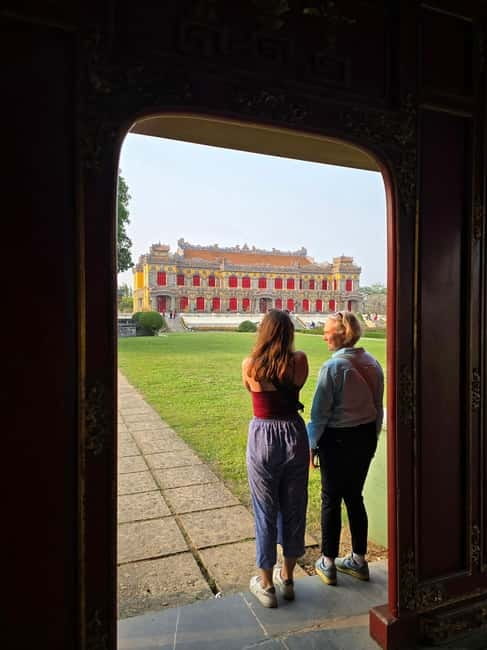
The Purple Forbidden City is the emotional center of the tour. This was the most restricted part of the imperial complex, associated with the emperor and the royal household.
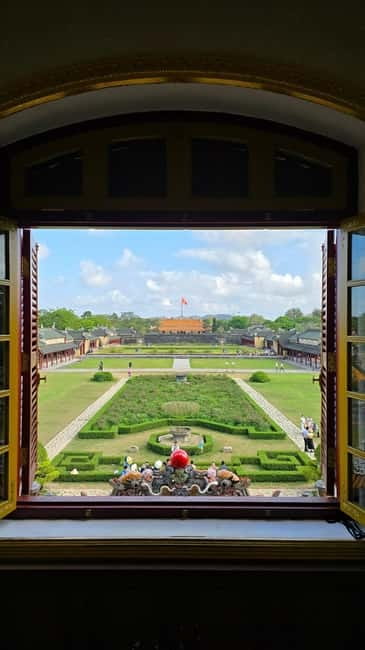
The tour includes Kien Trung Palace and the Royal Garden. These stops help you picture the inner workings of the court, not simply its formal entrance areas. The guide connects the buildings to the Nguyen Dynasty and explains how the palace complex functioned.
Kien Trung Palace is also a reminder that the Imperial City is not only about what survived in perfect condition. Hue has endured war, weather, political change, and long periods of decline. A guide can help you understand the site as a place shaped by both imperial ambition and historical loss.
The Royal Garden offers a change from the larger ceremonial spaces. Gardens were not just decoration. Within a royal compound, they formed part of the controlled setting of court life. You can use this stop to notice the relationship between buildings, open space, movement, and privacy.
What the guide adds to the experience
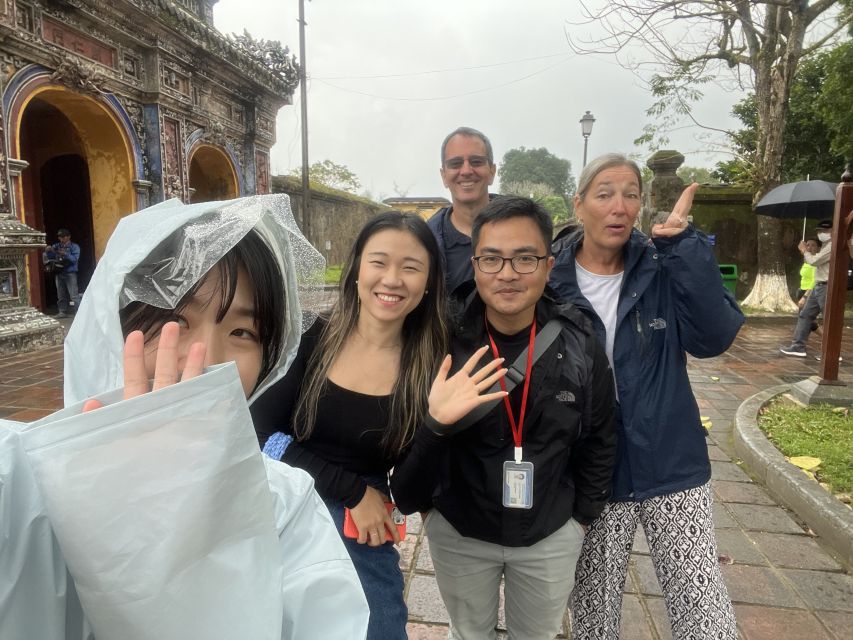
The guiding fee is the heart of this experience. You are paying for interpretation, not transportation, lunch, or admission.
That distinction matters. The Imperial City can be visited independently, but the scale and history can make a self-guided walk feel scattered. A historian guide gives you a route and a story. The strongest feedback centers on detailed explanations, impressive command of the subject, and a friendly atmosphere.
Matthew has been described as patient, considerate, professional, and highly enthusiastic about Hue and Vietnamese history. One visitor also used him for two royal tombs and Dong Ba Market on a separate day, where he translated questions for market sellers and offered practical help. That does not mean the standard Imperial City tour includes the market, but it suggests the provider may arrange custom guiding if you ask.
Dang has also been praised for making the citadel easy to follow, while another guide was appreciated for creating a relaxed atmosphere and building trust. These personal qualities matter in a history tour. The subject includes unfamiliar names, dates, dynastic titles, and architectural terms. A patient guide keeps it from becoming a wall of facts.
The tour is offered in English. One guide, Tom, has been praised for his French, but you should confirm that language directly if it is essential to your plans.
The 8 am Changing Guard Ceremony
A morning booking comes with a special advantage: you can watch the Changing Guard Ceremony at 8 am in front of Ngo Mon Gate.
This makes the early start worthwhile for visitors interested in living ceremony as well as old buildings. It also gives the Imperial City a stronger sense of place at the start of the day, before you continue into the palace complex.
You need to choose the morning option and plan to be there at the right time. The information provided does not state the exact tour departure time beyond the 8 am ceremony, so confirm the meeting schedule when booking.
If you prefer a slower morning, a later tour may suit you better. The trade-off is that you will miss this ceremony.
Optional royal tombs and custom plans
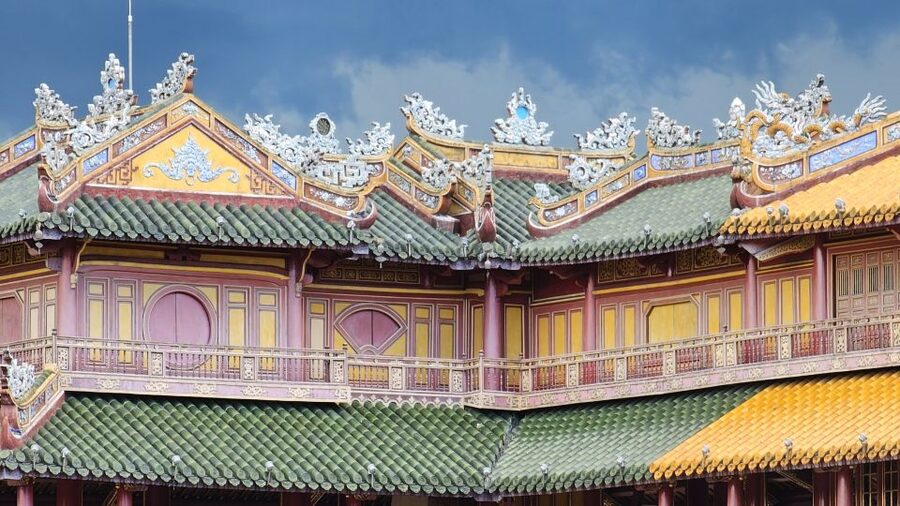
The experience offers additional tour choices for Hue’s other major sights, including royal tombs. However, the supplied details do not specify which tombs are included, how long the add-on lasts, how you reach them, or the exact extra price.
That means you should treat the Imperial City walk and the royal tombs as separate planning decisions. The main experience is a 2.5-hour walking tour with the guide fee listed at $26 per person. Ask for the tomb options, transport arrangements, entrance charges, and total cost before confirming an extended plan.
A separate day with Matthew included two kings’ tombs and Dong Ba Market for one couple. This shows that custom arrangements may be possible, but it does not establish a standard tomb itinerary for every booking.
I like the option for people who want more historical context. Hue’s royal story extends beyond the citadel, and tombs can show how individual rulers expressed their taste and beliefs. Still, you should get the exact details in writing so you know what you are buying.
Price, ticket costs, and overall value
The listed price is $26 per person, but it covers the guiding fee only. The entrance ticket costs 200,000 VND per person and is not included.
That makes the tour a good value if you care about explanation and historical context. A small group and a historian guide can turn a standard admission visit into a much more focused experience. You are paying for someone to explain why Hue became the capital, how the Nguyen court built its palace complex, and how weather, Feng Shui, and engineering affected the site.
The value is less clear if you only want a quick walk and photographs. In that case, the separate admission cost plus the tour fee may feel high for a 2.5-hour visit.
I would book this for a first visit to Hue, especially if you want to understand the Nguyen Dynasty rather than simply see its buildings. The ability to ask questions and follow your interests is another reason the small-group format earns its price.
Heat, timing, and what to bring
Hue can be hot and humid from May through August. Bring extra water, wear comfortable walking shoes, and dress for a warm outdoor visit.
The tour lasts 2.5 hours, so plan for sustained walking and standing. The information does not promise air-conditioned breaks or indoor transport. I would avoid arriving without water, particularly for a summer morning or afternoon.
The meeting point is outdoors at the Nine Holy Cannons, and the walk ends there. Keep your phone available for the WhatsApp message from the guide, and make sure you have the correct four-cannon side.
You can reserve now and pay later, which helps if your Vietnam plans are still changing. Cancellation is allowed up to 24 hours in advance for a full refund.
Who should book this Hue tour?
I would choose this tour if you:
- Want a clear explanation of the Nguyen Dynasty and Hue’s role as the imperial capital
- Prefer a small group to a large, hurried crowd
- Enjoy architecture, palace planning, royal ceremony, and court stories
- Want a historian guide who can answer questions
- Plan to visit the Imperial City for the first time
- Like the idea of adding royal tombs through a custom arrangement
I would think twice if you want a fully inclusive ticket price, private transportation, or a short photo-focused visit. The admission fee is separate, and the main experience is specifically a walking tour.
FAQ
How long does the Imperial City tour last?
The walking tour lasts 2.5 hours.
What does the $26 price include?
The price includes the guiding fee. It does not include the Imperial City entrance ticket.
How much is the entrance ticket?
The entrance fee is 200,000 VND per person.
Is the tour conducted in English?
Yes. English is listed as the tour language.
Can I book a morning tour?
Yes. A morning option is available. If you book it, you can watch the Changing Guard Ceremony at 8 am in front of Ngo Mon Gate.
Where does the tour meet?
The guide waits at the four-cannon side of the Nine Holy Cannons. The opposite side has five cannons.
Where does the tour end?
The activity ends back at the same meeting point.
Will the guide contact me before the tour?
Yes. The guide sends a WhatsApp message before the meeting to confirm that everything is going well.
Are royal tombs included?
Royal tombs are offered as optional tour choices, but they are not part of the basic guiding fee described here. Confirm the route, price, transport, and entrance costs before booking an add-on.
What should I bring in summer?
Bring extra water because Hue is often hot and humid from May through August.
Should you book the Hue Imperial City walking tour?
Book it if you want the Imperial City to make sense. The strongest part is the guiding: Nguyen Dynasty politics, architecture, palace intrigue, Feng Shui, weather, flood control, and the story of the dynasty’s downfall all receive attention.
The separate 200,000 VND admission fee is the main cost to remember. If you accept that, the $26 guiding fee offers good value, especially in a small group with a guide such as Matthew or Dang. Add the morning ceremony if the timing suits you, and ask for firm details before adding royal tombs.
For a history-minded first visit to Hue, this is a practical and worthwhile choice.
New around Hue Vietnam
- Phong Nha National Park: Paradise Cave Half-Day Tour★ 5.0 · 23 reviews
- Official Hue: Dragon Boat, Imperial Citadel, & Market tour★ 4.7 · 32 reviews
- Hue to Hoi An by bus: Hai Van Pass, Lang Co, Marble mountain★ 4.6 · 27 reviews
- Hue to Hoi An/Da Nang: Private Scenic Motorbike Tour★ 4.9 · 63 reviews
- Hue: Royal Tombs Private Tour with 3 Best Tombs & Pagoda★ 4.9 · 213 reviews
- Hue Royal Tombs Tour: Visit Best Pagodas & Mausoleums★ 4.9 · 19 reviews
- Hue: Private Transfer to/from Hoi An via Sightseeing Stops★ 4.9 · 111 reviews
- Hue : Private Day Trip to DMZ : Vinh Moc tunnel & Khe Sanh★ 5.0 · 26 reviews
Walking Tours in Hue, compared.
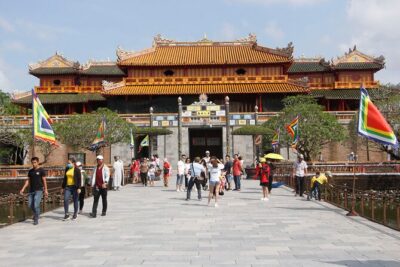
Imperial City Walk, Motorbike Tour & Private Car Options
Read our review →

Hue Imperial City Walking Tour: Citadel & Forbidden City
Read our review →Hue Imperial City Walking Tour: Citadel & Forbidden City
Read our review →
Half-Day Guided Street Food Walking Tour at Hue
Read our review →
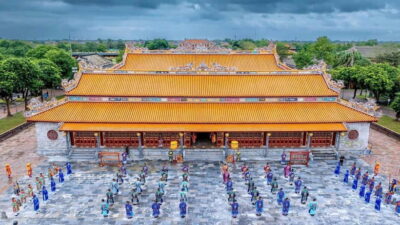
Hue Imperial City and Forbidden City Walking Private Tour
Read our review →Browse the lists this tour appears in