
Reviewed · COOKING CLASSES IN HANOI
Hanoi: 5 Local Dishes Cooking Class with Meal & Market Visit
Come hungry, leave with recipes. This 3.5-hour Hanoi experience combines a local wet-market visit with hands-on cooking, then puts the meal you prepared right in front of you. I like the market stop, where you learn how fresh ingredients are chosen, and I like the practical format, with everyone preparing five traditional dishes instead of watching a long demonstration. The main drawback is that the class is not suitable for wheelchair users or people with mobility impairments, and transportation to the meeting point is not included.
You meet an English-speaking chef at Apron Up Cooking Class in Hanoi’s Old Quarter, then walk to a nearby market and return to cook and eat. I also like the choice of two menus, plus vegetarian adaptations, though you should check the available menu and starting time when booking since the exact schedule can vary.
In This Review
- Key points at a glance
- Starting in Hanoi’s Old Quarter
- Shopping for ingredients at a Hanoi wet market
- Choosing between two five-dish menus
- Hands-on cooking instead of a passive demonstration
- The meal you helped prepare
- Rice whisky, fruit, and Hanoi hospitality
- What you take home
- Is $40 good value?
- Who should book this class?
- Should you book Hanoi’s five-dish cooking class?
- FAQ
- Where does the cooking class begin?
- Where does the activity end?
- How long does the experience last?
- What dishes can I learn to make?
- Can the menus be adapted for vegetarians?
- Is transportation included?
- What is included in the price?
- Can I cancel my booking?
Key points at a glance
- Five dishes in one session: Learn a full set of Hanoi favorites, then eat the food you helped prepare.
- A real market visit: See how fresh ingredients are selected and purchased before cooking begins.
- Two menu choices: Choose between dishes such as pho, bun cha, spring rolls, salads, pancakes, noodles, and egg coffee.
- Vegetarian-friendly options: The menus can be adapted so vegetarian cooks are not left with a token side dish.
- Personal teaching style: Instructors including Vy, Winnie, Bella, Ruby, Kim, Perla, and Ashley are praised for clear, patient guidance.
- Useful take-home gifts: You receive a recipe book and certificate, along with new Vietnamese cooking skills.
Starting in Hanoi’s Old Quarter
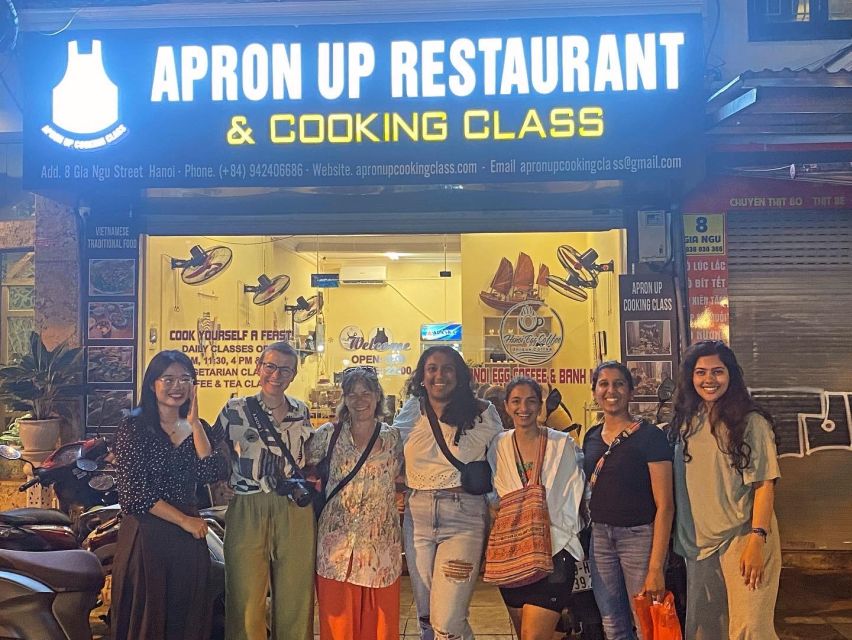
The experience begins at the Apron Up Cooking Class meeting point. Look for the large Apron Up sign in front of the venue. The activity ends at the same place, which makes the arrangement simple if you are already exploring the Old Quarter.
There is no hotel pickup or included transportation. You need to make your own way to the meeting point, so allow enough time to cross Hanoi’s busy streets and find the venue. This is a small but important detail. Arriving late could mean missing the market visit or the first cooking instructions.
The class lasts 3.5 hours. That gives the experience enough time for three distinct parts: shopping, cooking, and sitting down to eat. It is not a rushed demonstration followed by a quick snack. You take part in the work, and that changes how much you notice about each dish.
The class is taught in English. Different instructors lead the sessions, and several have been praised for their patience and clear explanations. Vy is often singled out for being warm and accommodating, while Winnie is noted for explaining ingredients and their origins. Ruby receives praise for repeating instructions when needed, and Kim is described as especially good at adapting the lesson to a student’s pace.
More Cooking Classes in Hanoi
- Hanoi Cooking Class: Culture, Local Market & Meaning CSR Impact
★ 5.0 · 5,147 reviews - 5 Traditional Dishes Hanoi Cooking Class with Market Trip
★ 5.0 · 4,890 reviews - Vietnamese Food Cooking Class in Hanoi with Market Experience
★ 5.0 · 778 reviews
Shopping for ingredients at a Hanoi wet market
The market visit is more than a quick photo stop. Your instructor shows you how to shop for the ingredients used in the class and selects the produce, herbs, meat, and other items needed for the menu.
This is where the cooking lesson begins. Instead of treating Vietnamese food as a list of mysterious ingredients, you see how the raw materials are judged before they reach the kitchen. The instructor explains how to identify fresh items, and you learn the names of ingredients in Vietnamese as you go. One family even enjoyed learning the local words for the ingredients they were using.
The market section also gives you a better sense of how ordinary meals begin in Hanoi. You are not simply handed premeasured ingredients in a classroom. You see a practical piece of local food culture, then return to use those ingredients yourself.
The market can be lively and crowded, and the route may require walking through busy streets. I would wear comfortable shoes and keep your belongings secure. Since the activity is not suitable for people with mobility impairments, the market walk and the physical setup of the class should be taken seriously.
Choosing between two five-dish menus
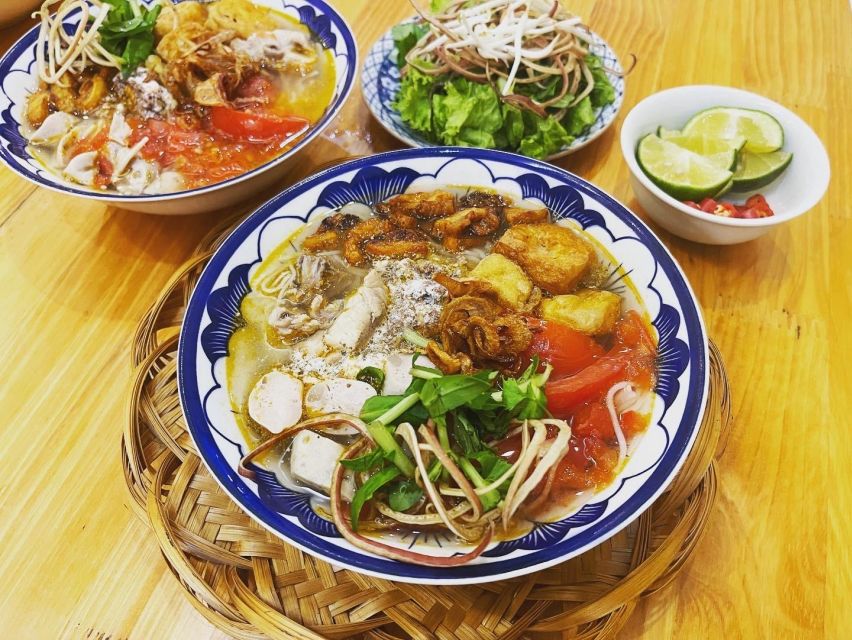
You can choose from two different set menus, and the menu choice shapes the entire session. The first option includes banh xeo pancakes, bun cha, pork rib noodle soup, beef fresh rolls, chicken salad, and banana ice cream. Since the class makes five dishes, the exact combination available to you should be confirmed at booking.
The second menu includes pho, bun cha, fried spring rolls, papaya salad, and egg coffee. This is an appealing choice if you want a broad introduction to familiar Vietnamese dishes, with a famous noodle soup, a grilled pork specialty, a crunchy fried item, a fresh salad, and Hanoi’s unusual coffee tradition.
The menus cover several cooking methods:
- Banh xeo: A Vietnamese savory pancake that gives you practice with batter and fillings.
- Bun cha: Grilled pork served with noodles, a Hanoi favorite with a balance of smoky, fresh, salty, and sweet flavors.
- Pho: A classic noodle soup that teaches you how several simple parts come together in one bowl.
- Fresh rolls and spring rolls: Two different approaches to wrapping ingredients, one fresh and one fried.
- Chicken or papaya salad: Fresh, sharp flavors that balance the richer dishes.
- Egg coffee: A distinctly Hanoi-style finish that turns coffee into dessert.
- Banana ice cream: A sweet ending for the menu that includes it.
You can also take two classes if you want to learn both menu sets. That makes sense for serious food lovers or for a longer Hanoi stay, but most people will find one session enough for an enjoyable introduction.
Vegetarian adaptations are available. This is one of the class’s strongest practical features because the vegetarian version is intended to cover the meal, not merely remove meat from one plate. If you have a specific dietary need beyond vegetarian food, confirm it before booking rather than assuming every request can be accommodated.
Hands-on cooking instead of a passive demonstration
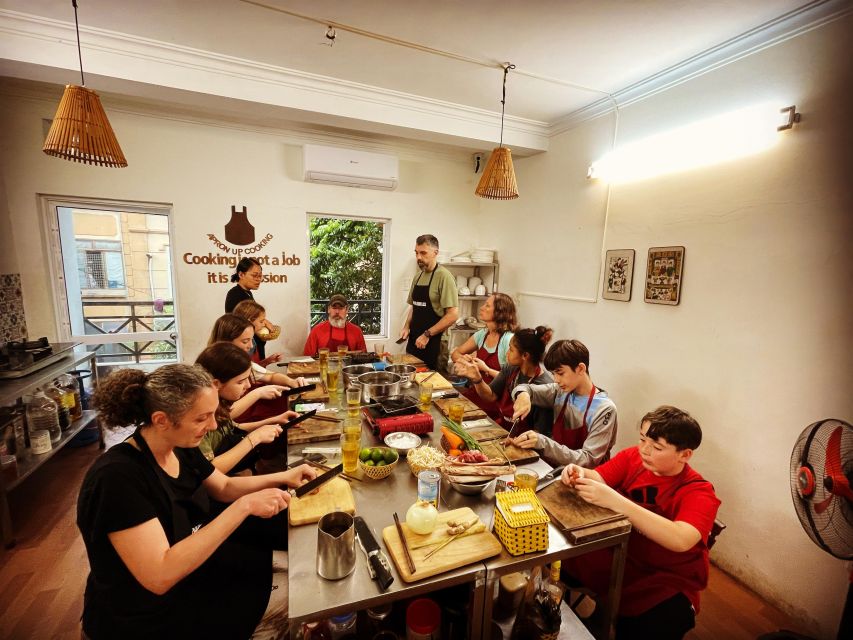
The main value here is participation. You roll up your sleeves, prepare ingredients, follow the chef’s instructions, and help bring five dishes together.
The instructors use a step-by-step approach. Ruby is praised for giving clear directions and showing techniques as many times as needed. Vy is described as patient with different cooking abilities, and one beginner was able to produce very good food despite having little cooking experience.
That makes this a good class for mixed groups. You do not need to arrive with advanced kitchen skills. At the same time, experienced home cooks should still pick up useful details, especially around Vietnamese flavor combinations, ingredient handling, and preparation methods.
The class is organized so people keep moving and each person has a task. This helps prevent the common cooking-class problem where one person does all the work while everyone else watches. You work as a team, which also makes the meal at the end feel earned.
The pace is worth noting. Five dishes in 3.5 hours requires an efficient schedule. You will not spend half an hour perfecting one recipe. Some elements may be prepared in advance or handled in stages while another dish cooks. That is practical for a group class, but it means the class is designed to teach the key methods rather than every possible variation of each recipe.
More Market Tours in Hanoi
- Hanoi Cooking Class and Market Tour in Ancient House
★ 5.0 · 379 reviews - Rose Kitchen Hanoi: Market, Cooking & Culture Tour + Free PickUp
★ 5.0 · 342 reviews - Hanoi Maya Kitchen: Traditional Cooking Class & Market Tour
★ 5.0 · 287 reviews - Hanoi: Old Quarter Market Tour and Cooking Class with Meal
★ 4.8 · 192 reviews
The meal you helped prepare
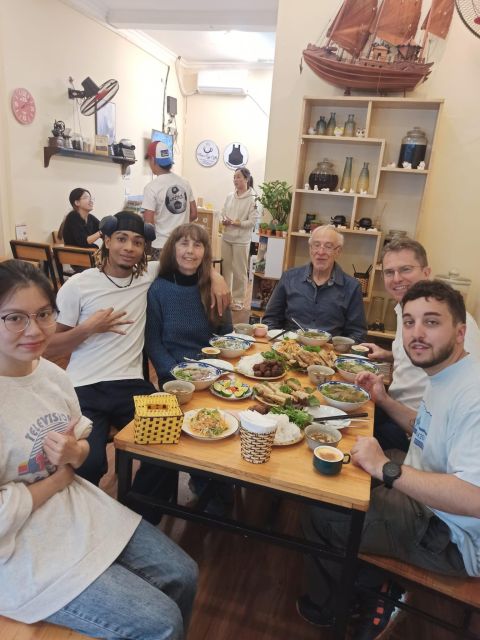
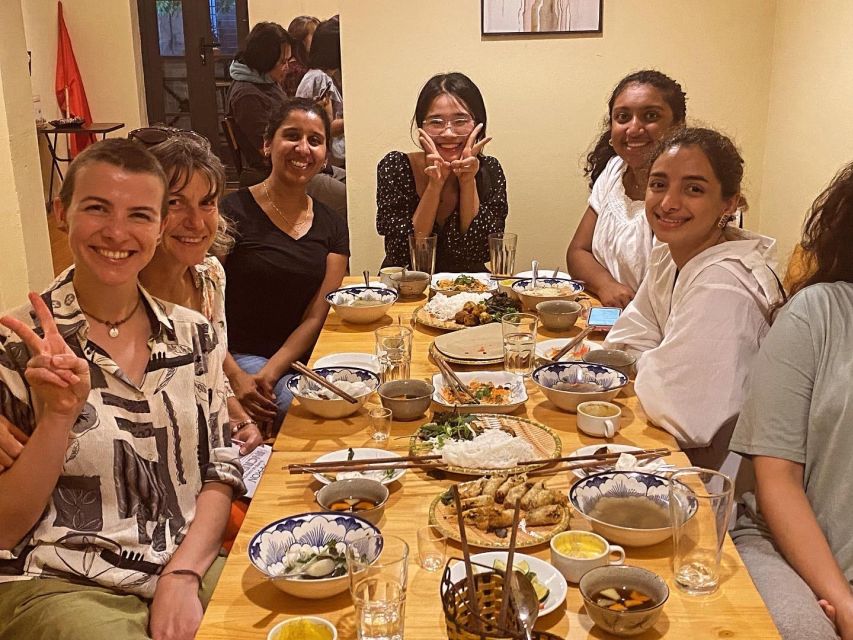
After the cooking, you sit down and eat the dishes together. This is one of the best parts of the format. You taste the food while the techniques are still fresh in your mind, and you can connect each flavor to the steps you just completed.
The food is served as a shared meal, which gives the experience a social side. People from different countries cook together, divide up tasks, and then sit at the same table. If you are traveling alone, this can be a pleasant way to meet people without the forced feel of a formal group activity.
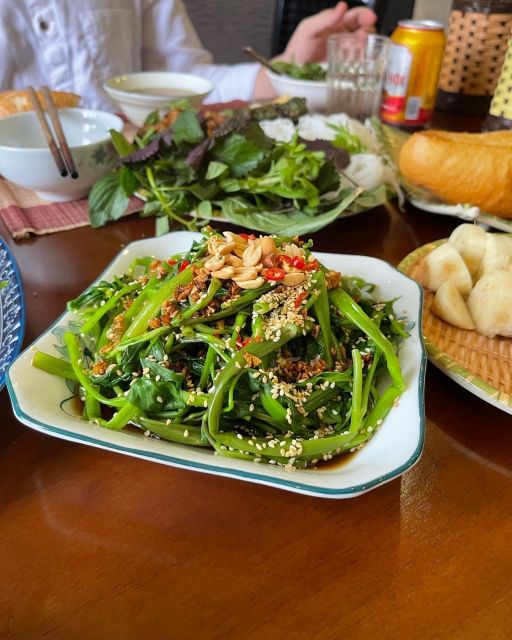
The dishes are intended to show contrast. Vietnamese cooking often pairs fresh herbs, crisp vegetables, noodles, grilled meat, fried textures, and sweet or salty sauces. A menu that includes bun cha, rolls, soup, salad, and coffee gives you more than one style of dish to remember.
The final meal is also a useful test of the instruction. If you want to recreate the food at home, tasting the finished result helps you understand how the seasoning should balance. The class focuses on tips and tricks for authentic flavor, so pay attention when the chef explains how a dish should look, smell, or taste before serving.
Rice whisky, fruit, and Hanoi hospitality
Tea, homemade rice whisky, and seasonal fruit are included. The rice whisky is a small cultural touch rather than the main reason to book, but it adds a local element to the meal.
You do not need to drink the whisky. If you choose to sample it, take it slowly, especially if you have already been eating and the weather is hot. The fruit offers a lighter finish and helps round out the meal.
The instructors are a major part of the experience. Names such as Winnie, Vy, Bella, Ruby, Kim, Perla, and Ashley appear repeatedly in the feedback, with praise for their warmth, humor, patience, and ability to explain recipes. Bella is also praised for explaining the origins of the dishes, while Perla made the class accessible for a 13-year-old participant.
That personal approach matters. A cooking class can be technically correct and still feel stiff. Here, the strongest accounts describe relaxed sessions where the chef answers questions, encourages participation, and creates a friendly atmosphere. One person even had a nearly private class because no other group had booked that day.
Group size is not specified, so you should not assume a guaranteed private lesson. Still, the possibility of a small or lightly booked class is worth knowing. A quieter session may offer more direct attention, while a fuller group may bring more conversation and teamwork.
What you take home
The recipe book is one of the most useful inclusions. It gives you a better chance of cooking the dishes again instead of letting the experience fade into a pleasant holiday memory.
You also receive a certificate confirming your participation. The certificate is a lighthearted souvenir, while the cookbook has real practical value. Keep it accessible if you want to recreate pho, spring rolls, bun cha, egg coffee, or the other dishes from your chosen menu.
The class also teaches skills that are broader than the five recipes. You learn how to identify ingredients, prepare several types of dish, work through a recipe in stages, and balance fresh and cooked components. Those habits will help you make other Vietnamese dishes at home, even if you do not follow the recipes exactly.
Is $40 good value?
At $40 per person, the price is fair for a 3.5-hour activity that includes the market visit, all ingredients, cooking tools, five dishes, a full lunch or dinner, tea, rice whisky, fruit, a cookbook, and a certificate.
The value improves if you are interested in food rather than simply looking for a meal. You are paying for instruction, market access, ingredients, and a social activity, not just five plates of food. A restaurant meal may cost less, but it will not show you how to shop for the ingredients or prepare the dishes.
The price may feel less attractive if you dislike group activities, do not cook, or would rather spend your time sightseeing. It is also worth noting that one person chose a higher-priced premium option and felt it was somewhat expensive. That comment does not describe the basic $40 price, but it is a reminder to check the exact package before paying.
For most visitors, I see this as a good-value half-day experience, especially early in a Hanoi trip. It can help you understand the food you will be eating in restaurants for the rest of your stay.
Who should book this class?
I would recommend it to first-time visitors who want an introduction to Hanoi food, couples looking for an activity beyond sightseeing, solo visitors who enjoy meeting people, and families with older children. The experience has enough variety to keep a group busy, and the cooking is beginner-friendly.
It can also suit vegetarians because every menu has adaptable options. If you want to learn both menus, booking two classes gives you a fuller look at the cooking styles covered.
I would be more cautious if you have limited mobility, use a wheelchair, or find walking through a local market difficult. The activity is specifically not suitable for wheelchair users, people with mobility impairments, or children under four. It is also not suitable for people over 95, according to the activity restrictions.
Book with a clear idea of what you want from the session. Choose the menu that includes the dishes you most want to learn, arrive at the Old Quarter meeting point on time, and tell the provider about vegetarian needs in advance.
Should you book Hanoi’s five-dish cooking class?
Yes, if you want a practical food experience rather than another guided sightseeing stop. The market visit gives the class a local starting point, the five-dish format offers good variety, and the shared meal turns the lesson into a satisfying social event.
I especially like that you receive recipes and learn techniques you can use at home. The class is not perfect for anyone with mobility limits, and the five-dish schedule may leave little time for lengthy questions, but the clear instruction and strong personal attention from chefs such as Vy, Winnie, Ruby, Bella, and Kim make it a smart use of 3.5 hours in Hanoi.
FAQ
Where does the cooking class begin?
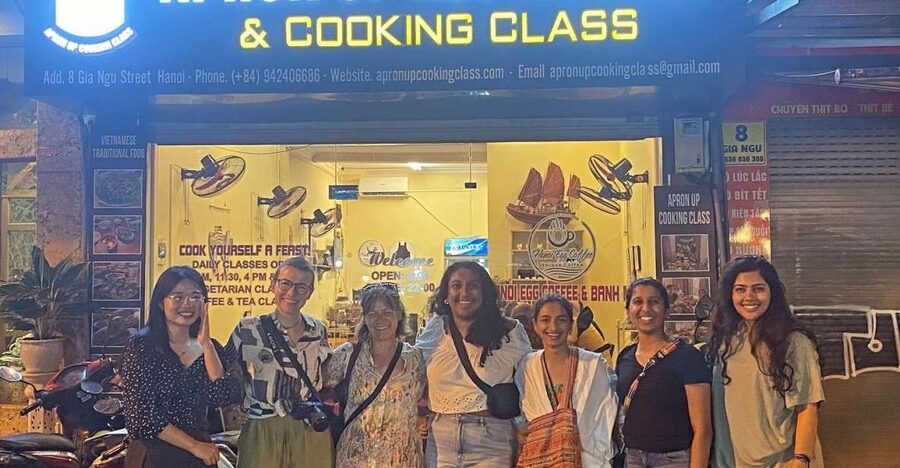
Meet at Apron Up Cooking Class in Hanoi’s Old Quarter. Look for the large Apron Up sign in front of the venue.
Where does the activity end?
The activity ends back at the Apron Up Cooking Class meeting point.
How long does the experience last?
The cooking class and market visit last 3.5 hours. Starting times vary, so check availability when booking.
What dishes can I learn to make?
Depending on the menu, dishes include pho, bun cha, fried spring rolls, papaya salad, egg coffee, banh xeo pancakes, pork rib noodle soup, beef fresh rolls, chicken salad, banana ice cream, and other traditional Hanoi dishes from the two set menus.
Can the menus be adapted for vegetarians?
Yes. The two menus can be adapted for vegetarian diets.
Is transportation included?
No. Transportation is not included, so you need to reach the meeting point yourself.
What is included in the price?
The price includes an English-speaking instructor, the market trip, ingredients, cooking tools, the hands-on class, lunch or dinner, tea, rice whisky, fruit, a cookbook, and a certificate.
Can I cancel my booking?
Yes. You can cancel up to 24 hours in advance for a full refund. You can also reserve now and pay later, subject to the booking terms.
More Workshops in Hanoi
- Hanoi Coffee Workshop: Taste Salt, Coconut and Egg Coffee
★ 5.0 · 1,286 reviews - Hanoi: Salt Coffee Workshop Awake Your Senses With 6 Brews
★ 5.0 · 792 reviews - Hanoi: Handcrafted Wood Carving Workshop with Local Artisan
★ 5.0 · 733 reviews - Hanoi Cooking Class: Pho/Bun Cha/Banh Xeo…+Free Egg/Salt Coffee
★ 5.0 · 267 reviews
More Shopping Tours in Hanoi
- Cooking class with market visit
★ 5.0 · 49 reviews - Cooking Class Hoi An:Local Market, Basket Boat, Fishing & Cooking
★ 5.0 · 3,660 reviews - Hoi An Cooking Class(Market,BasketBoat Crabfishing&Cooking Class)
★ 5.0 · 3,386 reviews - From Hoi An: Market Tour, Basket Boat Ride and Cooking Class
★ 4.8 · 2,208 reviews
New around Hanoi
- Private LUXURY Hanoi City Full day guided tour★ 4.5 · 21 reviews
- Private transfer between Hanoi and Sapa★ 5.0 · 27 reviews
- Private Transfer Hanoi <=> Mai Chau One Way (Free hotel pickup)★ 5.0 · 22 reviews
- Private Transfer from Ninh Binh to Halong or Halong to Ninh Binh★ 5.0 · 21 reviews
- Private Transfers Hanoi <=> Halong One Way (Free Hotel Pickup)★ 5.0 · 31 reviews
- Hanoi Airport See-off (Private Ride from Hotels to Hanoi Airport)★ 4.5 · 70 reviews
- Thang Long Water Puppet Theater★ 4.5 · 45 reviews
- Private transfer Ninh Binh <=> Halong One Way (Free Hotel Pickup)★ 5.0 · 21 reviews
Cooking Classes in Hanoi, compared.

Hanoi Cooking Class: Culture, Local Market & Meaning CSR Impact
Read our review →
5 Traditional Dishes Hanoi Cooking Class with Market Trip
Read our review →
Vietnamese Food Cooking Class in Hanoi with Market Experience
Read our review →
Hanoi Cooking Class and Market Tour in Ancient House
Read our review →
Hanoi Maya Kitchen: Traditional Cooking Class & Market Tour
Read our review →
Hanoi Cooking Class: Pho/Bun Cha/Banh Xeo…+Free Egg/Salt Coffee
Read our review →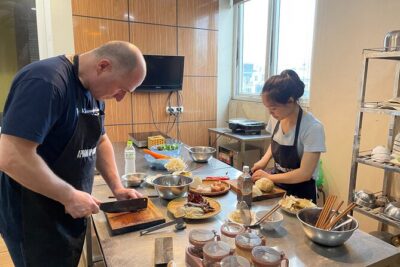
Private Cooking Class with 5 dishes of your choice
Read our review →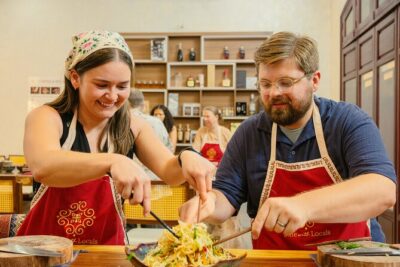
Experience Hanoi Cooking Class with Free Wine Tasting
Read our review →Browse the lists this tour appears in