
Reviewed · COOKING CLASSES IN HANOI
Hanoi Maya Kitchen: Traditional Cooking Class & Market Tour
Come hungry, leave with new kitchen skills. This four-hour Hanoi experience pairs a walk through a local market with hands-on cooking in the Old Quarter, so you get more than a meal and a recipe sheet. You see the ingredients first, then use them yourself.
I like the market visit, where you can look at fresh Vietnamese ingredients and learn about possible substitutes. I also like the small-group limit of 15 people, plus the full menu: fried spring rolls, papaya salad, pho rolls, mixed pho, egg coffee, and seasonal fruit. The main drawback is that the meeting-point information needs care, since the details name both 38 Bat Su Street and the Crossing Vietnam Tour office at 47 Hang Bong Street.
In This Review
- Key points at a glance
- Why this Hanoi cooking class works well
- Starting with the local market
- Learning to roll Vietnamese spring rolls
- Balancing the sweet and sour papaya salad
- Making pho rolls and mixed pho
- The egg coffee finale
- The instructors and the tone of the class
- What the $30 price really includes
- Group size, timing, and practical fit
- The main strengths and limitations
- Should you book Hanoi Maya Kitchen?
- FAQ
- Where does the cooking class start?
- How long does the experience last?
- Is transportation included?
- What dishes will I make?
- Is food included in the price?
- Will I visit a local market?
- Is the class taught in English?
- How many people can join the class?
- Can I cancel for a full refund?
Key points at a glance
- Five Vietnamese specialties in one class: Make fried spring rolls, papaya salad, pho rolls, mixed pho, and egg coffee.
- A real market stop first: Visit a local market to see ingredients, buy food, and learn about substitutions.
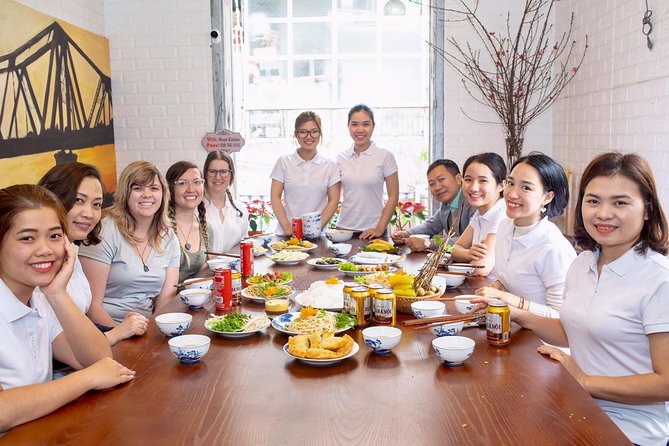
- A meal you prepare yourself: Sit down after cooking and eat the dishes made during class.
- Named instructors praised for warmth: Iris, Aurora, and Ruby have each been singled out for clear teaching, local tips, and friendly conversation.
- Good value at $30: The price includes food, one drink, local wine tasting, dessert, instruction, and recipes.
- Easy cancellation window: Cancel at least 24 hours before the start for a full refund.
Why this Hanoi cooking class works well
Cooking classes can be either useful or decorative. This one has a sensible order. You begin by seeing the raw ingredients in a local market, then move into the kitchen and turn them into familiar Vietnamese dishes.
That order matters. A dish such as papaya salad is easier to understand when you have first seen the green papaya, herbs, and other ingredients in their everyday setting. You also get a better feel for the difference between an ingredient that is essential and one that can be replaced at home.
The class is held in Hanoi’s Old Quarter area, with the activity ending back at the meeting point. It lasts about four hours, which is long enough for a proper market stop, cooking instruction, and a sit-down meal without taking your whole day.
At $30 per person, the value is strong if you want both food and an activity. You are not paying only for a plate of food. The fee covers the market and food-buying portion, an English-speaking instructor, all menu ingredients, one drink, local wine tasting, seasonal fruit, and a cooking recipe.
More Cooking Classes in Hanoi
- Hanoi Cooking Class: Culture, Local Market & Meaning CSR Impact
★ 5.0 · 5,147 reviews - 5 Traditional Dishes Hanoi Cooking Class with Market Trip
★ 5.0 · 4,890 reviews - Vietnamese Food Cooking Class in Hanoi with Market Experience
★ 5.0 · 778 reviews
Starting with the local market
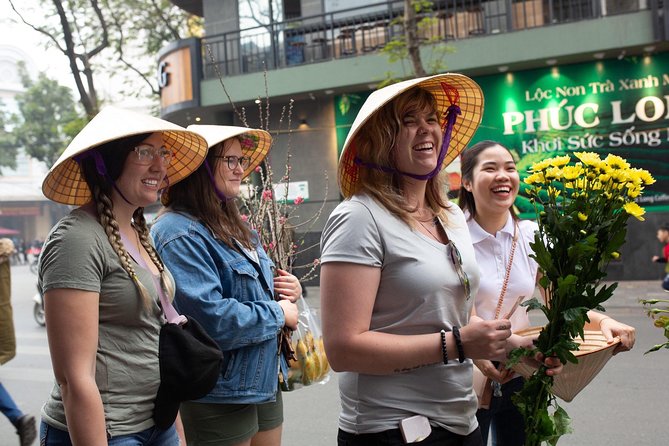
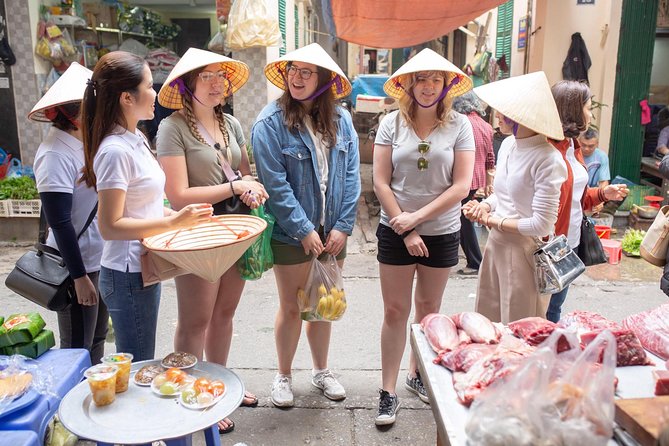
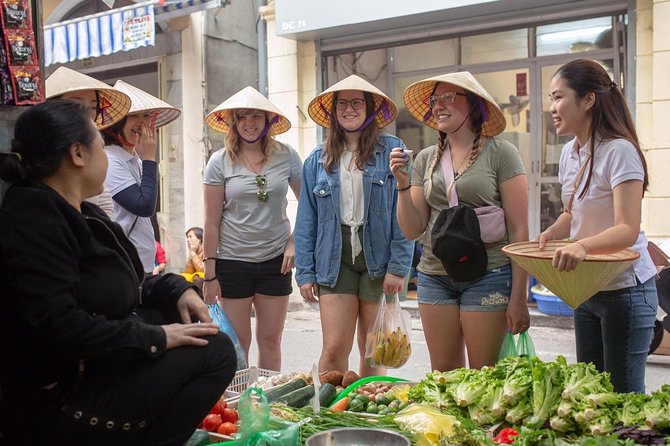
The market visit gives the class its local character. The itinerary describes a visit to Yen Thai Market, while the listed stop is Hang Da Market. Both details point to a nearby local-market visit, but I would confirm the exact market and meeting point when booking.
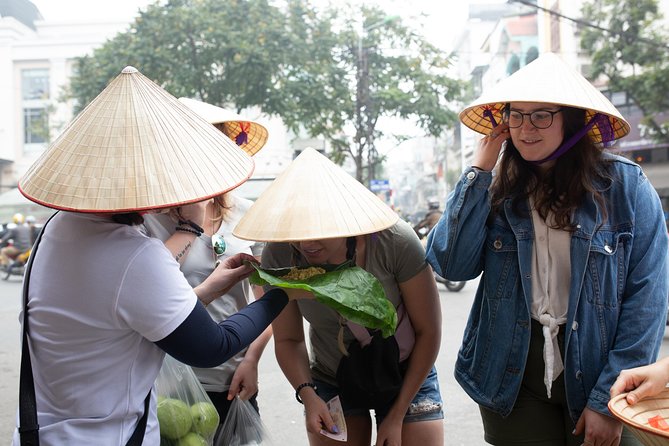
The point of the stop is not simply to take photographs. You get a look at daily food shopping in Hanoi and see the ingredients used in Vietnamese cooking before they arrive at the kitchen. The guide also explains substitutes, which is especially helpful if you plan to repeat the recipes outside Vietnam.
You will be buying fresh food for the class, so this is an active part of the experience rather than a quick walk past stalls. It gives you a better sense of the ingredients behind the finished dishes. For many people, this will be the most useful part of the class because it connects the recipe to the way food is actually sold and selected.
You should expect a market environment rather than a polished cooking-school display. That means a more ordinary local setting, with the sights, sounds, and practical details that come with a working food market. If you prefer a quiet, private tour, this may feel less comfortable. If you want a closer look at normal Hanoi food shopping, it is a good fit.
Learning to roll Vietnamese spring rolls
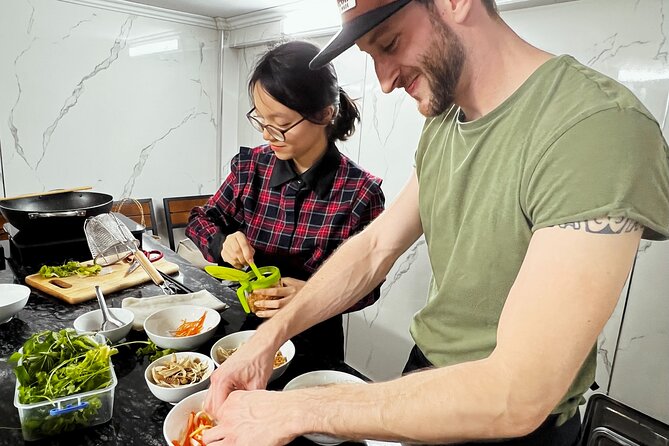
The first cooking lesson focuses on Nem Ran, or fried spring rolls. The instructor guides you step by step, including the rolling itself.
This is a useful choice for a class because the technique is simple to describe but harder to perform evenly. You need flexible hands and a light touch to produce neat rolls. The class gives you a chance to practice that skill instead of watching someone else do all the work.
Fried spring rolls are linked with holidays and family gatherings in Vietnam, so this dish carries more meaning than its familiar restaurant appearance suggests. You get a small look at how food fits into social occasions, not just how it tastes.
The class is hands-on, but the exact amount of individual work can depend on the group. With a maximum of 15 people, it is not a private lesson. Still, the size is limited enough to make step-by-step guidance possible, especially when the instructor moves around the kitchen and demonstrates each stage.
The spring rolls may be your favorite dish of the day. One participant specifically praised them and planned to make them at home. That is a good sign for anyone choosing a class based on practical skills rather than a one-time meal.
Balancing the sweet and sour papaya salad
Next comes Nom Du Du, the Vietnamese papaya salad. The key flavor balance here is sour and sweet.
This dish gives you a different kind of lesson from the spring rolls. Instead of focusing on shaping and frying, you learn how a few strong flavors work together. It is a useful introduction to Vietnamese cooking, where balance often matters as much as the individual ingredients.
The menu repeats papaya salad under slightly different spellings, Nom Du Du and Nom du du. That is the same dish, not two separate courses. You should expect one papaya salad preparation as part of the five-item menu.
This is also where the market visit pays off. Seeing the produce first helps you understand the dish as something built from fresh ingredients, not merely a prepared salad served beside a main course. If you enjoy sharp, fresh flavors, this may be one of the most satisfying parts of the meal.
More Market Tours in Hanoi
- Hanoi: 5 Local Dishes Cooking Class with Meal & Market Visit
★ 5.0 · 420 reviews - Hanoi Cooking Class and Market Tour in Ancient House
★ 5.0 · 379 reviews - Rose Kitchen Hanoi: Market, Cooking & Culture Tour + Free PickUp
★ 5.0 · 342 reviews - Hanoi: Old Quarter Market Tour and Cooking Class with Meal
★ 4.8 · 192 reviews
Making pho rolls and mixed pho
The class also includes Pho Cuon, or pho rolls, and Pho Tron, or mixed pho. These dishes give you two different ways to enjoy pho-style rice noodles.
Pho rolls are a useful change from the hot soup most visitors associate with pho. The mixed pho offers another texture and serving style. Together, they show that Vietnamese noodle cooking is not limited to one famous bowl.
The menu is generous for a four-hour class. You are preparing four savory dishes plus egg coffee, then eating them all with seasonal fruit for dessert. The practical advice is simple: do not eat a large breakfast before the class. One participant said there was plenty of food, and another group had enough left to take away in special containers.
That amount of food is part of the value, but it can also be a drawback. If you are looking for a short demonstration followed by a light snack, this class may feel substantial. If you want lunch and a lesson in one booking, the size of the meal works in your favor.
The egg coffee finale
Vietnamese egg coffee, or Cafe Trung, is the most distinctive item on the menu. It is not an afterthought. You learn to make it as part of the class and drink it with the meal.
The coffee is a good reason to choose this particular menu if you want to try a Hanoi specialty in a more active way. You are not just ordering a cup and moving on. The class lets you see how this local drink fits into the larger meal.
The reviews give egg coffee special attention. One person called out the chance to make it as part of an excellent cooking lesson. It is also the kind of recipe that makes a good talking point when you return home because it is less familiar to many home cooks than spring rolls or noodle dishes.
Seasonal fruit finishes the meal. The exact fruit is not specified, so you should expect the dessert to depend on what is available at the time rather than on a fixed item.
The instructors and the tone of the class
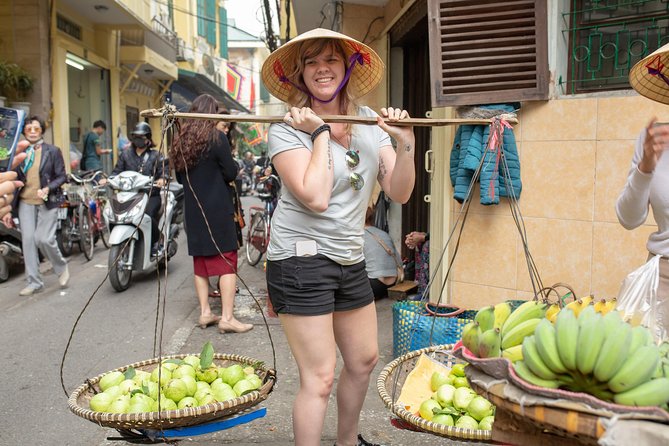
The instructor is English-speaking and provides step-by-step guidance. Several instructors have been praised by name, including Iris, Aurora, and Ruby.
Iris is associated with both the market visit and the kitchen instruction. The experience with her included selecting ingredients, cooking as a family, and ending with more than enough food. Aurora added stories about Vietnam and even some singing, which suggests the tone can be social and lively rather than strictly technical.
Ruby has also received strong praise for teaching, food, and local advice. She shared places to try in Hanoi, which can be useful if you want to continue exploring Vietnamese food after class. Another booking with Ruby involved two people making five dishes and exchanging recommendations for Vietnamese places.
These details suggest that the personality of the instructor is a meaningful part of the experience. Your exact guide may be different, and the class will not be identical every time. But the teaching style appears to combine cooking instruction with conversation, local food suggestions, and a relaxed atmosphere.
If you want a silent, highly formal lesson, this may not be your ideal choice. If you like a host who talks about local food, answers questions, and keeps the room friendly, it should suit you well.
What the $30 price really includes
At $30 per person, the class offers a lot for a half-day activity in central Hanoi. The fee includes:
- Local market tour and food buying
- English-speaking instruction
- Ingredients for the listed dishes
- Seasonal fruit
- One drink, such as water, tea, or coffee
- Local wine tasting
- Cooking recipe
The meal itself is the main value. You are preparing enough food to serve as a full meal, not just sampling a few bites. The inclusion of a recipe also gives the class value after you leave Vietnam, especially if the instructor explains ingredient substitutes during the market visit.
Transportation is not included. You must make your own way to the meeting point, and there is no hotel pickup or drop-off. That keeps the price down, but you should allow extra time to reach the Old Quarter on foot or by local transport.
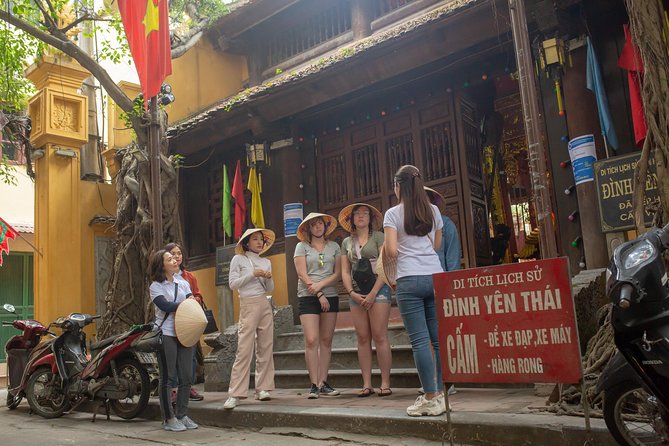
The booking information names 38 P. Bat Su, Hang Bo, Hoan Kiem, Hanoi, as the start point. It also refers to the Crossing Vietnam Tour office at 47 Hang Bong Street. Since those addresses differ, check the exact confirmation details before setting out. The activity ends back at the meeting point.
Group size, timing, and practical fit
The maximum group size is 15 people. That is not an intimate private lesson, but it is more manageable than a large food demonstration. You should have a reasonable chance to follow the instructor and take part in the preparation.
The class lasts approximately four hours. Plan it as a half-day commitment, especially since the market stop, cooking, and meal are all included. It is best placed when you do not need to hurry to another timed attraction.
The meeting point is near public transportation. The tour does not include transfers, so this matters. You will need to organize your own route to the start, but the central location makes the activity easier to fit into an Old Quarter sightseeing day.
Service animals are allowed. Confirmation is provided at booking. The activity is suitable for families in the sense that a family of four completed the market and cooking experience together, although the supplied information does not specify a minimum age or detailed accessibility arrangements.
The main strengths and limitations
The strongest feature is the combination of market shopping and cooking. You see where the food begins, learn what the ingredients are, and then use them in the kitchen. That makes the experience more grounded than a class that begins with pre-measured ingredients.
The second major strength is the amount of food. Fried spring rolls, papaya salad, pho rolls, mixed pho, egg coffee, fruit, and a drink make this both a lesson and a meal. You may even have enough to take away, depending on your group and portions.
The instructors are another clear advantage. Iris, Aurora, and Ruby have each been praised for teaching, local stories, singing, and restaurant suggestions. Those personal touches can turn a standard cooking class into a more memorable Hanoi activity.
The main limitations are practical. Pickup is not included, the address details should be checked, and the four-hour schedule may be too long for a tight sightseeing plan. The menu is set, too, so you should confirm any dietary needs before booking if you cannot eat one or more of the listed dishes.
The class has a 5 out of 5 rating from 287 reviews and a 100 percent recommendation figure. Those numbers point to very strong satisfaction, but the right choice still depends on your expectations. This is a social group lesson with a full meal, not a private chef session or a short coffee workshop.
Should you book Hanoi Maya Kitchen?
I would book this class if you want to understand Vietnamese food by handling it yourself. It is especially good for first-time visitors to Hanoi, families, couples, and anyone who wants a practical souvenir that costs less than another restaurant meal.
Come hungry, wear comfortable clothes, and keep your schedule open for the full four hours. Confirm the starting address, and ask about dietary needs before you pay. If you prefer local markets, friendly instructors, and a large self-made meal, $30 is a fair price. If you want a quiet, private class or hotel transport, choose a different format.
FAQ
Where does the cooking class start?
The listed start point is 38 P. Bat Su, Hang Bo, Hoan Kiem, Hanoi, Vietnam. The information also names the Crossing Vietnam Tour office at 47 Hang Bong Street, so confirm the exact meeting location in your booking details.
How long does the experience last?
The experience lasts approximately four hours.
Is transportation included?
No. Pickup and drop-off are not included. You must make your own way to the meeting point.
What dishes will I make?
The menu includes papaya salad, fried spring rolls, pho rolls, mixed pho, and Vietnamese egg coffee. Seasonal fruit is served for dessert.
Is food included in the price?
Yes. The price includes the food listed on the menu, seasonal fruit, and one drink such as water, tea, or coffee. Local wine tasting is also included.
Will I visit a local market?
Yes. The experience begins with a visit to a nearby local market to buy fresh ingredients and learn about Vietnamese food and ingredient substitutes.
Is the class taught in English?
Yes. An English-speaking instructor leads the cooking class.
How many people can join the class?
The activity has a maximum of 15 travelers.
Can I cancel for a full refund?
Yes, if you cancel at least 24 hours before the experience start time. Cancellations made within 24 hours are not refunded, and changes within that period are not accepted.
More Workshops in Hanoi
- Hanoi Coffee Workshop: Taste Salt, Coconut and Egg Coffee
★ 5.0 · 1,286 reviews - Hanoi: Salt Coffee Workshop Awake Your Senses With 6 Brews
★ 5.0 · 792 reviews - Hanoi: Handcrafted Wood Carving Workshop with Local Artisan
★ 5.0 · 733 reviews - Hanoi Cooking Class: Pho/Bun Cha/Banh Xeo…+Free Egg/Salt Coffee
★ 5.0 · 267 reviews
More Shopping Tours in Hanoi
- Cooking class with market visit
★ 5.0 · 49 reviews - Cooking Class Hoi An:Local Market, Basket Boat, Fishing & Cooking
★ 5.0 · 3,660 reviews - Hoi An Cooking Class(Market,BasketBoat Crabfishing&Cooking Class)
★ 5.0 · 3,386 reviews - From Hoi An: Market Tour, Basket Boat Ride and Cooking Class
★ 4.8 · 2,208 reviews
New around Hanoi
- Private LUXURY Hanoi City Full day guided tour★ 4.5 · 21 reviews
- Private transfer between Hanoi and Sapa★ 5.0 · 27 reviews
- Private Transfer Hanoi <=> Mai Chau One Way (Free hotel pickup)★ 5.0 · 22 reviews
- Private Transfer from Ninh Binh to Halong or Halong to Ninh Binh★ 5.0 · 21 reviews
- Private Transfers Hanoi <=> Halong One Way (Free Hotel Pickup)★ 5.0 · 31 reviews
- Hanoi Airport See-off (Private Ride from Hotels to Hanoi Airport)★ 4.5 · 70 reviews
- Thang Long Water Puppet Theater★ 4.5 · 45 reviews
- Private transfer Ninh Binh <=> Halong One Way (Free Hotel Pickup)★ 5.0 · 21 reviews
Cooking Classes in Hanoi, compared.

Hanoi Cooking Class: Culture, Local Market & Meaning CSR Impact
Read our review →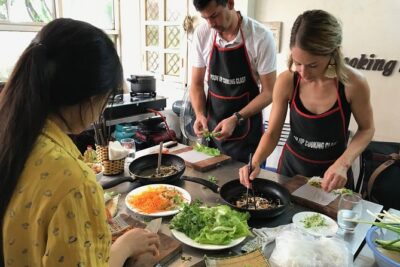
5 Traditional Dishes Hanoi Cooking Class with Market Trip
Read our review →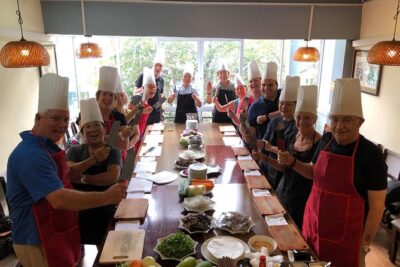
Vietnamese Food Cooking Class in Hanoi with Market Experience
Read our review →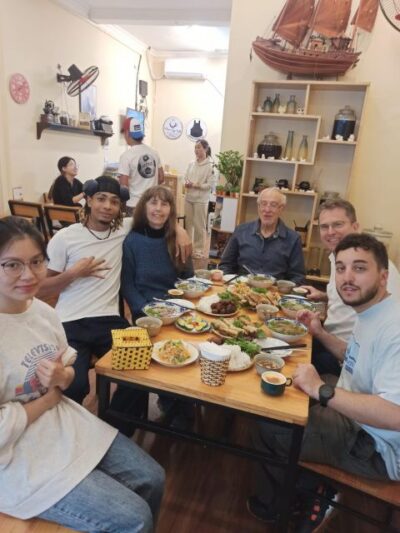
5 Local Dishes Cooking Class with Meal & Market Visit
Read our review →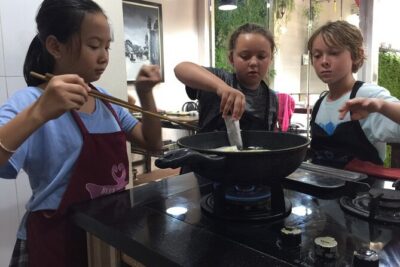
Hanoi Cooking Class and Market Tour in Ancient House
Read our review →
Hanoi Cooking Class: Pho/Bun Cha/Banh Xeo…+Free Egg/Salt Coffee
Read our review →
Private Cooking Class with 5 dishes of your choice
Read our review →
Experience Hanoi Cooking Class with Free Wine Tasting
Read our review →Browse the lists this tour appears in