
Reviewed · SAPA TOURS
Sapa: Muong Hoa Mountain Views and Villages Trek with Lunch
The best Sapa views require some uphill work. This nine-hour trip combines a steep climb to Sa Seng Mountain with walks through Hang Da and Hau Thao, two Black Hmong villages where daily life is still closely tied to rice fields, animals, and home building. I especially like the wide views of Fansipan and Muong Hoa Valley and the chance to eat at a family-run restaurant, rather than treating lunch as an afterthought. The main concern is simple: this is a demanding trek, and the pickup service has not been reliable for everyone.
I also like that the group is limited to 10 people. That gives you a better chance to ask about Hmong marriage customs, rice farming, and village life, especially with a guide such as Châu A Su or Su, both praised for their friendly manner. Still, arrive early at the meeting point, Massage Lits on Hoàng Văn Thụ, and confirm the pickup if you can. Two people reported waiting without being collected, which is a serious problem when your day in Sapa is limited.
In This Review
- Key points before you book
- Why this Sapa trek is worth your time
- Starting at Hoàng Văn Thụ and climbing Sa Seng
- Down toward Hang Da and the Black Hmong countryside
- A family lunch with no fuss
- Hau Thao and the meaning behind village life
- The final walk to Giang Ta Chai
- The pickup issue deserves serious attention
- What to bring for nine hours outdoors
- Who should book this experience?
- Should you book the Sa Seng Mountain trek?
- FAQ
- Where does the tour start and finish?
- What time does pickup take place?
- How difficult is the trek?
- What mountain can you see from Sa Seng Mountain?
- Which villages does the tour visit?
- Is lunch included?
- What language does the guide speak?
- What should I bring?
Key points before you book
- Sa Seng Mountain takes about an hour to climb: The first 1-kilometer uphill section is steep and tiring, not a gentle stroll.
- Fansipan is part of the view: From the summit, you can see Vietnam’s highest mountain at 3,143 meters, along with Sapa town and Muong Hoa Valley.
- Two Black Hmong villages add cultural depth: Hang Da and Hau Thao offer context about farming, houses, animals, and marriage traditions.
- Lunch is served by a local family: This keeps the midday break simple and connected to the villages you are visiting.
- The walk ends at Giang Ta Chai: Transport waits on the main road there, bringing you back to Sapa.
- A massage discount comes afterward: The tour includes a 20 percent voucher for Massage Lits at 01 Hoàng Văn Thụ.
Why this Sapa trek is worth your time
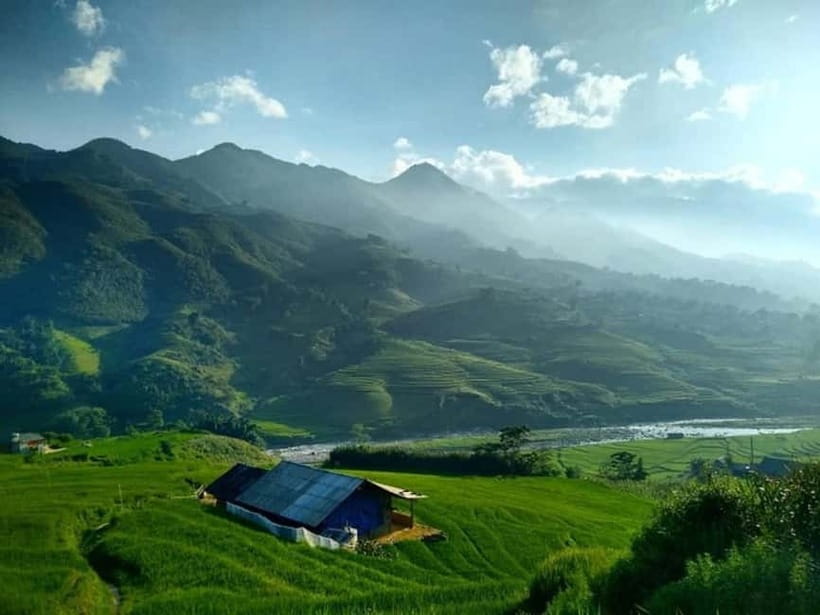
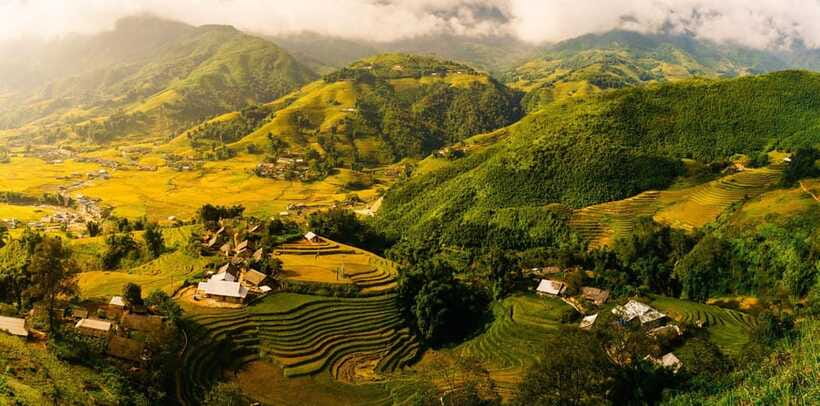
Sapa is easy to admire from a viewpoint, but the best part of this outing is the change in pace. You begin with a van ride and a short introduction, then spend much of the day on foot, moving from mountain ridge to village road. The result is a fuller picture of northern Vietnam: dramatic peaks above you, rice terraces below, and working communities along the route.
At $20 per person, the value is strong if the pickup and transport run as planned. The price includes the van, driver, English-speaking guide, lunch, and the massage voucher. You are not paying for a polished resort-style excursion. You are paying for a long walk, local interpretation, and access to views and villages that would be harder to connect on your own.
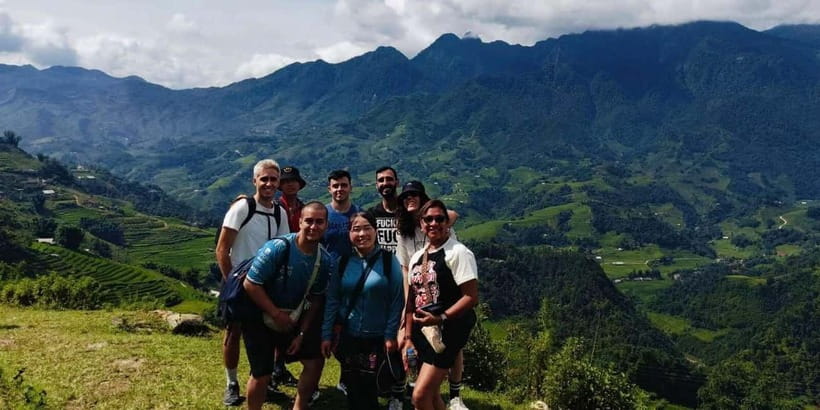
The group limit of 10 matters. On one outing, only two people had booked, which made it possible to chat easily with guide Su about the surrounding countryside, wildlife, and local life. A small group also makes it easier to keep moving on narrow paths and to hear the guide when explaining customs or farming work.
A few more Sa Pa runs to compare on price
- Sa Pa: Muong Hoa Valley Trek and Local Ethnic Villages
★ 4.6 · 864 reviews - Sapa: Eco Adventure Terrace Fields and Local Villages Trek
★ 4.9 · 636 reviews - From Sapa: 1-Day Guided Trek to Lao Chai & Ta Van with Lunch
★ 4.9 · 416 reviews
Starting at Hoàng Văn Thụ and climbing Sa Seng
The meeting point is Massage Lits at 01 Hoàng Văn Thụ in Sapa. Pickup is scheduled for 9:00, followed by a short introduction and the ride toward the trail. I would arrive before 9:00, keep your phone available, and make sure the guide or driver has found you.
The walk begins with about 1 kilometer on a small uphill trail. The distance sounds modest, but the steepness is the real issue. The climb takes roughly one hour and is described as hard trekking, so you should treat this as a genuine mountain walk rather than a sightseeing walk with a few steps.
Wear shoes with a firm grip. Bring water, sunscreen, a hat, and a small snack. Trekking poles or other trekking gear can also help, especially if the path is wet. The route is not suitable for people with mobility impairments, back problems, vertigo, or a strong fear of heights. Pregnant women should not book it.
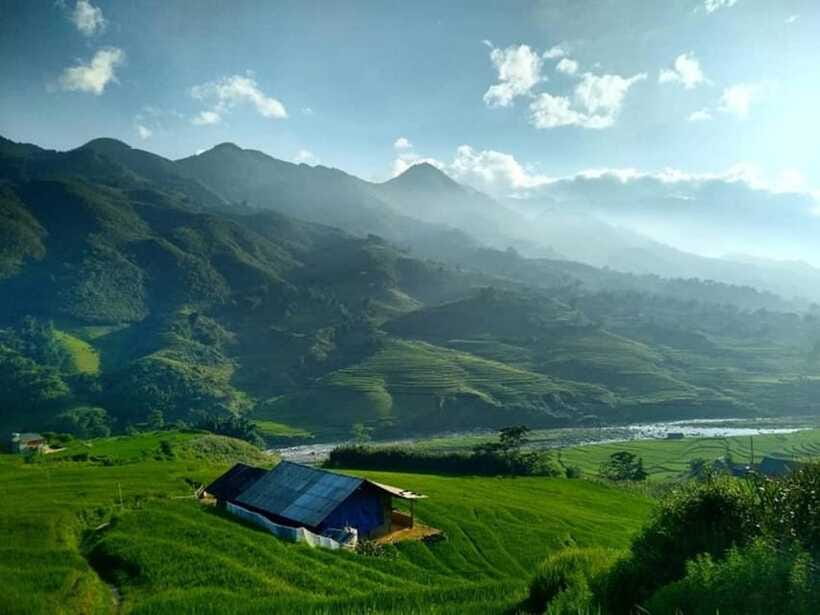
At the top of Sa Seng Mountain, the effort pays off with a broad view. You can see Fansipan, which rises to 3,143 meters and is the highest mountain in Indochina. Sapa town sits below, while Muong Hoa Valley opens out with its famous rice terraces and the area’s largest river and valley views.
This is the tour’s visual high point, so take your time with photographs. Weather will shape what you see. On a clear day, the mountain and terraces can appear sharply defined. In cloud or mist, the mood changes, and the distant views may be limited. The uphill section is still worthwhile, but you should not book this trip solely on the promise of a perfect panorama.
Down toward Hang Da and the Black Hmong countryside
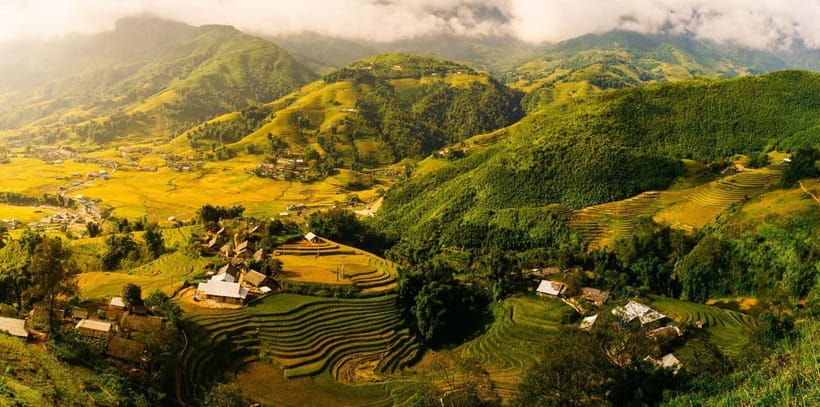
After the summit, the route turns down the mountainside toward Hang Da, a village of the Black Hmong minority. The descent gives your legs a different challenge. A steep uphill is tiring for your lungs, while a downhill path can be hard on knees and ankles, particularly if the ground is slick.
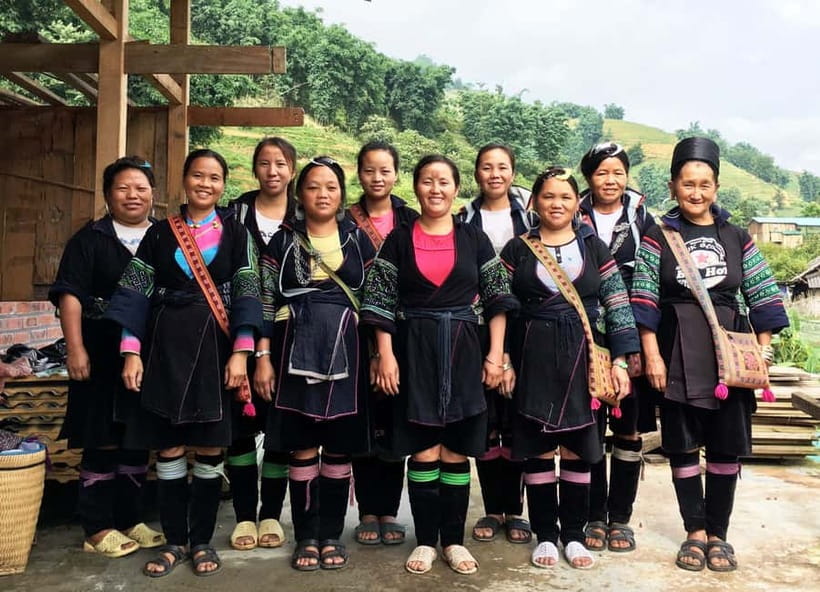
Hang Da is not presented as a staged cultural show. The interest comes from seeing ordinary village surroundings and learning how local life works. Along the way, you might see buffalo, cattle, and pigs. These animals are not just scenery. They are important to local families and form part of the practical economy of the countryside.
That detail helps explain why this trip feels more grounded than a quick viewpoint stop. The guide can connect what you see in the fields and around homes to work, food, transport, and family life. Ask questions as you walk. The small group format should make that easier than it would be on a large coach outing.
The route also gives you time to notice how much of the day depends on the terrain. Roads, footpaths, fields, and homes all fit around the mountain slopes. The walking is not merely a way to reach the next stop. It is the main way you see how the villages connect.
A family lunch with no fuss
Lunch takes place at a small restaurant run by a local family. That is a modest description, and you should set your expectations accordingly. This is not a formal dining room or a long tasting menu. It is a practical meal break during a full day outdoors, with traditional food and a direct link to the community.
I see this as one of the tour’s best choices. A family-run restaurant keeps money in the local area and gives you a chance to pause somewhere connected to the villages. It also breaks up the trek at the right time, after the climb and descent have used up some energy.
Bring a snack as well as water. The tour includes lunch, but personal tastes and portion sizes vary, and the guidance specifically recommends snacks to keep you going. Personal expenses are not included, so carry a little money if you want anything beyond what the tour provides.
Same city, a very different kind of morning:
- Sapa 1 Day Long Trek: Trek to Hau Thao and Sa Seng Villages
★ 4.6 · 344 reviews - Sapa: Fansipan Cable, Cat Cat Village, Moana Instagram Tour
★ 4.8 · 294 reviews - From Sapa: 3-Day Ha Giang Loop with Safe Rider (max 8 pax)
★ 4.9 · 285 reviews - Explore Sapa by TrekkingAdventures, Mountain,Rice fields
★ 4.9 · 229 reviews
Hau Thao and the meaning behind village life
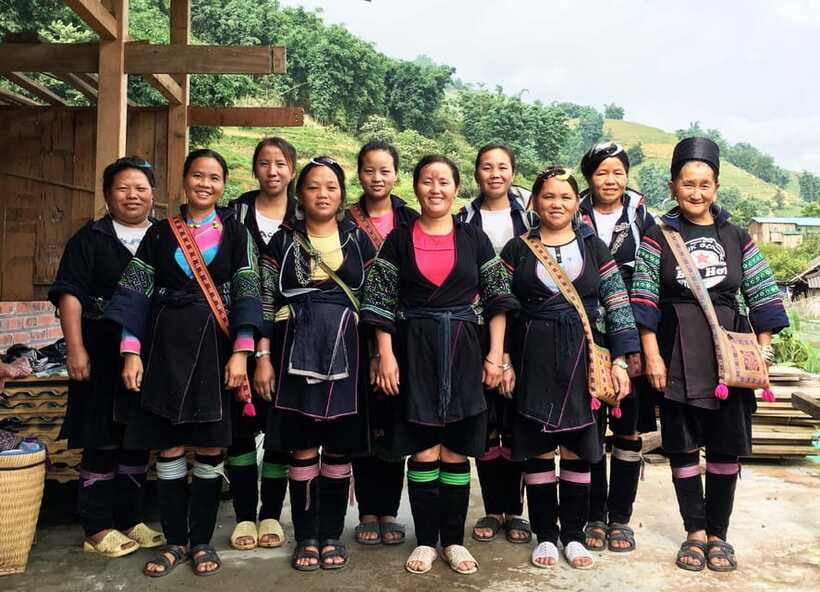
After lunch, you continue along a small road toward Hau Thao, another Black Hmong village. Compared with the mountain climb, this part should feel more open and less strenuous, though you are still walking for much of the afternoon.
Hau Thao is where the cultural explanations become especially useful. The guide introduces Hmong marriage traditions, rice-field work, and house-building techniques. These subjects give you a better way to understand what you see, rather than simply passing through and taking photographs.
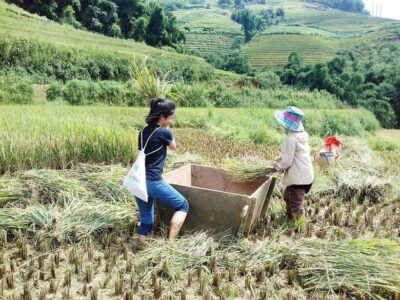
Rice farming is strongly shaped by the slopes. Planting and harvesting depend on the season, so the exact activity in the fields will vary. If you visit at the right time, you might see local people planting or harvesting rice. If not, you can still see the terraces and learn how the work is organized.
The same applies to house building. A house is not separate from the mountain setting, available materials, family needs, and farming routine. Ask the guide to point out details as you walk. An English-speaking guide who is comfortable discussing local customs can turn a scenic walk into a useful lesson.
The Hmong marriage traditions are another reason to choose this trip over a purely scenic trek. They offer a glimpse into social life and family relationships, although the amount of detail will depend on the guide and the questions you ask. Guides Châu A Su and Su received specific praise for being friendly and engaging, so requesting one of them may be worth asking about, though availability is not guaranteed.
The final walk to Giang Ta Chai
Around 15:30, you walk to Giang Ta Chai village, where the transport waits on the main road. This final section is important to understand before booking. You do not return to the original trailhead by van from Hau Thao. You continue on foot until reaching the vehicle.
The tour then brings you back to Sapa and ends at Hoàng Văn Thụ. The stated duration is nine hours, so expect a full day rather than a short morning activity. Keep your evening plans flexible, particularly if the group moves slowly or the mountain path is difficult.
This ending also explains why comfortable shoes matter from the first step. By late afternoon, tired feet can make even a mild road feel long. The reward is that the walk finishes with a clear transport point rather than leaving you to find your own way back.
The pickup issue deserves serious attention
The strongest negative point is not the trail, food, or cultural program. It is the possibility of a missed pickup. Two customers reported waiting at the meeting point and not being collected, with one person waiting more than an hour before leaving to find another tour. That person had only one day left in Sapa and lost valuable time.
I would not ignore this. Arrive at Massage Lits early, have the meeting address saved, and confirm the start time before the day of the trek. If the operator provides a contact number, use it to verify the van and ask how you will identify the driver or guide.
The overall rating is 4.3 from 28 ratings, and the positive feedback repeatedly points to the scenery, food, walking route, and guides. One person called the views spectacular after a long day among rice fields and mountain peaks. Another singled out guide Châu A Su, while a separate small group had a particularly pleasant day with Su. Those strengths are real, but they do not erase the pickup concern.
What to bring for nine hours outdoors
Pack light, but do not arrive empty-handed. Your day includes a hard ascent, a descent, village paths, a road walk, and time in open fields.
- Comfortable trekking shoes with good grip
- Water and a snack
- Sun protection, including sunscreen and a hat
- A camera or phone for the summit and rice terraces
- Appropriate trekking gear for steep paths
- A little money for personal expenses
Smoking is not allowed on the activity. The tour is also unsuitable for anyone who cannot manage steep inclines or who feels unsafe around heights.
The massage voucher gives you a pleasant way to finish the day. It offers a 20 percent discount at Massage Lits, 01 Hoàng Văn Thụ, the same address used for the meeting point. The discount is not a substitute for proper recovery during the walk, but it is a useful extra after several hours on mountain paths.
Who should book this experience?
I would choose this trek if you want Sapa’s famous views but also want time in working villages. It suits people who enjoy walking, ask questions, and accept that mountain weather and trail conditions can change the day.
It is a good fit for active couples, friends, solo visitors comfortable in a small group, and anyone who wants an English-speaking guide without paying a high price. The route also works well for people who prefer a local lunch and cultural explanation over a short photo stop.
I would not choose it if you want an easy outing, have mobility or back problems, are pregnant, or dislike steep trails and heights. It is also a poor match for a tightly packed schedule because the day lasts nine hours and the pickup problem needs extra care.
Should you book the Sa Seng Mountain trek?
Book it for the combination of high mountain views, rice terraces, and Black Hmong village life at a low price. The strongest parts are the Sa Seng summit, the small group, the family lunch, and guides such as Su and Châu A Su, who have been praised for their warmth and local explanations.
Before paying, confirm the pickup clearly and arrive early at Massage Lits. If the operator gives you a reliable meeting confirmation, this is a solid-value day for fit walkers who want more than a viewpoint and a quick photograph. If you need guaranteed punctuality or a gentle walk, choose a shorter and simpler Sapa activity instead.
FAQ
Where does the tour start and finish?
The tour starts and finishes at Massage Lits, 01 Hoàng Văn Thụ, in Sapa.
What time does pickup take place?
Pickup is scheduled for 9:00. The tour lasts about nine hours and returns to Hoàng Văn Thụ.
How difficult is the trek?
The trek is challenging, with a steep 1-kilometer uphill section that takes about one hour to reach the top of Sa Seng Mountain.
What mountain can you see from Sa Seng Mountain?
You can see Fansipan, which is 3,143 meters high and the highest mountain in Indochina.
Which villages does the tour visit?
The route includes Hang Da and Hau Thao, both villages of the Black Hmong ethnic minority. The walk later continues to Giang Ta Chai, where transport is waiting.
Is lunch included?
Yes. Lunch is included at a small restaurant run by a local family.
What language does the guide speak?
The live guide speaks English.
What should I bring?
Bring comfortable shoes, trekking gear, water, snacks, a hat, sunscreen, and a camera. Smoking is not allowed.
New around Sa Pa
- Sapa3D2N TrekkingAdventures,Valleys,Bambooforest,Waterfall★ 4.8 · 24 reviews
- Sapa: Y Linh Ho – Lao Chai, and Ta Van Trekking Day Tour★ 5.0 · 25 reviews
- Sapa: Ta Phin Village Trek & Red Dao Herbal Bath★ 5.0 · 22 reviews
- From Sapa: Guided Full-Day Trekking with Lunch and Drop-Off★ 4.2 · 86 reviews
- Sapa Trekking Bargains With Local Guide★ 4.9 · 91 reviews
- Sapa: Private Highlights Day Tour with Lunch★ 4.8 · 61 reviews
- Sapa: Love Silver Waterfall, LonelyTree in Heaven-Rice Field★ 4.9 · 28 reviews
- Sapa: Motorbike Tour 1 Day Visit Waterfalls & Local Villages★ 5.0 · 112 reviews
Sapa Tours, compared.
Muong Hoa Valley Trek and Local Ethnic Villages
Read our review →
Fansipan Cable, Cat Cat Village & Moana Instagram Tour
Read our review →
Eco Adventure Terrace Fields and Local Villages Trek
Read our review →
Number one top rated ethical cultural trekking and homestay by ETHOS
Read our review →
Cat Cat Village, Moana, Fansipan Cable Car, Alpine Coaster – Sapa
Read our review →
1-Day Guided Trek to Lao Chai & Ta Van with Lunch
Read our review →
Sapa 1 Day Long Trek: Trek to Hau Thao and Sa Seng Villages
Read our review →Browse the lists this tour appears in