
Reviewed · SAPA TOURS
Sapa: Eco Adventure Terrace Fields and Local Villages Trek
The best Sapa days leave the pavement behind. I like the way this trek pairs terraced mountain scenery with real village life, and I especially like the local guides, including Chai and Vu, who explain customs, work, clothing, and family life in clear, personal terms. The main catch is simple: this is a 10 to 12 kilometer hike, and wet weather can turn the first section into a slippery mud course.
For $27, you get a small-group outing of up to 10 people, entrance fees, an English-speaking ethnic guide, and lunch. That is strong value for a full day in the Muong Hoa Valley. You should still bring proper shoes, warm layers, and insect repellent, and you should not expect a gentle stroll through tidy paths.
In This Review
- Key points to know before you go
- Starting at Sapa Church and climbing toward Fansipan
- Muong Hoa Valley, where the scenery becomes the story
- Y Linh Ho and the river crossing
- Lao Chai Sang and a local lunch at 12:30 PM
- Lao Chai Village and Hmong daily life
- Ta Van Village and the Dzay connection
- The guides are the real strength
- How hard is the 10 to 12 kilometer route?
- What the $27 price really covers
- How this compares with a gentler Sapa day
- Should you book the Sapa terrace fields trek?
- FAQ
- Where does the Sapa trek begin?
- How long does the activity last?
- How far do you walk?
- Which villages does the route visit?
- Is lunch included?
- Is hotel pickup included?
- What should you bring?
- Is the trek suitable for children?
- Can you cancel the booking?
Key points to know before you go
- A 10 to 12 kilometer trek: This is a proper hike with steep, uneven, and sometimes muddy sections.
- Three village areas in one day: The route links Y Linh Ho, Lao Chai, Lao Chai Sang, and Ta Van, with a focus on Hmong and Dzay culture.
- The guide makes the difference: Guides such as Chai, Vu, Chai, Si, and Rose are praised for warm personalities, strong English, and local insight.
- Weather changes the experience: Mist may hide Fansipan and the valley in the morning, while rain can make trails very slick.
- Lunch breaks the walk well: A local meal around 12:30 PM gives you time to rest and taste food from the Sapa area.
- Meet at Sapa Church: The guide meets you in front of the church at 9:00 AM, and you should provide a WhatsApp number for contact.
Starting at Sapa Church and climbing toward Fansipan
Your morning begins at 9:00 AM in front of Sapa Church, an easy meeting point in the center of town. Keep your phone handy, since the operator asks for a WhatsApp number to make contact simple.
The first stop is a small hill viewpoint. From here, you may see toward Fansipan Peak, Vietnam’s highest mountain. On a clear day, this gives you a useful sense of the scale ahead: Sapa town sits high in the mountains, while the valley and its villages spread below.
Fog is part of the Sapa experience, not a rare nuisance. Several departures have had misty or cloudy mornings with limited views. Some skies cleared later in the day, so do not write off the trek if the opening viewpoint looks gray. Still, if sweeping mountain views are your main reason for booking, clear weather matters.
The opening portion can be the hardest part. Rain from the previous day may leave the paths slippery, and mud can cling to every shoe. Some people rent rubber boots locally before setting out. That is a smart move in wet conditions, especially if you would rather keep your hiking shoes clean and dry.
The route is not described as a forest hike. Much of the appeal comes from open rice fields, mountain slopes, village paths, streams, and working farmland. You get broad views, but you also spend plenty of time watching your footing.
A few more Sa Pa runs to compare on price
- Sa Pa: Muong Hoa Valley Trek and Local Ethnic Villages
★ 4.6 · 864 reviews - From Sapa: 1-Day Guided Trek to Lao Chai & Ta Van with Lunch
★ 4.9 · 416 reviews - Sapa 1 Day Long Trek: Trek to Hau Thao and Sa Seng Villages
★ 4.6 · 344 reviews
Muong Hoa Valley, where the scenery becomes the story
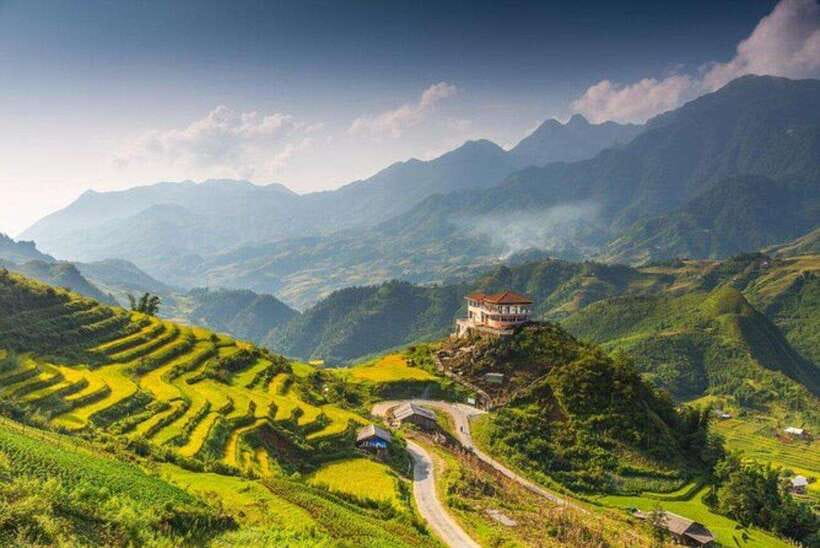
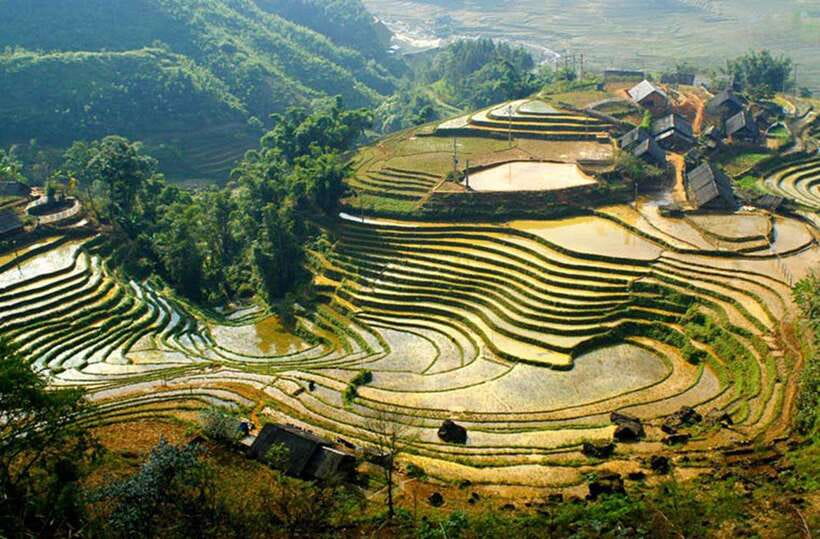
From the viewpoint, the trek continues into Muong Hoa Valley. This is the visual heart of the day, with layered rice terraces cut into the mountainsides. The terraces change character with the season. Depending on when you visit, you may see farmers planting, tending, or harvesting rice.
That farming activity gives the scenery purpose. These are not decorative steps carved into a hillside for tourists. They are working fields that support local households and require careful use of water and steep land.
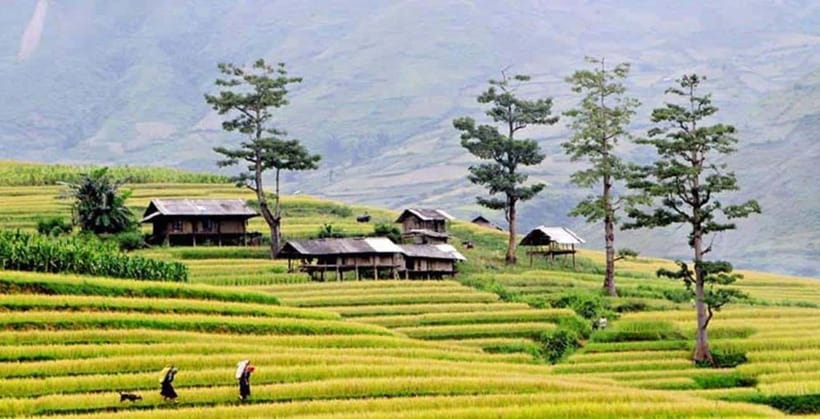
You pass meandering streams, rivers, traditional wooden houses, and farmers at work. The pace is suited to stopping for photos and listening to the guide, although the uneven trail means you should not expect a fast march. A small group of no more than 10 people helps keep the pace manageable and makes questions easier.
The walking surface changes as the day goes on. Muddy tracks may give way to paved village paths, but even easier sections can include slopes and uneven ground. If you have weak knees, balance problems, or little hiking experience, this is worth taking seriously. The route can feel moderate for an active person, but it is not an easy urban walk.
Y Linh Ho and the river crossing
Around 11:00 AM, you reach Y Linh Ho Village, an area associated with the Hmong ethnic minority. A small bridge crosses a scenic river, creating one of the route’s quieter moments.
The bridge and river are more than a photo stop. They mark a shift from Sapa’s town edge into a rural setting where homes, fields, animals, and footpaths are part of daily life. You might see simple farm activity and the close relationship between the village and the surrounding hills.
This is also where the guide’s role becomes especially useful. A good guide can explain what you are seeing without turning every house or field into a staged attraction. Guides named Chai, Vu, Rou, Lien, and Si have been praised for answering questions, keeping the group together, and sharing personal knowledge of local life.
The Hmong communities around Sapa have their own customs, clothing traditions, and ways of working the land. The guide-led format gives you a chance to ask about these subjects directly. That personal exchange is a stronger reason to choose this trek than simply ticking off another viewpoint.
Lao Chai Sang and a local lunch at 12:30 PM
After crossing the river, you continue toward Lao Chai Sang. The setting opens onto more rice terraces, with high mountains rising around the valley. This is a good stretch for taking in the scale of the area, though paths may remain slick if rain has recently passed through.
At about 12:30 PM, lunch is served with a local Hmong family in Lao Chai Sang. The supplied details describe it as home-cooked, while some departures have eaten at a small village restaurant with a broad view. Either way, lunch is an important pause rather than a rushed snack.
The meal gives you time to sit down, recover from the morning’s climbs, and enjoy local dishes. Vegetarian and vegan options have been available on some departures, but you should communicate dietary needs when booking or at the start of the day rather than assume every menu will be identical.
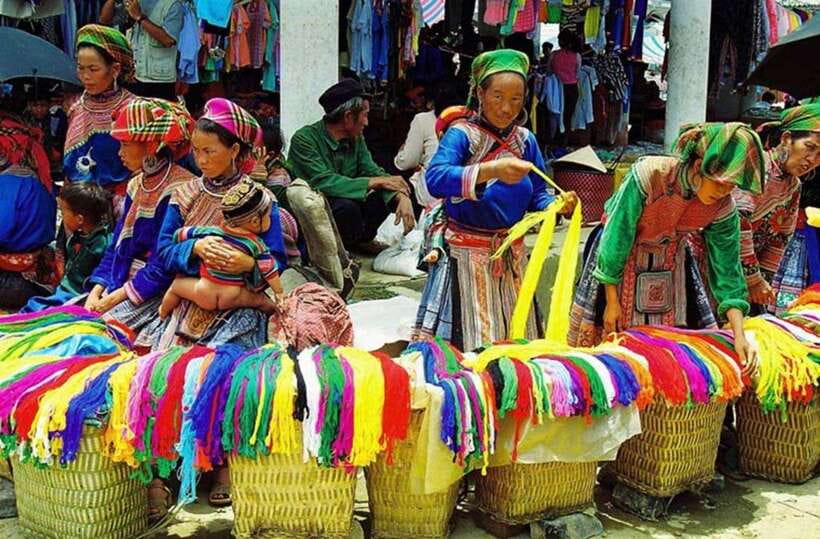
Lunch is included in the $27 price, which improves the value considerably. Drinks are not included, so carry money for beverages. You should also bring some cash if you would like to buy handmade clothing or bags from village sellers. Buying is optional, and you are not required to purchase anything, but a small purchase can be a direct way to support local makers.
Same city, a very different kind of morning:
- Sapa: Fansipan Cable, Cat Cat Village, Moana Instagram Tour
★ 4.8 · 294 reviews - From Sapa: 3-Day Ha Giang Loop with Safe Rider (max 8 pax)
★ 4.9 · 285 reviews - Explore Sapa by TrekkingAdventures, Mountain,Rice fields
★ 4.9 · 229 reviews - EXPLORE SAPA: 2D1N TREKKING & HMONG CULTURE WITH DINH
★ 4.9 · 191 reviews
Lao Chai Village and Hmong daily life
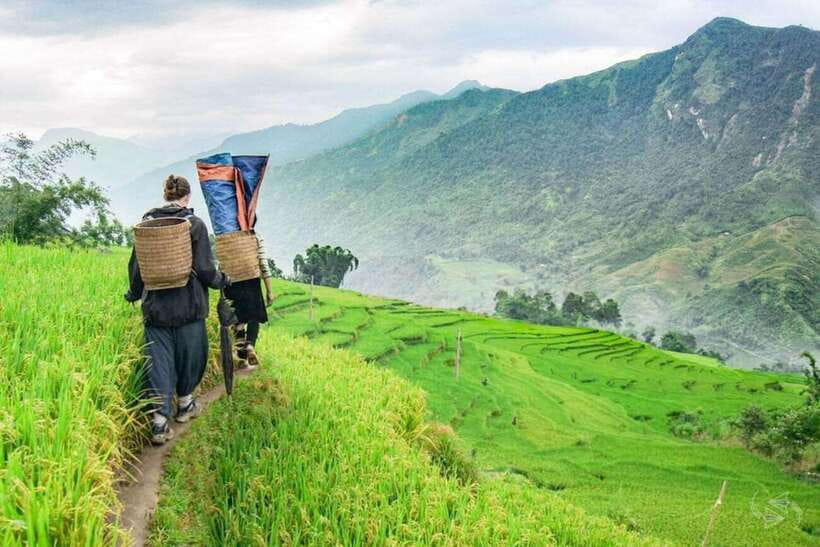
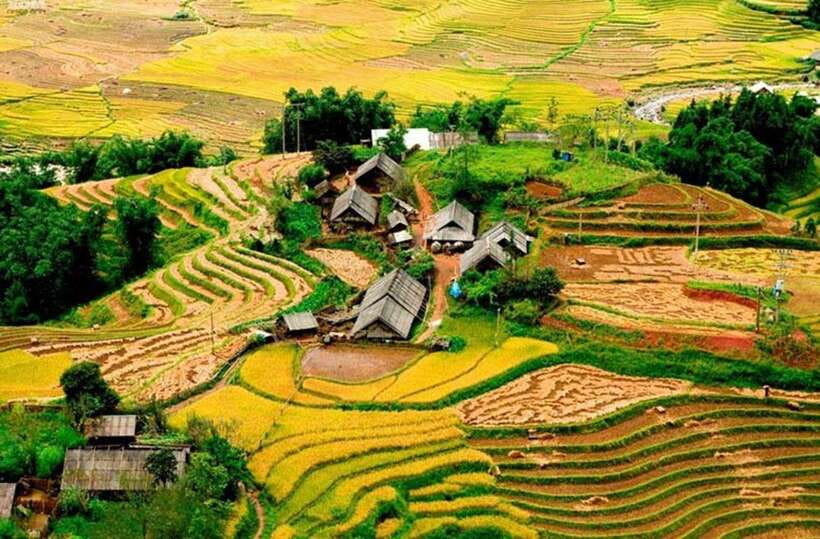
After lunch, the route continues to Lao Chai Village. Rice work remains a central theme. In planting season, you may see farmers in the fields. During harvest, the terraces take on a different look as crops are gathered.
The village section helps you connect the earlier scenery to ordinary life. You may pass animals such as pigs, ducks, chickens, water buffalo, and dogs. You may also see traditional homes and people moving between fields and houses.
The cultural portion includes an introduction to Hmong daily life and traditional clothing-making. This is one of the most valuable parts of the experience because it moves beyond taking photographs of terraces. You learn how clothing and craft connect to identity, household work, and local customs.
Several guides have shared personal stories about village life, including the situation of local women and the difficulties faced by families in mountain communities. The strongest moments tend to come from these direct explanations, delivered with humor and warmth rather than as a memorized lecture.
There is also a practical point about local women who may walk alongside you during muddy sections. They can offer a steady hand on slippery paths, especially during the early part of the trek. At some points they may sell handmade items. You can politely decline, but carrying cash gives you the choice to support them if you find something useful.
Ta Van Village and the Dzay connection
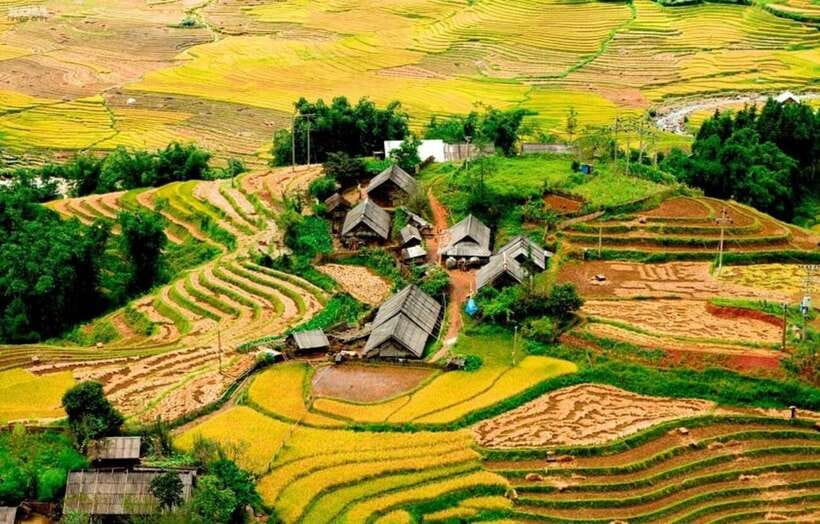
The final village area is Ta Van, home to the Dzay minority, also written as Zay in some descriptions. Reaching Ta Van gives the day a useful cultural contrast, since the route introduces more than one ethnic community rather than presenting Sapa as a single local culture.
The path toward Ta Van is generally easier than the muddy opening in many conditions, with more paved sections through the villages. That does not remove all slopes, and wet weather can still affect comfort. Your feet may be tired by this point, but the later sections allow more attention to homes, paths, and village activity.
The trek is scheduled to return to Sapa around 3:30 PM. Some departures have finished closer to 4:00 PM, and traffic may slow the final ride into town. Plan a little flexibility if you have a train, bus, or fixed dinner reservation afterward.
Hotel pickup is not included. You meet at Sapa Church, and the experience returns you to Sapa rather than collecting you from your hotel. That keeps the price low, but you need to arrange your own way to and from the meeting point.
The guides are the real strength
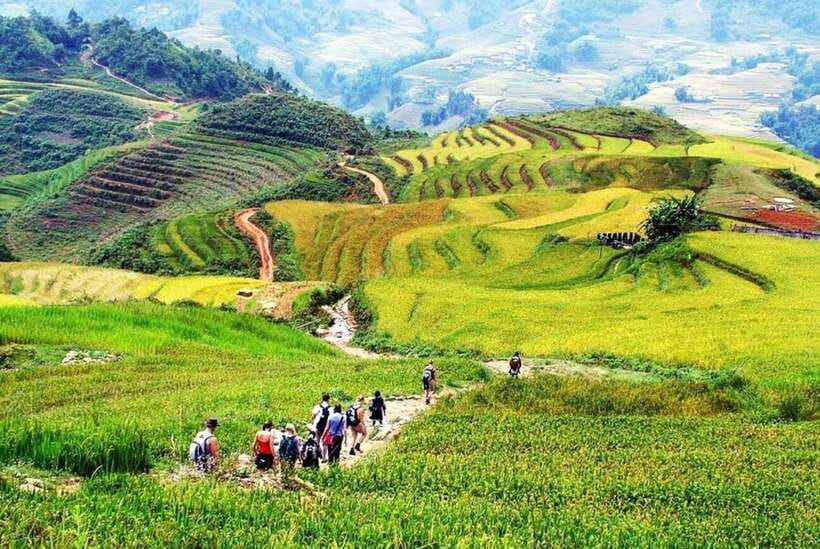
The scenery gets people to Sapa, but the guide often determines how much you take home. Chai receives repeated praise for her English, energy, humor, care on slippery slopes, and ability to explain Hmong traditions without making the day feel like a classroom.
Vu is another frequently praised guide. Her local background, friendly manner, and willingness to answer questions help turn the walk into a conversation. Other guides named Chai, Shou, VU, Wu, Lien, Rou, Si, Le, Chan, Pai, and Rose have also been described as attentive and friendly.
Guide names may not be assigned until the day itself, so you should not book solely to request one particular person. The consistent pattern is more useful: this activity depends heavily on local guides who know the paths and can adjust the pace.
A guide also provides safety help when the trail gets difficult. That matters in Sapa, where a route that looks easy on a map can become awkward after rain. Guides may offer a simpler road option for part of the way, but choosing the easier path can mean missing some of the more adventurous footpaths.
How hard is the 10 to 12 kilometer route?
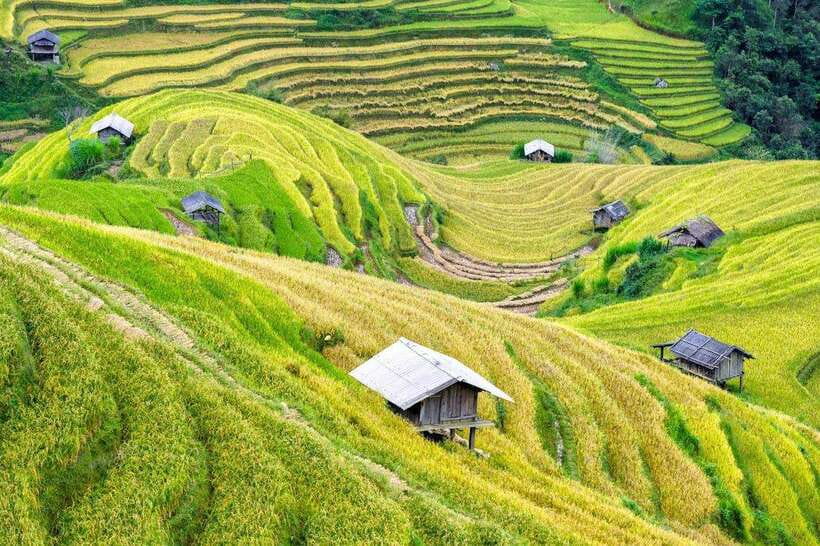
You should have a reasonable level of fitness for this activity. The distance alone is manageable for many active adults, but the combination of hills, slippery ground, mud, and uneven surfaces makes it more demanding than a normal sightseeing walk.
The first third may be the roughest, particularly after rain. You could get muddy from the knees down, and even dry sunny weather does not guarantee firm footing. Rubber boots can help, though hiking shoes with good grip may be more comfortable on drier sections.
Bring:
- Hiking shoes or boots with strong grip
- Warm clothing for changing mountain weather
- Insect repellent
- Water and money for drinks
- Clothes that can get dirty
- Cash for optional purchases from local makers
The activity is not suitable for children under five, pregnant women, wheelchair users, people with mobility impairments, or people over 75. Those limits make sense given the trail conditions. If you are unsure about your knees, balance, or stamina, ask before booking.
What the $27 price really covers
At $27 per person, this is a low-cost way to spend roughly six and a half hours in the Sapa countryside. The price includes an English-speaking local ethnic guide, entrance tickets, and lunch. Those inclusions cover the main costs of the day.
You still pay separately for drinks, hotel transfers, and anything else not listed. You may also choose to rent rubber boots, particularly during the rainy season. That extra expense can be worthwhile if it keeps you safer and more comfortable.
The small-group limit of 10 is another value point. You are not joining a huge procession that blocks the path or makes conversation difficult. The group can still include people with different walking speeds, so tell the guide early if you need a slower pace.
Free cancellation up to 24 hours before departure and the option to reserve now and pay later add flexibility. Those policies are useful in Sapa, where fog and rain can change the day’s appeal. They do not guarantee clear views, but they reduce the risk of being locked into a poor-weather outing.
How this compares with a gentler Sapa day
This trek suits you if you want scenery and cultural contact in equal measure. It is a better fit than a short town excursion if you want to walk through rice fields, cross a river, and spend time hearing about Hmong and Dzay life.
It is less suitable if you want polished paths, guaranteed mountain views, or a relaxed schedule with little exertion. One departure used an easier road for part of the route, but the main appeal is the more active trail.
If you have several days in Sapa, you might pair this with a separate visit to Cat Cat Village rather than trying to see everything in one outing. This route already gives you a full day of terraces and rural villages, so adding too many similar walks back to back may leave your legs complaining before your camera does.
Should you book the Sapa terrace fields trek?
I would book this if you want the best mix of mountain walking and local culture at a modest price. The guide-led conversations, village stops, included lunch, and changing scenery give the day more substance than a viewpoint visit alone.
Book with caution if rain is forecast, your mobility is limited, or you strongly dislike mud. The route can be slippery even under sunny skies, and fog may hide Fansipan and the valley for part of the day.
For an active visitor who brings suitable shoes and accepts a little dirt, this is a strong Sapa choice. The 4.9 rating from 636 bookings reflects the same qualities I would value most: kind local guides, good pacing, memorable views, and a real connection to village life.
FAQ
Where does the Sapa trek begin?
The guide meets you in front of Sapa Church in central Sapa at 9:00 AM.
How long does the activity last?
The activity lasts 390 minutes, or about six and a half hours. The planned return to Sapa is around 3:30 PM.
How far do you walk?
The trek involves approximately 10 to 12 kilometers of walking and hiking.
Which villages does the route visit?
The route includes Y Linh Ho, Lao Chai Sang, Lao Chai, and Ta Van. The schedule focuses on Hmong and Dzay communities.
Is lunch included?
Yes. A local lunch is included, usually around 12:30 PM. Drinks are not included.
Is hotel pickup included?
No. Hotel transfer service is not included. You need to reach the meeting point at Sapa Church yourself.
What should you bring?
Bring warm clothing, hiking shoes, and insect repellent. Clothes that can get muddy are also a sensible choice.
Is the trek suitable for children?
The activity is not suitable for children under five. It is also not suitable for pregnant women, wheelchair users, people with mobility impairments, or people over 75.
Can you cancel the booking?
Yes. You can cancel up to 24 hours in advance for a full refund. You can also reserve now and pay later, subject to the booking conditions.
New around Sa Pa
- Sapa3D2N TrekkingAdventures,Valleys,Bambooforest,Waterfall★ 4.8 · 24 reviews
- Sapa: Y Linh Ho – Lao Chai, and Ta Van Trekking Day Tour★ 5.0 · 25 reviews
- From Sapa: Guided Full-Day Trekking with Lunch and Drop-Off★ 4.2 · 86 reviews
- Sapa: Ta Phin Village Trek & Red Dao Herbal Bath★ 5.0 · 22 reviews
- Sapa: Muong Hoa Mountain Views and Villages Trek with Lunch★ 4.3 · 28 reviews
- Sapa Trekking Bargains With Local Guide★ 4.9 · 91 reviews
- Sapa: Private Highlights Day Tour with Lunch★ 4.8 · 61 reviews
- Sapa: Love Silver Waterfall, LonelyTree in Heaven-Rice Field★ 4.9 · 28 reviews
Sapa Tours, compared.
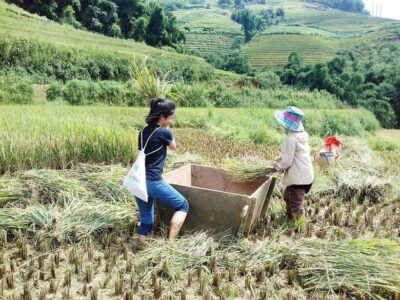
Muong Hoa Valley Trek and Local Ethnic Villages
Read our review →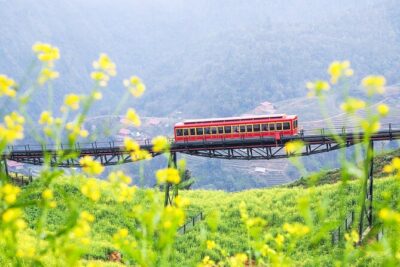
Fansipan Cable, Cat Cat Village & Moana Instagram Tour
Read our review →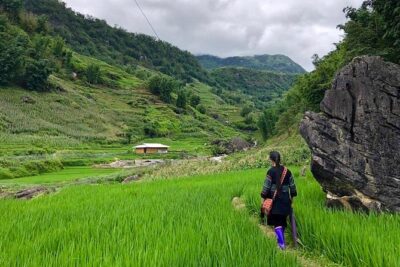
Number one top rated ethical cultural trekking and homestay by ETHOS
Read our review →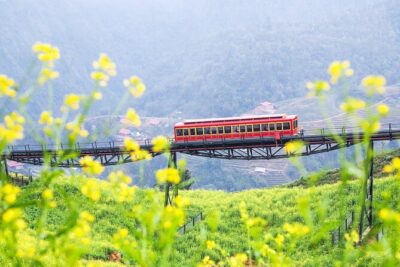
Cat Cat Village, Moana, Fansipan Cable Car, Alpine Coaster – Sapa
Read our review →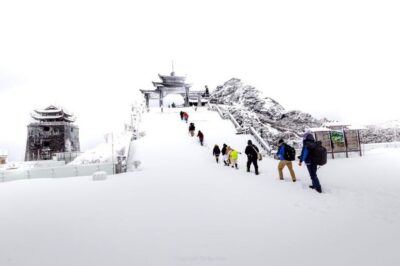
1-Day Guided Trek to Lao Chai & Ta Van with Lunch
Read our review →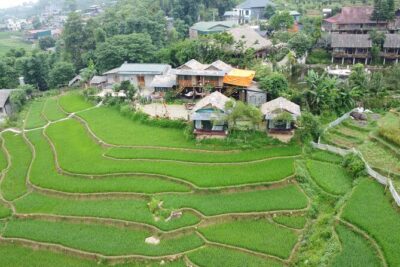
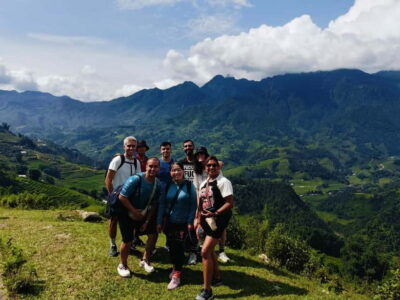
Sapa 1 Day Long Trek: Trek to Hau Thao and Sa Seng Villages
Read our review →Fansipan Cable, Cat Cat Village, Moana Instagram Tour
Read our review →Browse the lists this tour appears in