
Reviewed · SAPA TOURS
1-Day Sapa Long Trek – Rice Field Terrace, Ethnic Culture
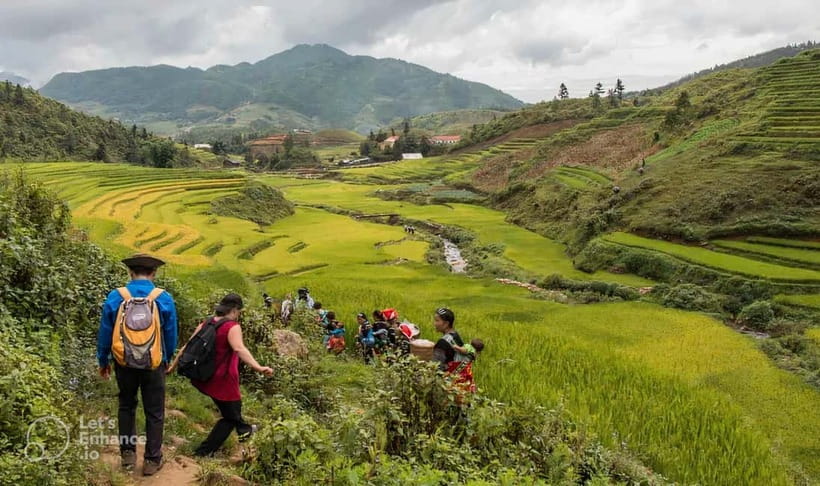
Sapa’s best views come with muddy shoes. This 7-hour trek leads from Sapa town into Muong Hoa Valley, with sweeping views of Fansipan, Hmong rice terraces, village paths, and a family-style lunch in Lao Chai Sang. I especially like the local Hmong guides, who bring personal stories to the walk, and the small groups, capped at 10 people. The main drawback is the trail itself: after rain, steep and slippery sections can make the 12 to 15-kilometer route hard work.
I also like the way the day mixes scenery with everyday culture. You do not simply stop for photos, then return to town. You visit village homes, learn about handwoven clothing and indigo dyeing, and walk through working fields. Still, the route passes through popular villages, so local women may walk beside you offering scarves and other crafts.
In This Review
- The five details that matter most
- Starting above Muong Hoa Valley at 9:00 AM
- Descending into the rice terraces
- Y Linh Ho and the wooden bridge
- Lunch in Lao Chai Sang with a Hmong family
- Learning about Hmong textiles and indigo dyeing
- Ta Van and the Dzay village finish
- Why the guides make such a difference
- Is $24 good value for a full day in Sapa?
- Weather, fitness, and what to pack
- Who should book this Sapa trek?
- Should you book the Lao Chai and Ta Van trek?
- FAQ
- How long does the Sapa long trek last?
- How far do you walk?
- Is lunch included?
- Does pickup from my hotel come with the tour?
- What languages do the guides speak?
- Can I cancel the booking?
The five details that matter most
- Fansipan views from a quiet ridge: On a clear morning, you may see Vietnam’s highest peak rising from the Hoang Lien Son range.
- A long valley walk: Expect roughly 12 to 15 kilometers, with uphill climbs, descents, uneven ground, and slippery stretches after rain.
- Lunch with a Hmong family: The meal is home-cooked, shared family-style, and generous enough for most appetites.
- Local guides shape the day: Guides such as Mao, Sung, Chai, Giang, Thao, and Soso have been praised for warmth, English skills, humor, and flexibility.
- Culture beyond the rice terraces: Visits may include local homes, traditional clothing, natural dyes, indigo work, and village life in Ta Van.
- Simple value at $24: Hotel pickup in Sapa town, lunch, village entrance fees, a guide, transport back, water, and rain protection are included.
Starting above Muong Hoa Valley at 9:00 AM
The day begins at 9:00 AM in central Sapa. Pickup is available from hotels inside Sapa town, which is useful if you want to start walking without arranging a taxi. If you stay outside town, you can request paid transport to a meeting point, such as Sapa TT Homestay on Dien Bien Phu Street or Sapa View Spring Garden Hotel on Muong Hoa Street.
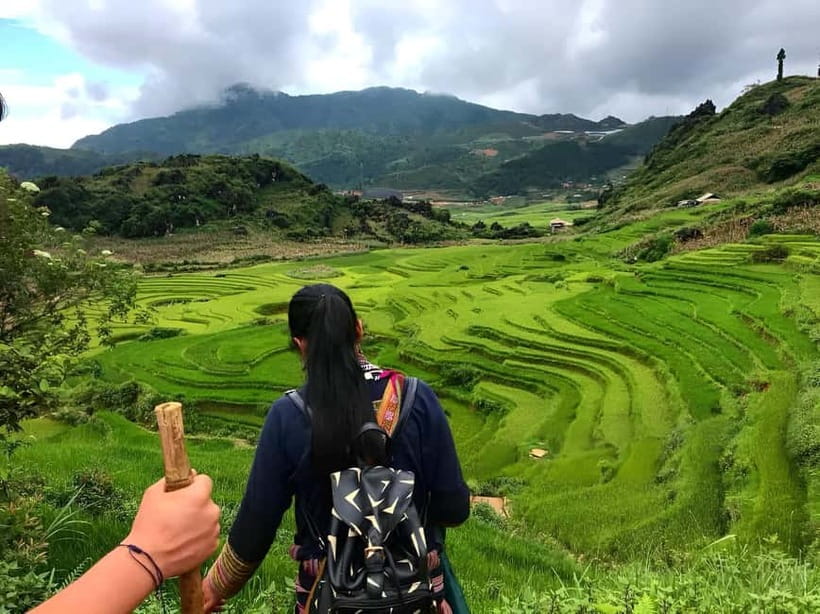
The first section climbs toward a quieter ridge. This is where the walk earns its name as a long trek rather than a casual village stroll. The reward is a broad view toward Fansipan, known as the Roof of Indochina, and the surrounding Hoang Lien Son mountains.
Cloud is part of Sapa’s character, not a rare inconvenience. On misty days, you may see only fragments of the peaks. The guides can adjust the route, as Mao did for one group, choosing lower paths when climbing higher offered little chance of a view. That sort of judgment matters more than a fixed script.
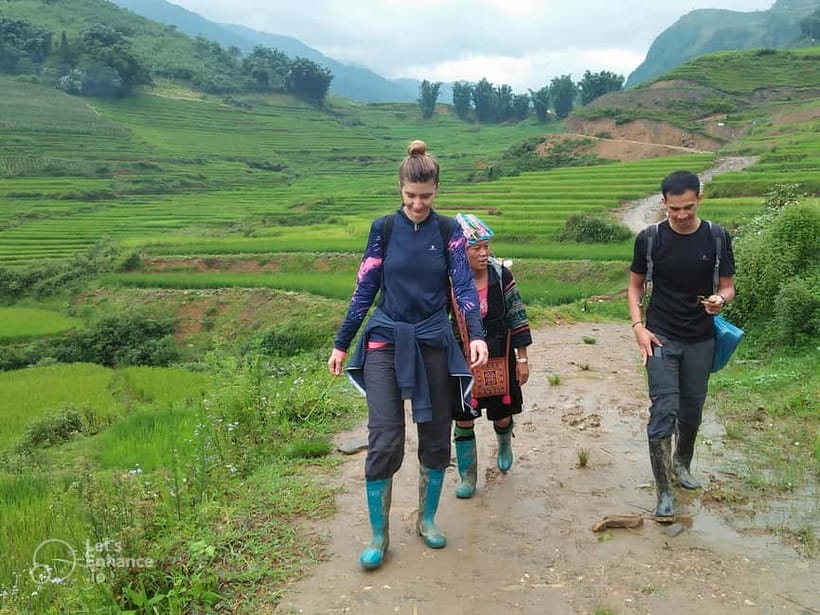
Wear shoes with real grip from the first step. Trainers may work in dry conditions, but proper hiking shoes are the safer choice. After rain, some people rent rubber boots or wellies locally. Several walkers found them useful, especially in muddy sections.
A few more Sa Pa runs to compare on price
- Sa Pa: Muong Hoa Valley Trek and Local Ethnic Villages
★ 4.6 · 864 reviews - Sapa: Eco Adventure Terrace Fields and Local Villages Trek
★ 4.9 · 636 reviews - From Sapa: 1-Day Guided Trek to Lao Chai & Ta Van with Lunch
★ 4.9 · 416 reviews
Descending into the rice terraces
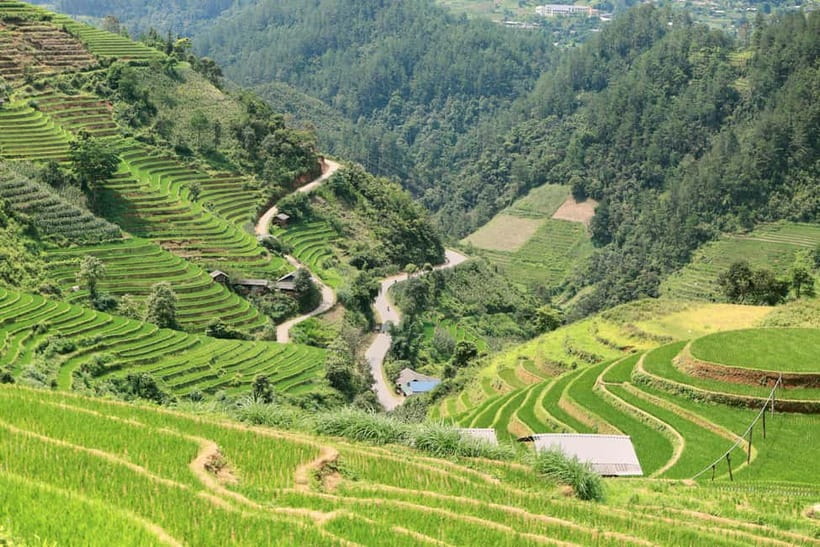
From the ridge, the trail descends toward Muong Hoa Valley. The terraces are the visual heart of the day. Hmong farmers have shaped the steep slopes into layered fields, and the view changes as you walk. From above, the terraces form broad curves. Lower down, you see narrow paths, water, plants, and people working close to the soil.
The timing of your visit affects the color. The supplied information does not promise a particular planting or harvest season, so you should not book expecting every terrace to be bright green. Even when the fields are less colorful, the curved lines, mountain walls, and streams make the route worthwhile.
This section can be peaceful, though it is not always empty. The trail passes through a well-known part of Sapa, and local women may join the walk to offer handmade goods. Some walkers appreciate the chance to buy scarves and support village sellers. Others find repeated sales approaches distracting. Bring cash only if you genuinely want to shop, and feel free to politely decline.
The guide helps turn the scenery into a place rather than a postcard. Guides such as Soso and Mao have taken groups along quieter paths when conditions allowed. You may pass through stretches with few other people, then rejoin the more active village route later.
Y Linh Ho and the wooden bridge
Around 11:00 AM, the walk reaches Y Linh Ho, a Hmong village beside a calm river. A wooden bridge marks the crossing and gives you a good pause before the trail continues through open fields.
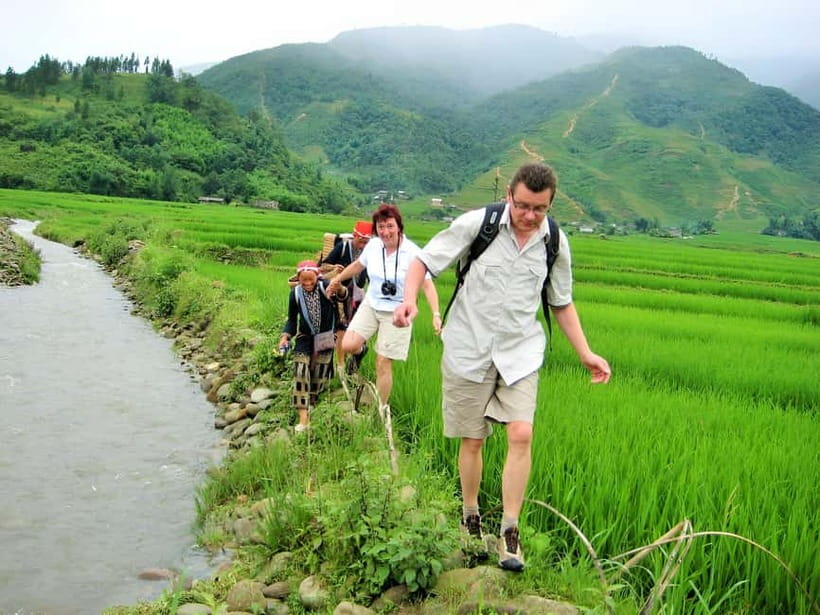
This is a useful point to check your pace. The day still has several hours to go, and the route does not stay flat. You will walk up and down through the valley, with some steep and uneven sections. One participant recorded more than 13 kilometers and a maximum elevation above 1,100 meters, while another described a route closer to 15 kilometers. The exact distance can vary with the chosen path.
The guides generally set a comfortable pace and ask if you prefer easier or steeper sections. That flexibility is a real advantage for mixed groups. It does not remove the physical demands, but it gives you a better chance of enjoying the walk rather than racing through it.
Take regular water breaks. A small bottle is supplied, but I would bring more water for a full day on the trail. Suncream, a hat, sunglasses, and insect repellent belong in your daypack. Even a cloudy day can feel warm during uphill stretches.
Lunch in Lao Chai Sang with a Hmong family
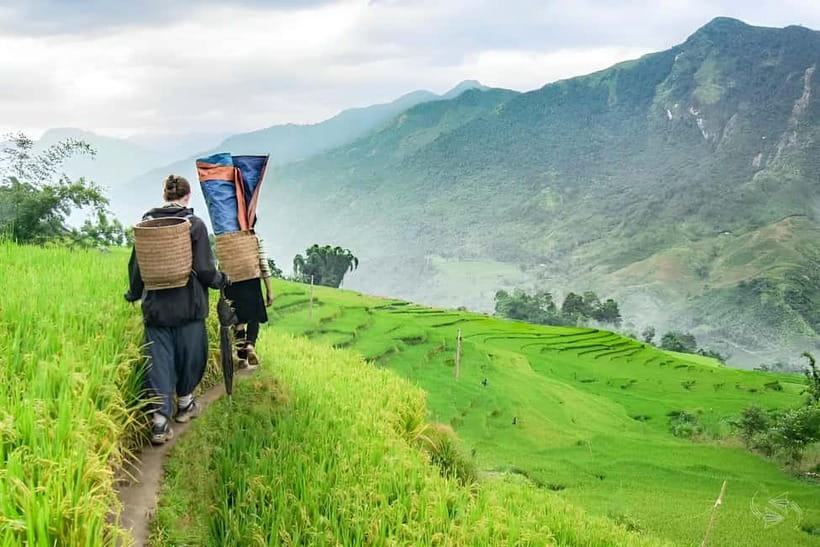
At about 12:30 PM, lunch is served in Lao Chai Sang, traditionally in a local family home. This is one of the most valuable parts of the day because it slows the trek down and lets you experience hospitality in a simple setting.
The food is home-cooked and served family-style. Dishes may vary, but the portions are described as generous, with more available when needed. The meal is not presented as fine dining, and that is the point. You are eating in a mountain community, sharing a table after a morning of walking.
Dietary restrictions and allergies can be catered for if you tell the operator in advance. Do not wait until lunchtime to mention a serious allergy. The meal may also be arranged as a picnic on other routes, but this Lao Chai and Ta Van day focuses on the family meal.
A few guides have added a cheerful local toast at the end of the day, sometimes with rice wine known informally as happy water. Treat that as optional. You still have more walking ahead, so water is the smarter main drink.
Same city, a very different kind of morning:
- Sapa 1 Day Long Trek: Trek to Hau Thao and Sa Seng Villages
★ 4.6 · 344 reviews - Sapa: Fansipan Cable, Cat Cat Village, Moana Instagram Tour
★ 4.8 · 294 reviews - From Sapa: 3-Day Ha Giang Loop with Safe Rider (max 8 pax)
★ 4.9 · 285 reviews - Explore Sapa by TrekkingAdventures, Mountain,Rice fields
★ 4.9 · 229 reviews
Learning about Hmong textiles and indigo dyeing
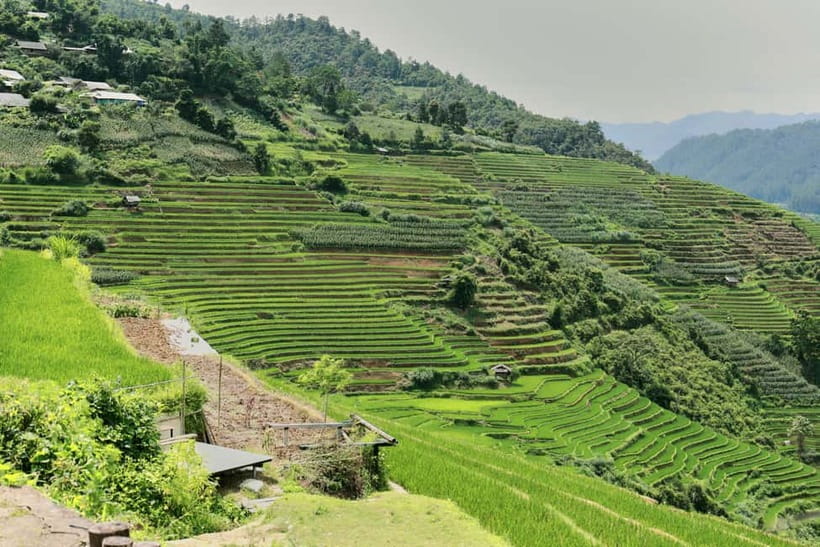
After lunch, around 2:00 PM, the route includes a local stop connected with traditional clothing. You can learn how Hmong people make handwoven fabrics and use natural dyes. One particularly memorable part is the indigo process, which gives the cloth its deep blue color.
This stop adds useful context to the scarves and fabrics you may see for sale along the trail. You get a better sense of the labor behind them, rather than viewing them as generic souvenirs. Lucy described the indigo work as a highlight, while Tom found the stories about village traditions especially engaging.
The experience description also mentions traditional incense making as a highlight. The timed route information gives more detail about handwoven clothing and natural dyes, so the exact craft demonstration may depend on the day or guide. If incense making matters to you, ask for confirmation before booking.
The guide’s personal connection can make this part more meaningful. Thao has spoken openly about women’s lives in the villages and social change, while other guides have explained family customs, work, and daily routines. English ability varies by guide, but the overall response to communication has been very positive. Guides learn through work and conversation with international visitors, which often creates an informal, friendly exchange.
Ta Van and the Dzay village finish
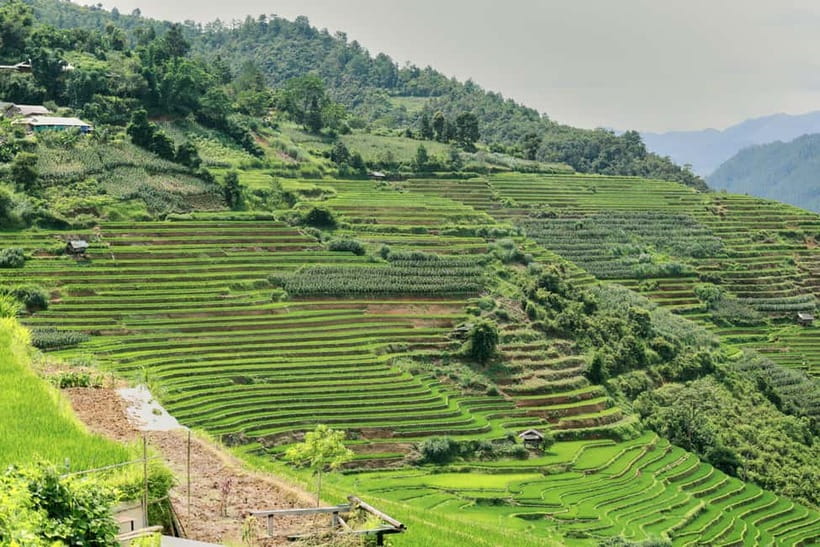
The trek reaches Ta Van at about 3:00 PM. Ta Van is associated with the Dzay people, adding another cultural layer after the Hmong communities earlier in the day. The village setting, rice fields, mountain slopes, and stream views give the final section a calm finish.
The itinerary lists about 4.5 hours in the Ta Van portion, though that figure includes walking, stops, visits, and sightseeing rather than four and a half hours in one place. The full experience lasts around seven hours, ending with a vehicle ride back to Sapa town.
Transport back is included. You can ask about a different drop-off location after booking, but an extra fee may apply outside the standard area. Confirm this early if you are staying away from central Sapa or need to connect with a train or bus.
Ta Van is also a sensible place to consider a longer stay. One guide team can arrange homestays for people who want more time with village life. This one-day route gives you an introduction, while a homestay offers a slower look at the same communities.
Why the guides make such a difference
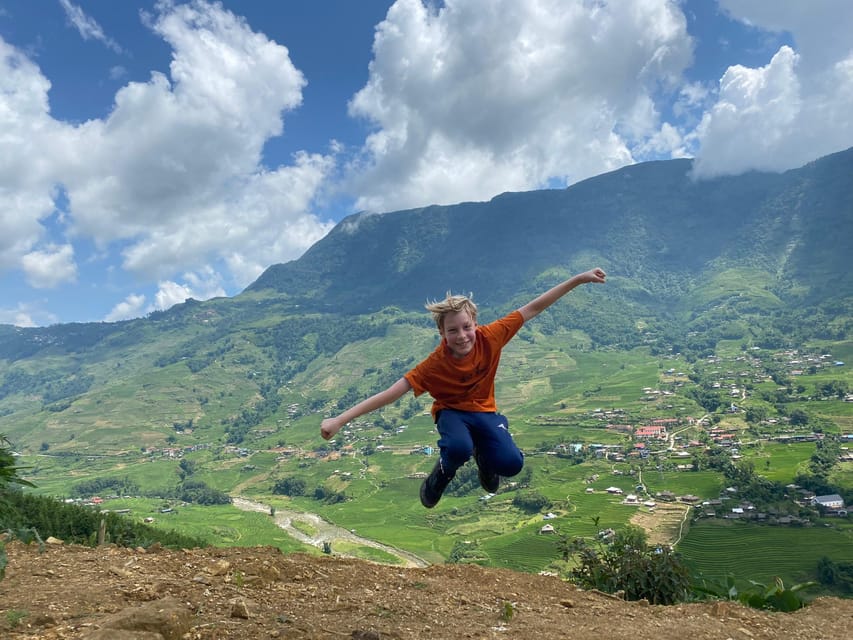
The strongest part of this experience is the guiding. Names appearing across the day’s guide assignments include Mao, Sung, Chai, Giang, Thao, Soso, Ly, Vu, Dinh, and Ma Ma Je. The praise is consistent: warmth, strong English, good humor, cultural insight, and careful attention to walking pace.
That does not mean every guide will have the same style. Some are very talkative. Others may focus more on practical help and short explanations. The best guides adjust to the group, stop for photos, explain what you are seeing, and find safer footing when the path turns slick.
Pao, for example, was praised for taking photographs and making the day feel personal. Mao adjusted a misty route and offered choices about higher or lower paths. Soso led a small group through less crowded sections and helped everyone keep a shared pace.
A group of up to 10 is small enough for conversation, though your actual group may be smaller. Several groups had only four people, which made it easier to walk together and ask questions. If you tire easily, request a private or very small group, if available, so the pace can better match your ability.
Is $24 good value for a full day in Sapa?
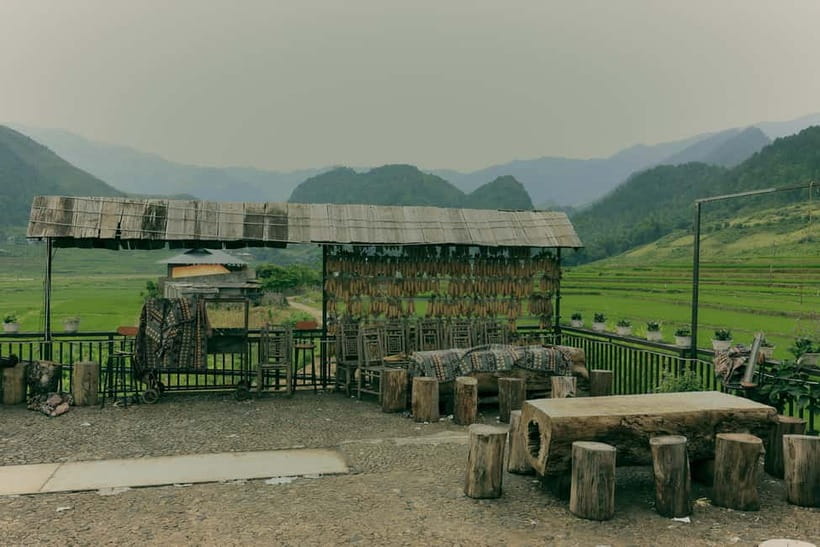
At $24 per person, this is strong value if you want scenery, food, guiding, and transport in one package. The price includes pickup in Sapa town, a local Hmong guide, village entrance fees, home-cooked lunch, a small bottle of water, rain protection, and transport back to town.
The value is not only in the included items. A local guide can help you understand village life, avoid getting lost on branching paths, and manage the route in changing weather. You are also paying for access to homes and communities that can be harder to approach respectfully on your own.
There are limits. Anything not listed as included costs extra, and pickup outside Sapa town may carry a fee. Handmade goods, optional transport changes, and any extra service should be treated as separate expenses.
The tour has a 4.9 rating from 62 reviews, with 94 percent of transport ratings receiving a perfect score. Those figures support the view that the day is well organized, but they do not change the basic fact that this is a physically active mountain trek.
Weather, fitness, and what to pack
Sapa weather can change quickly. The tour runs in rain or shine, so bring a raincoat during the wet season. Rain ponchos or raincoats are supplied, but your own waterproof layer is still useful for comfort.
Pack:
- Hiking shoes with strong grip
- A sun hat or cap
- Suncream and sunglasses
- Insect repellent
- Extra water
- Toiletries
- Clothes that can handle mud
The walk is not suitable for wheelchair users or people with mobility impairments. It is also a poor fit for people with back, heart, or serious pre-existing medical conditions, those afraid of heights, and people with visual impairments.
You do not need to be an elite hiker, but you should be comfortable walking for several hours. The trail includes climbs, descents, mud, and uneven ground. If your knees are weak or you tire quickly, ask about a shorter or custom route before booking.
Who should book this Sapa trek?
I would choose this trip if you have one full day in Sapa and want more than a viewpoint and a quick village stop. It suits people who enjoy walking, want direct contact with local communities, and do not mind getting dirty.
It is especially good for couples and small groups who want a guide with time for questions and photographs. Solo walkers can also fit in well, especially when the group is limited to 10 people.
I would skip it if you want a gentle stroll, guaranteed sunshine, or a tightly controlled cultural performance. The scenery can disappear into mist, the path can become slippery, and the craft sellers can be persistent. Those are manageable issues, but you should know about them before you lace up.
Free cancellation is available up to 24 hours before departure, and you can reserve now and pay later. That gives you some useful flexibility when mountain weather is uncertain.
Should you book the Lao Chai and Ta Van trek?
Yes, if you are ready for a real walk and want Sapa’s terraces paired with local life. The guide quality, generous lunch, small-group format, and low price make this one of the better-value ways to see Muong Hoa Valley.
Book with proper footwear, extra water, and a willingness to accept muddy conditions. If you want incense making specifically, confirm that detail first, since the day’s cultural stop may focus more on weaving, clothing, and indigo dyeing.
FAQ
How long does the Sapa long trek last?
The experience lasts about seven hours, beginning at 9:00 AM and finishing after transport returns you to Sapa town.
How far do you walk?
The distance can vary by route, but direct accounts describe walks of roughly 12 to 15 kilometers. Expect uphill sections, descents, uneven paths, and possible mud.
Is lunch included?
Yes. A home-cooked lunch is included and is generally served family-style by a local family. Dietary restrictions and allergies can be accommodated when provided in advance.
Does pickup from my hotel come with the tour?
Pickup is included for locations inside Sapa town. Accommodation outside town may require paid transport to a meeting point.
What languages do the guides speak?
Guides speak English and Vietnamese. The trek is led by local Hmong guides from nearby villages.
Can I cancel the booking?
You can cancel up to 24 hours before the activity for a full refund. The reserve-now, pay-later option also lets you keep your plans flexible.
New around Sa Pa
- Sapa3D2N TrekkingAdventures,Valleys,Bambooforest,Waterfall★ 4.8 · 24 reviews
- Sapa: Y Linh Ho – Lao Chai, and Ta Van Trekking Day Tour★ 5.0 · 25 reviews
- Sapa: Ta Phin Village Trek & Red Dao Herbal Bath★ 5.0 · 22 reviews
- From Sapa: Guided Full-Day Trekking with Lunch and Drop-Off★ 4.2 · 86 reviews
- Sapa: Muong Hoa Mountain Views and Villages Trek with Lunch★ 4.3 · 28 reviews
- Sapa Trekking Bargains With Local Guide★ 4.9 · 91 reviews
- Sapa: Private Highlights Day Tour with Lunch★ 4.8 · 61 reviews
- Sapa: Love Silver Waterfall, LonelyTree in Heaven-Rice Field★ 4.9 · 28 reviews
Sapa Tours, compared.
Muong Hoa Valley Trek and Local Ethnic Villages
Read our review →
Fansipan Cable, Cat Cat Village & Moana Instagram Tour
Read our review →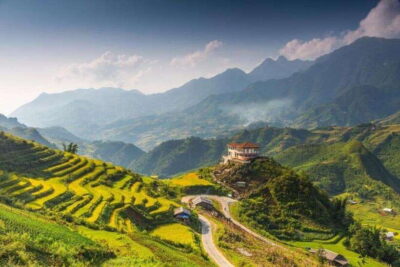
Eco Adventure Terrace Fields and Local Villages Trek
Read our review →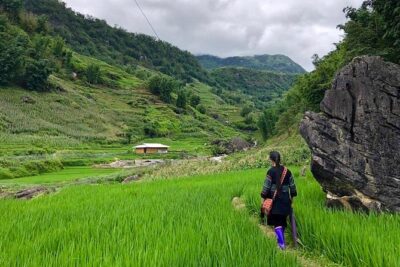
Number one top rated ethical cultural trekking and homestay by ETHOS
Read our review →
Cat Cat Village, Moana, Fansipan Cable Car, Alpine Coaster – Sapa
Read our review →
1-Day Guided Trek to Lao Chai & Ta Van with Lunch
Read our review →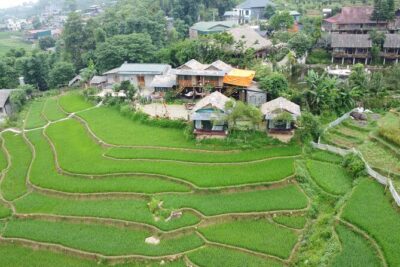
Sapa 1 Day Long Trek: Trek to Hau Thao and Sa Seng Villages
Read our review →Browse the lists this tour appears in