
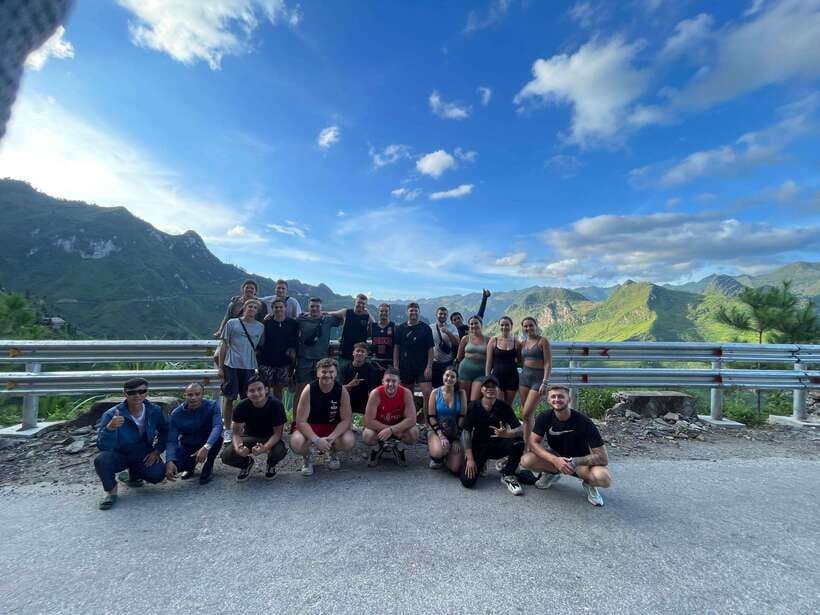
Reviewed · SAPA TOURS
Sapa: 3-Day Ha Giang Loop Motorbike Tour
Mountain roads, river bends, and very little flat ground. This three-day ride from Sapa to Ha Giang is interesting because it trades ordinary sightseeing for close views of northern Vietnam, with local guides, ethnic minority homestays, mountain passes, and a swim at Du Gia Waterfall. I like the Ma Pi Leng Pass views and the chance to travel by motorbike rather than sit behind a bus window. I also like that meals, fuel, permits, protective gear, and luggage storage are included. The main drawback is the pace: roughly 350 kilometers in three days means long hours on the road, basic accommodation, and plenty of bumps.
I especially like the human touch provided by the riding team. Chu, known by the nickname Black Horns, is identified as a kind and capable pilot, while group leader Phuc is praised for creating a friendly atmosphere. You should still understand what you are signing up for: this is an active road trip, not a soft sightseeing holiday, and the safety instructions matter.
In This Review
- Key points to know before booking
- What this Sapa to Ha Giang tour actually involves
- Day 1: Quan Ba Heaven Gate and the road to Dong Van
- Day 2: Dong Van Market, Ma Pi Leng, and Tu San defile
- Day 3: Du Gia Valley and the return to Ha Giang
- Guides, easy riders, and safety on the road
- Food and accommodation: authentic, basic, and part of the tradeoff
- Who will enjoy this three-day route most
- Should you book the Ha Giang Loop from Sapa?
- FAQ
- How long is the Ha Giang Loop tour?
- Is transport from Sapa and back to Hanoi included?
- Can I use an easy rider?
- What accommodation is provided?
- Are meals and drinks included?
- What equipment is supplied for the motorbike ride?
Key points to know before booking
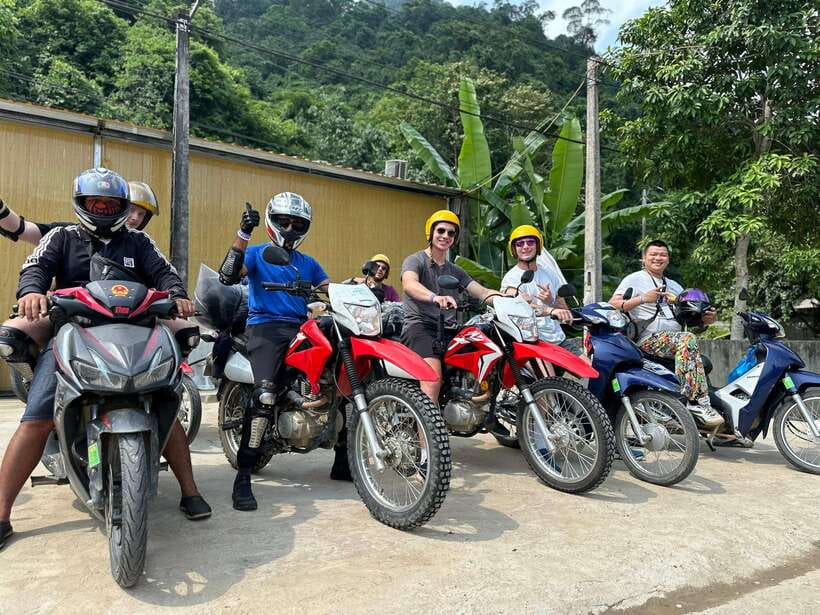
- The route covers about 350 kilometers: Expect three full days of mountain riding, with winding roads and long periods on the back of a motorcycle.
- Ma Pi Leng Pass is the visual high point: The Panorama Viewpoint looks over Tu San defile, steep mountains, and terraced fields.
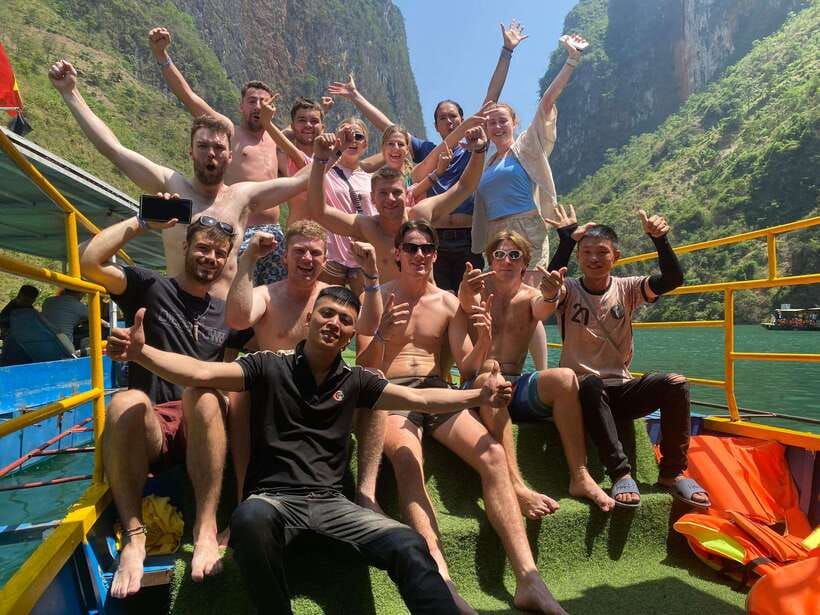
- Nho Que River adds a calmer break: The boat ride gives you a different angle on the cliffs and narrow river valley.
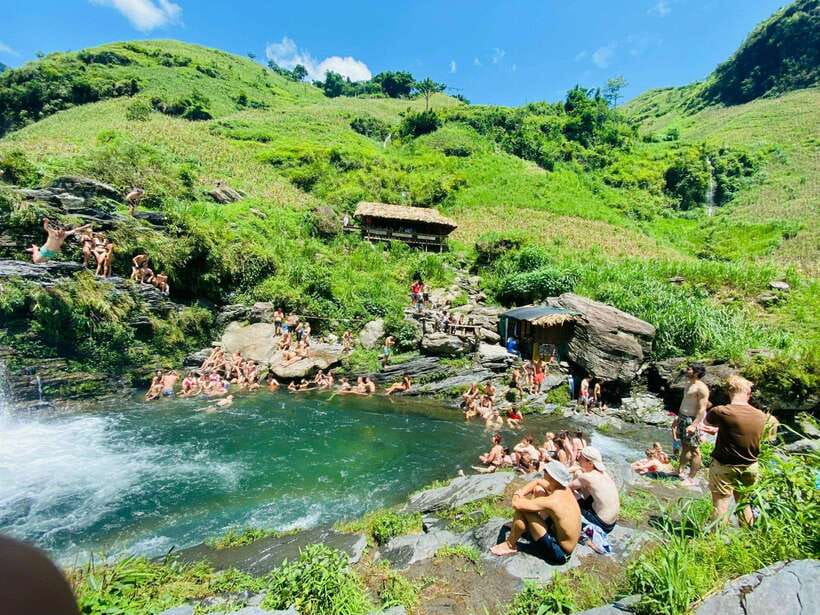
- Du Gia Waterfall is the best chance to cool off: You can swim and jump into the water in a forest setting.
- The ride includes local culture: Dong Van Market, the Vuong Chinh Duc palace, old fortifications, villages, and ethnic minority homestays add context to the scenery.
- An easy rider can make the tour far simpler: If you are not confident on a motorcycle, request a local driver rather than treating the route as a casual scooter ride.
What this Sapa to Ha Giang tour actually involves
The trip begins with a 7:30 PM pickup from your hotel or hostel in Sapa. You take a large bus to Ha Giang City, arriving in the early morning. A hostel bed is available for a nap before breakfast and the motorcycle departure later that morning.
That overnight transfer saves a separate travel day, but it also means you begin the riding portion after a broken night. I would pack a small wash kit, earplugs, and a change of clothes where you can reach them. Your large suitcase or other nonessential luggage can stay in storage at the Ha Giang hostel, so there is no reason to carry a bulky bag on the motorcycle.
The package includes a bus transfer in both directions, though a luxury bus upgrade requires contacting the provider. At the end, the bus leaves Ha Giang after lunch and reaches Hanoi around midnight. This matters if you have an early flight the next morning. I would plan a buffer rather than treating that arrival time as perfectly fixed.
The tour uses genuine Japanese motorcycles and covers fuel, helmets, knee and elbow protection, basic rain clothing, bungee cords, and plastic bag covers. You still need suitable clothing for changing mountain weather. Long trousers, closed shoes, a warm layer, sun protection, and a small waterproof bag are sensible choices.
More Ha Giang Loop rides:
- From Sapa: 3-Day Ha Giang Loop with Safe Rider (max 8 pax)
★ 4.9 · 285 reviews - Ha Giang Loop 3 days Small group- From Ha Noi
★ 5.0 · 1,114 reviews - Ha Giang Loop 3D/2N Private Room+Free Dorm Hotel 1N before tour
★ 5.0 · 993 reviews
Day 1: Quan Ba Heaven Gate and the road to Dong Van
After breakfast at about 8:30 AM, you meet the English-speaking guide and easy rider before leaving Ha Giang City. The first section follows the route known as the Happiness Road, heading north toward Quan Ba.
The road climbs the Bac Sum and Quan Ba passes. This is your first real lesson in Ha Giang riding: the road twists sharply, the mountains rise quickly, and the view keeps changing as the motorcycle gains height. At Quan Ba Heaven Gate, a mountain lookout above a steep zigzag road, you get broad views across rice fields and pointed hills.
The stop at Fairy Hill adds another familiar Ha Giang photo point, but the value is not just the view. It gives you a sense of how communities farm in a region where level ground is scarce. The rice fields appear in narrow patches between high ridges, and the road itself becomes part of the scene.
After Quan Ba, the route climbs through pine forest toward Yen Minh. The ride is about 135 kilometers for the day, so lunch is an important pause rather than a minor detail. Meals are local Vietnamese food, and the package includes breakfast, lunch, and dinner. You should expect simple dishes rather than restaurant-style choice or special dietary flexibility, since no special meal arrangements are described.
From Yen Minh, the road continues toward Tham Ma Pass. Its winding route on National Highway 4C is one of the day’s most recognizable sections. The turns make the journey feel adventurous, but they also explain why you should not judge the trip by distance alone. One hundred and thirty-five kilometers in these mountains can take much of the day.
At Sa Phin, you visit the roughly one-hundred-year-old palace of Vuong Chinh Duc, known as the King of the Hmong. This is a welcome change from roadside viewpoints. The building connects the scenery to local power, trade, and Hmong history, although the supplied information does not give a detailed tour of the interior. Your guide is the person to ask for more context.
The final stop is Dong Van Old Town, with a visit to the old fort built by the French. You then stay in Dong Van. Accommodation is a mix of basic hotels and ethnic minority homestays, depending on the night and the group arrangement. A private room is possible for an extra fee, but the standard setup is more social and more basic.
Day 2: Dong Van Market, Ma Pi Leng, and Tu San defile
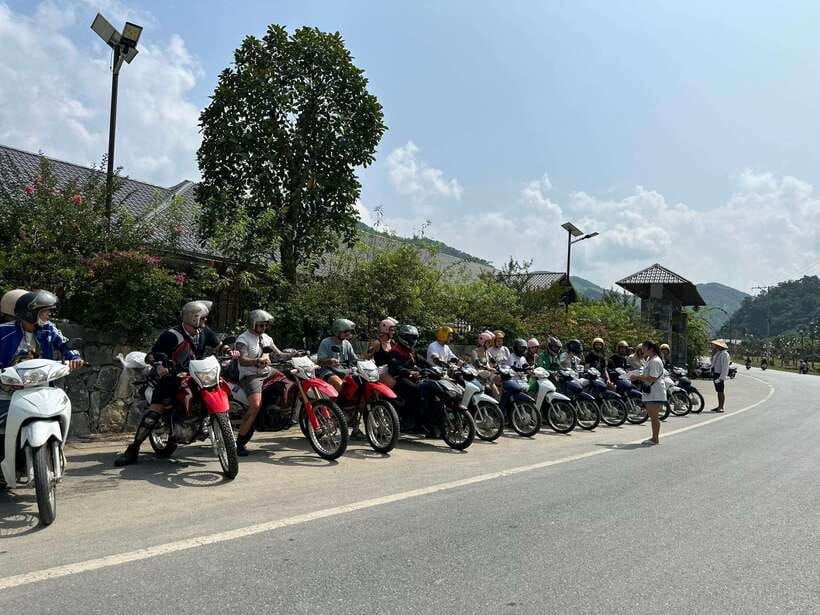
Day two covers about 120 kilometers and brings the most famous road of the loop. After breakfast and checkout, the morning begins at Dong Van Market, located in the old town complex.
This market is described as the largest exchange of goods and culture on the Dong Van rocky plateau. That makes it more than a shopping stop. It is a chance to see how people from the mountain communities meet, trade, and maintain local connections. Market activity can vary, so you should enjoy it as a real local gathering rather than expect a staged cultural show.
The road then heads toward Ma Pi Leng Pass. This is the section that gives the tour its strongest visual payoff. The pass climbs through severe mountain country, with steep drops, exposed rock, and views that make the road seem almost too narrow for the traffic using it.
At the Panorama Viewpoint, you look across the mountains and terraced fields toward Tu San defile below. The pass is often called the Cliff of Death in the itinerary, a name that captures the drama but should not be treated as a reason to take risks. Keep your helmet on, follow the guide’s instructions, and stay where the guide indicates at viewpoints.
The route is aimed at people who want to see the mountains from road level, not just photograph them from a coach. On a motorcycle, you feel the temperature shift, smell the roadside vegetation, and notice how quickly the scenery changes. The tradeoff is exposure to wind, dust, rain, and road vibration. If you have back problems or dislike long motorcycle rides, this is the day to consider carefully.
The itinerary includes a boat ride on the Nho Que River, one of the best ways to change the rhythm of the day. From the water, the cliffs rise around a narrow river corridor, and you see the rock walls from below instead of from a pass. The supplied schedule does not state the exact boat duration, so treat it as a planned highlight rather than a timed cruise.
After the river stop, you continue through rocky mountain passes to Mau Due for lunch. The afternoon remains scenic but demanding. There are more bends, more exposed slopes, and fewer easy stretches where you can simply relax.
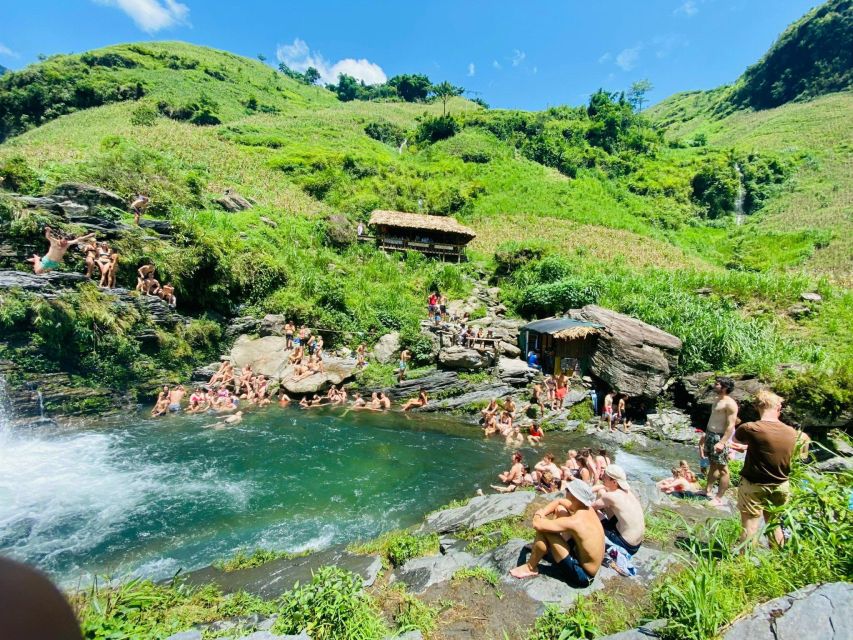
The day ends in Du Gia Village, where the mood changes again. Instead of another high pass, you reach a quieter rural setting and visit Du Gia Waterfall. You can swim and jump into the water in a green forest area shaped by nature over a very long period.
Bring swimwear in your small day bag, not in your stored luggage. A towel is not listed among the inclusions, so pack a light one if you want to swim. The waterfall is a welcome physical break after hours on the bike, though wet clothing and a cool ride afterward can be uncomfortable. Change before getting back on the motorcycle if possible.
Day 3: Du Gia Valley and the return to Ha Giang
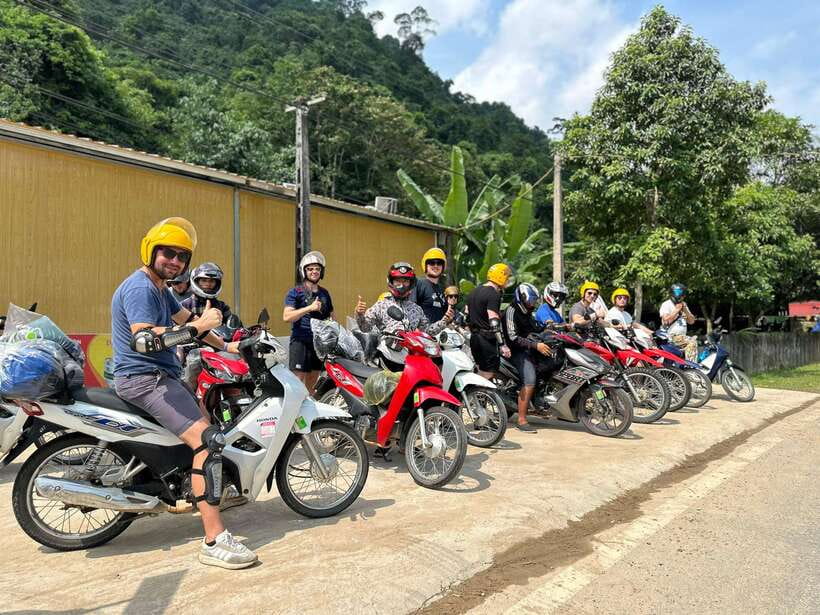
The final riding day covers about 100 kilometers. After breakfast, you say goodbye to Du Gia and head south through Duong Thuong Valley, where wide fields sit between high mountain walls.
The road toward Thuan Hoa includes high, winding passes and sections described as low and dangerous. That wording is a useful warning. Even if the distance is shorter, the riding does not become effortless. You still need to listen closely to the driver and guide, especially on narrow curves and steep sections.
The scenery along the Song Lo Valley provides a strong final stretch before Ha Giang City. This part of the route is less about famous individual sights and more about watching the mountain settlements and cultivated areas pass at a slower road level.
Lunch is served at the hostel in Ha Giang. Afterward, you have time to visit a nearby local village or rest for a few hours before the bus departure. That pause is practical. Three days of riding can leave you dusty and tired, and a shower or quiet rest may be more valuable than squeezing in another attraction.
The bus then takes you toward Hanoi, arriving around midnight. The tour ends there. A bus to Ninh Binh is available on request, which may help if your next stop is south of Hanoi, but you need to arrange that with the provider rather than assume it is part of the standard return.
A few more Sa Pa runs to compare on price
- From Hanoi: Sapa 3-Day Medium Trek and Limousine Trip
★ 4.5 · 59 reviews - Amanda Cruise – Ha Long, Lan Ha Bay – All Inclusive 2D1N & 3D2N
★ 5.0 · 4,358 reviews - Hanoi: 3-Day Ninh Binh, Ha Long, & Lan Ha Bay 5-Star Cruise
★ 4.8 · 1,401 reviews - Mon Chéri Cruises 5 star: Amazing 3 days exploring Halong & Cat Ba island
★ 5.0 · 1,280 reviews
Guides, easy riders, and safety on the road
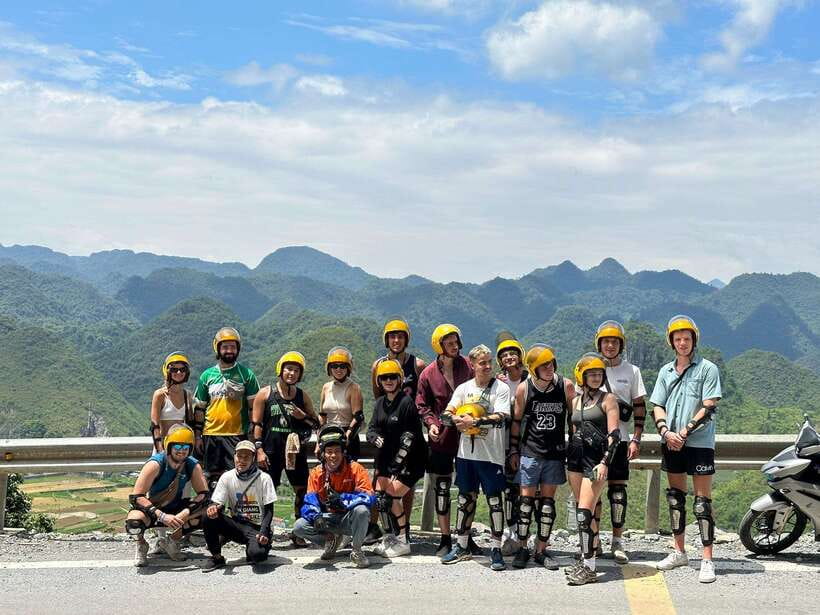
The quality of the riding team can shape this trip as much as the mountains. Chu, called Black Horns, is praised as a friendly and skilled pilot. Phuc, the group leader, is also singled out for being pleasant and helping create a good group atmosphere.
An easy rider is available on request. I strongly recommend this option if you do not have solid motorcycle experience, do not hold the required license for riding abroad, or simply want to watch the views instead of concentrating on every turn. The route is not the place to learn basic riding skills.
Safety equipment includes a full or half helmet, knee and elbow protection, and basic rain clothes. Fuel is included, so you do not have to manage petrol stops or calculate the cost of each mountain section. Wear the helmet at all times and follow the guide’s instructions. The route includes steep roads and tight bends, and the equipment only helps if you use it properly.
You should also expect weather changes. The tour provides basic rain protection, but your own warm layer and waterproof cover for electronics will make the ride easier. A small backpack is better than a large suitcase. The provider supplies bungee cords and plastic covers, but keeping your personal kit compact still matters.
Food and accommodation: authentic, basic, and part of the tradeoff
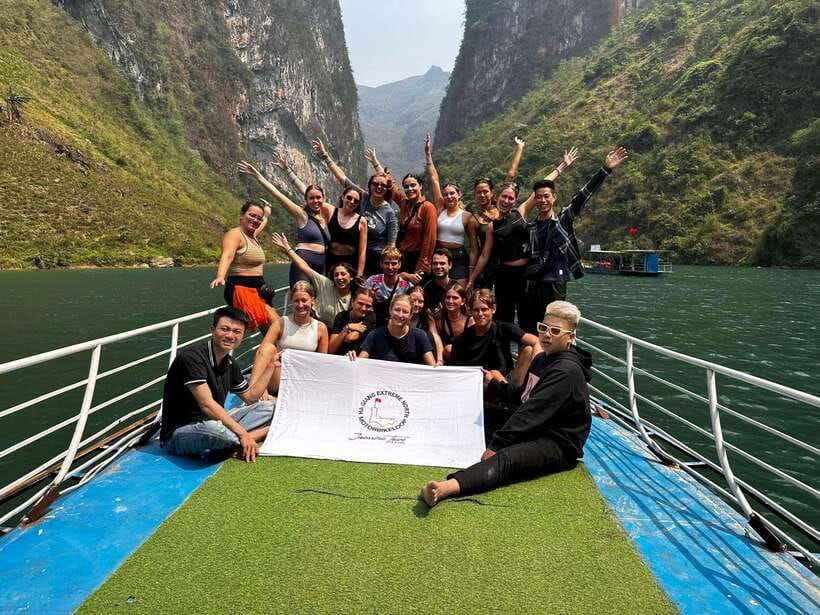
Accommodation combines ethnic minority homestays and hotels. A homestay can give you a closer look at rural life and a more social evening, but it will not offer the same privacy or facilities as a standard city hotel. The information specifically advises you to prepare for basic amenities.
Meals are included as listed, with breakfast, lunch, and dinner on the first two riding days, then breakfast and lunch on the final day. Drinking water and water or soft drinks during lunch are also included. Personal snacks and extra drinks are your responsibility.
I see good value here because the package covers several costs that can quietly add up: fuel, entrance tickets, permits, meals, accommodation, protective gear, and two-way bus transport. The exact tour price is not provided, so I cannot judge it against a stated fare. Still, the inclusions make the package easier to budget than a bare motorcycle rental.
There is a 50 US dollar per person surcharge during Christmas and Tet Holiday. Personal expenses and travel insurance are not included. You should arrange your own insurance, particularly for a motorbike trip, and check that its terms cover the activities you plan to undertake.
Who will enjoy this three-day route most
I would recommend the tour to you if you want:
- A concentrated introduction to northern Vietnam
- Mountain scenery reached by road rather than a window seat
- A local guide and driver support
- Rural accommodation and simple Vietnamese meals
- A mixture of viewpoints, history, market life, river scenery, and swimming
- A return to Hanoi without arranging every transfer yourself
I would hesitate if you need polished hotels, long meals, flexible sightseeing time, or reliable rest every night. The overnight bus from Sapa, early arrival in Ha Giang, and late return to Hanoi make the schedule demanding.
The tour is also less suitable if you are uncomfortable with steep roads or long rides. The easy rider option solves the driving problem, but not the time spent sitting on a motorcycle. You should be prepared for roughly 350 kilometers over three days.
The experience has a very strong rating of 4.9 from 34 ratings, with particular praise for the overall experience, the riding team, and the friendly group atmosphere. The comments about Chu and Phuc are useful because they point to the people who help turn a difficult route into a manageable one.
Should you book the Ha Giang Loop from Sapa?
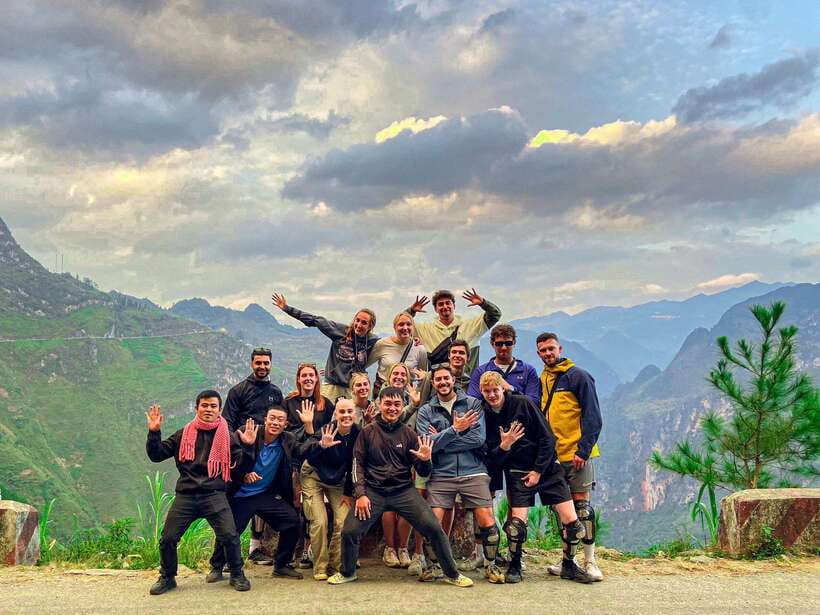
Book it if you want a packed, active route through northern Vietnam and you accept basic conditions. The combination of Ma Pi Leng Pass, Tu San defile, Nho Que River, Dong Van Market, the Hmong palace, and Du Gia Waterfall gives you far more variety than a simple mountain drive.
Request an easy rider if you have any doubts about controlling a motorcycle. Pack light, bring proper clothing, protect your electronics from rain, and leave room in your schedule after the midnight Hanoi arrival.
I would choose this tour for its route and practical inclusions, not for comfort. If dramatic roads, local food, homestays, and close mountain views sound better than a soft seat and a fixed hotel, it is a strong choice.
FAQ
How long is the Ha Giang Loop tour?
The riding portion lasts three days and covers about 350 kilometers, or 218 miles. The trip begins with an overnight bus from Sapa to Ha Giang City and ends with a bus to Hanoi.
Is transport from Sapa and back to Hanoi included?
Yes. The tour includes a bus transfer from Sapa to Ha Giang and a return bus from Ha Giang to Hanoi. A luxury bus upgrade is available by contacting the activity provider.
Can I use an easy rider?
Yes. Easy riders are available on request. This is a useful option if you do not want to operate the motorcycle yourself.
What accommodation is provided?
Accommodation is a mix of ethnic minority homestays and hotels. A single room is available for an extra fee. The accommodation is generally basic, so you should prepare for simple facilities.
Are meals and drinks included?
Breakfast, lunch, and dinner are included where shown in the schedule. Drinking water, plus water or soft drinks during lunch, are also included. Personal expenses are not covered.
What equipment is supplied for the motorbike ride?
The tour provides a full or half helmet, protective knee and elbow gear, basic rain clothes, bungee cords, and plastic covers for bags. Fuel, entrance tickets, and permits are also included.
New around Sa Pa
- Sapa3D2N TrekkingAdventures,Valleys,Bambooforest,Waterfall★ 4.8 · 24 reviews
- Sapa: Y Linh Ho – Lao Chai, and Ta Van Trekking Day Tour★ 5.0 · 25 reviews
- Sapa: Ta Phin Village Trek & Red Dao Herbal Bath★ 5.0 · 22 reviews
- From Sapa: Guided Full-Day Trekking with Lunch and Drop-Off★ 4.2 · 86 reviews
- Sapa: Muong Hoa Mountain Views and Villages Trek with Lunch★ 4.3 · 28 reviews
- Sapa Trekking Bargains With Local Guide★ 4.9 · 91 reviews
- Sapa: Private Highlights Day Tour with Lunch★ 4.8 · 61 reviews
- Sapa: Love Silver Waterfall, LonelyTree in Heaven-Rice Field★ 4.9 · 28 reviews
Sapa Tours, compared.
Muong Hoa Valley Trek and Local Ethnic Villages
Read our review →
Fansipan Cable, Cat Cat Village & Moana Instagram Tour
Read our review →
Eco Adventure Terrace Fields and Local Villages Trek
Read our review →
Number one top rated ethical cultural trekking and homestay by ETHOS
Read our review →
Cat Cat Village, Moana, Fansipan Cable Car, Alpine Coaster – Sapa
Read our review →
1-Day Guided Trek to Lao Chai & Ta Van with Lunch
Read our review →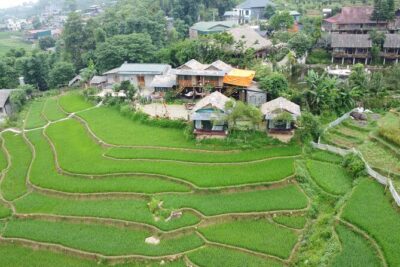
Sapa 1 Day Long Trek: Trek to Hau Thao and Sa Seng Villages
Read our review →Browse the lists this tour appears in